 Everett
 Building a Deck That's Actually Made for West Everett
West Everett sits close enough to Puget Sound that salt-laden air, driving rain off the water, and a long, damp moss season are simply part of owning a home here. A deck built with generic, one-size-fits-all methods might look fine the first summer, but by year three or four you're dealing with soft boards, rusted fasteners, slick green algae, and a structure that needs work far earlier than it should. Building for this specific stretch of Snohomish County means treating the climate as a design input from day one, not an afterthought.
This page covers what a deck actually needs to hold up in West Everett, what a correct build involves from the ground up, how our process works, and why local experience matters more than most homeowners expect.
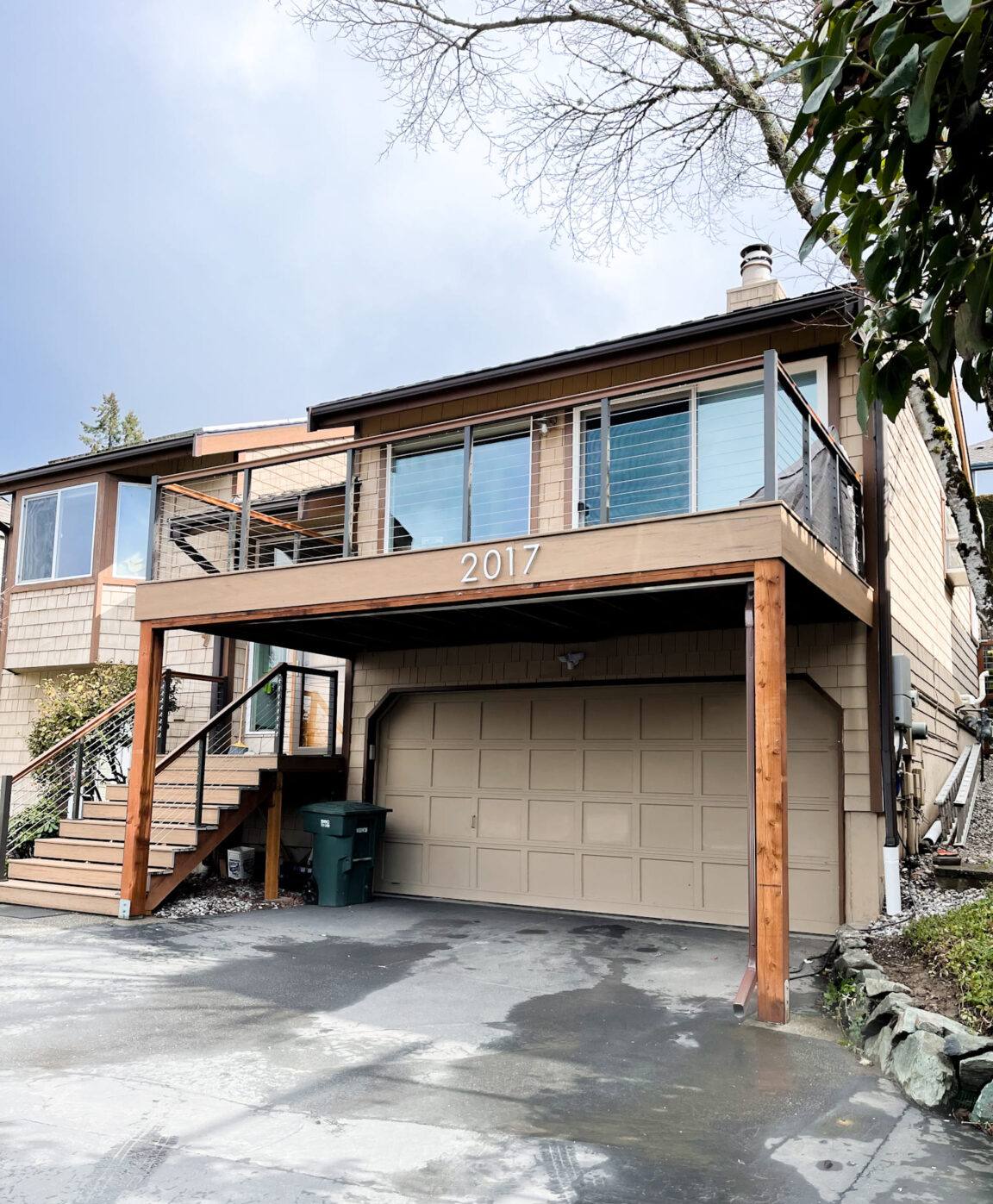
What Our Climate Does to a Deck Over Time
Salt Air and Metal Fatigue
Proximity to Puget Sound means airborne salt settles on everything, including your deck's fasteners, brackets, and hardware. Standard galvanized screws and connectors that would be fine further inland can start corroding years ahead of schedule out here. Once a fastener rusts, it weakens the connection it's supposed to be holding — and that's a structural issue, not a cosmetic one.
Driving Rain and Trapped Moisture
Pacific storms don't just drop rain straight down — wind-driven rain gets pushed sideways into ledger connections, under railing posts, and into any gap that wasn't properly flashed or sealed. Wood and even composite substructures that stay wet longer than they should are where rot and material failure start, almost always out of sight until it's a bigger repair.
The Long Moss Season
Everett's damp, shaded, mild winters are exactly the conditions moss and algae need. On a deck, that shows up as slick green film on boards and stair treads — a real slip hazard — plus moss holding moisture against the wood surface long after a dry spell should have let it breathe.
What a Correctly Built Deck Needs Here
None of the challenges above are unusual for this area — they're just things a deck has to be designed around instead of ignored. A deck that's going to last in West Everett needs a few things done right from the start:
- Proper drainage under and around the structure so water doesn't pool against framing or footings
- Corrosion-resistant fasteners and connectors rated for coastal or high-moisture exposure
- Flashing at the ledger board where the deck meets the house — the single most common source of hidden rot
- Decking material chosen for how it actually performs wet, not just how it looks dry in a showroom
- Surface texture and layout that sheds water and doesn't trap standing puddles or debris
Framing and Structure: Where Most Deck Problems Start
The visible decking boards get all the attention, but the framing underneath is what determines whether a deck is safe and long-lasting. Footings need to be sized and set to local frost depth and soil conditions, not guessed at. Ledger attachment to the house has to be properly flashed and bolted — this is the connection point that takes the most water exposure and the most structural load at the same time, which is why it's also the most common failure point we find on older decks in this area.
Joist spacing, beam sizing, and post spacing all need to match the actual load the deck will carry, including furniture, hot tubs if applicable, and snow load in a harder winter. Undersized framing might pass a casual glance for years before it becomes an obvious problem, which is exactly why it should be done right the first time rather than patched later.
Choosing the Right Decking Material
There's no single "best" decking material — there's a best material for your budget, your maintenance tolerance, and how much sun or shade your particular yard gets. Here's how the common options actually compare for a climate like ours:
| Material | Upfront Cost | Moisture & Rot Resistance | Moss/Algae Resistance | Maintenance |
|---|---|---|---|---|
| Pressure-treated fir/hem-fir | Lowest | Good if sealed regularly | Low — needs regular cleaning | Annual cleaning and resealing |
| Cedar | Moderate | Naturally decent, degrades if unsealed | Low to moderate | Periodic cleaning, oil/stain every 1-2 years |
| Traditional composite | Higher | Very good | Moderate — can still grow surface algae | Periodic washing, no sealing needed |
| Capped composite / PVC | Highest | Excellent | Best of the group | Occasional washing only |
We don't push one product on every homeowner. Real wood costs less upfront but asks for a real maintenance commitment in a climate that doesn't make that easy. Capped composite costs more but largely removes the sealing and staining cycle, which matters if you don't want a recurring weekend chore. We'll walk through the honest trade-offs for your specific deck rather than defaulting to whatever's easiest to sell.
Our Deck Building Process
1. On-Site Assessment
We look at your yard's drainage, sun and shade exposure, soil, and how the deck will attach to your home before recommending anything. A deck on a shaded, damp side of the house needs different decisions than one in full sun.
2. Design and Material Selection
We talk through layout, size, railing style, and decking material with real numbers and real trade-offs — not just what looks best in a brochure.
3. Permitting
Most new deck construction and many significant deck rebuilds require a permit through the applicable local jurisdiction, particularly once you're above a certain height off grade or attaching structurally to the house. We handle that process so you're not the one chasing down inspections.
4. Framing and Structural Work
Footings, posts, beams, joists, and ledger flashing get built to hold up under our rain load and soil conditions, with corrosion-resistant hardware throughout.
5. Decking, Railing, and Finish Work
Surface installation, railing, stairs, and any lighting or finishing details go in last, with attention to drainage gaps and fastening that won't loosen or corrode early.
6. Walkthrough
We go over the finished deck with you, including what maintenance it actually needs — and how much — so there are no surprises six months in.
Permits and Code Basics in Snohomish County
Deck permitting requirements vary by height, size, and whether the structure attaches to your home, so we confirm current requirements with the applicable jurisdiction before starting rather than assuming. In general, expect guardrail requirements once a deck reaches a certain height above grade, footing depth requirements tied to local frost line, and inspection points at framing and final completion. Skipping permitting on a structural deck isn't worth the risk — it can complicate a future home sale and, more importantly, means no third-party check on whether the structure is actually safe.
Living With Your Deck Through Moss Season
Even a well-built deck needs some seasonal attention here — the goal is to make that as low-effort as possible, not eliminate it entirely. A simple annual routine keeps most decks ahead of the problem:
- Sweep leaves and debris off the surface regularly through fall — trapped organic matter is what moss feeds on
- Wash the deck surface at least once a year with a deck-safe cleaner, more often in shaded areas
- Check that drainage gaps between boards aren't clogged with debris or dirt
- Inspect railing posts and stair connections annually for looseness or corrosion at fasteners
- Reseal or restain wood decking on the schedule appropriate to that product — don't wait until it looks obviously worn
- Address any soft or spongy spots immediately rather than waiting for a full inspection cycle
Why a Crew That Already Works West Everett Matters
A contractor who builds decks across a wide range of climates might default to generic specs that are technically code-compliant but not really optimized for this area's rain and salt exposure. A crew already working in and around Everett and Snohomish County has seen firsthand which fastener grades hold up, which flashing details actually stop the water that comes off Puget Sound sideways, and which decking products handle a real moss season versus which ones just get sold as if they do. That local pattern recognition is the difference between a deck that needs real attention in three years and one that's still solid a decade later.
Get a Straightforward Estimate
If you're planning a new deck or replacing one that's past its prime, we're happy to take a look and give you an honest read on what your yard and budget call for — no pressure, no upsell script. Use the form below to request a free estimate for your West Everett deck project.