 Everett
 Why Glenhaven Decks Wear Out Faster Than Homeowners Expect
If you own a home in the Glenhaven neighborhood of Everett, you've probably noticed your deck aging faster than the rest of the house. That's not bad luck — it's the climate. Snohomish County's mix of salt-laden air, driving rain that comes in sideways off the water, and a moss season that can stretch eight or nine months out of the year puts more stress on an exposed wood structure than almost any other part of a home. A deck that was built to a generic national standard, without those local conditions in mind, will show it within five to ten years: soft boards, rusted fasteners, black streaking, and a railing that wobbles more than it should.
Replacing a deck in Glenhaven isn't just a cosmetic upgrade. Done right, it's a chance to correct the moisture and structural issues that caused the original deck to fail in the first place, so the new one actually lasts through the next few decades of Everett winters instead of repeating the same slow decline.
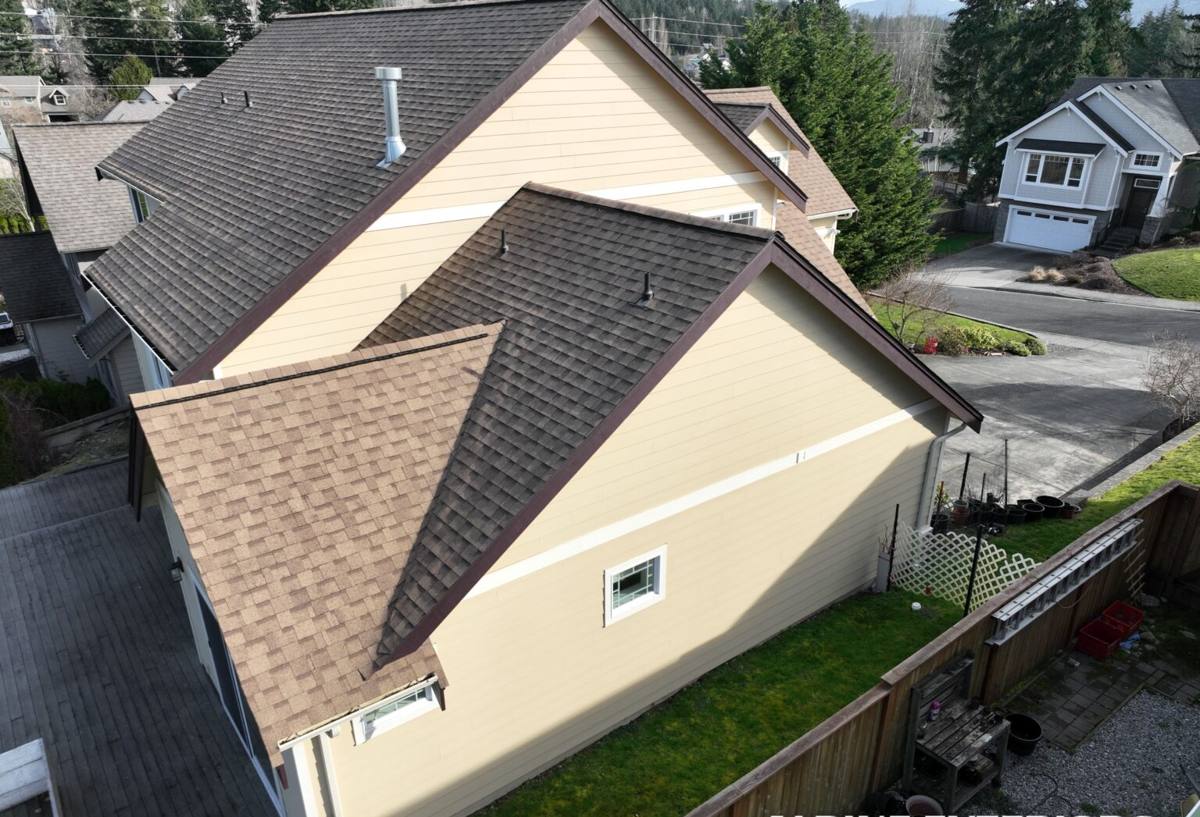
What Everett's Climate Actually Does to a Deck Over Time
Salt air and metal fasteners
Everett sits close enough to Puget Sound that airborne salt reaches inland neighborhoods, not just waterfront properties. Salt accelerates corrosion in ordinary fasteners, joist hangers, and post bases. Once a nail or screw starts rusting, it swells slightly, cracks the wood fibers around it, and lets moisture track further into the board. On an older deck you'll often see rust "bleeding" out around screw heads long before the wood itself looks obviously rotten — that's usually the first visible sign that the fastener hardware is failing underneath.
Driving rain and end-grain
Rain in this part of Washington doesn't just fall — wind pushes it at an angle, which means it gets driven into joints, stair stringers, and the cut ends of boards far more aggressively than in calmer climates. End-grain (the cut edge of a board) soaks up water many times faster than the face of the board. Decks with poorly sealed cut ends, or decking installed without gapping for drainage, hold that water and start rotting from the inside out, often before any surface staining shows up.
Moss season and hidden rot
Everett's long wet season means moss and algae get a real foothold on any horizontal wood surface that doesn't dry out quickly — especially decks shaded by trees or fences, which describes a lot of Glenhaven's residential lots. Moss holds moisture against the board surface for months at a time, and it's also a slip hazard on stairs and low-traffic corners. A deck that looks "just a little green" in February is often further along in surface breakdown than it appears.
Signs Your Glenhaven Deck Needs Replacing, Not Just Repair
Repair makes sense when the damage is isolated. Replacement makes sense once the problems are structural or spread across the deck. Here's what we look for during an inspection:
- Soft or spongy spots anywhere in the decking, especially near the house or at board ends
- Visible rot or rust at the ledger board where the deck attaches to the house
- Railings or posts that flex noticeably when pushed
- Persistent moss or dark staining that comes back within weeks of cleaning
- Gaps or separation where the decking meets the house siding or trim
- Stairs that feel uneven, springy, or have visibly worn tread edges
- A deck more than 20-25 years old that has never had the substructure inspected
If two or more of these apply, it's usually cheaper in the long run to replace than to keep patching — repeated repairs on a failing substructure rarely buy more than a season or two.
What a Correct Deck Replacement Actually Involves
The ledger connection
The ledger board — where the deck bolts to the house — is the single most important, and most commonly botched, part of any deck. It needs proper through-bolting (not just lag screws in many cases), and it needs flashing that directs water away from the house band joist rather than trapping it against it. A huge share of the rot we find on older Everett decks starts right here, hidden behind the rim joist where nobody looks until the deck is already sagging.
Footings and framing
Footings need to sit below the frost and reach undisturbed soil, sized to the load the deck will carry. Joists get sized for the span and spaced to suit whatever decking material goes on top — composite boards generally need tighter joist spacing than solid wood. We also add joist tape or a similar barrier over the tops of joists, which is inexpensive insurance against exactly the kind of trapped moisture that causes framing rot in this climate.
Fasteners and hardware
Every screw, bolt, hanger, and post base should be rated for the decking material and for exposed, coastal-influenced conditions — stainless or heavy hot-dip galvanized hardware, not generic zinc-coated fasteners that look fine in the box but start rusting within a couple of wet seasons.
Decking material
The boards themselves are the visible part, but they're only as good as everything underneath. We'll walk through material options honestly below, because the right choice depends on your budget, how much upkeep you want to do, and how much shade and moss exposure your specific yard gets.
Choosing Decking Material for a Glenhaven Yard
There's no single "best" decking material — there's a best fit for your situation. Here's how the common options actually compare in this climate:
| Material | Upfront Cost | Moss/Moisture Behavior | Maintenance |
|---|---|---|---|
| Pressure-treated wood | Lowest | Resists rot when properly sealed; needs re-sealing to stay ahead of moss and graying | Annual cleaning + re-staining every 2-3 years |
| Cedar | Moderate | Naturally rot-resistant but softer surface; can hold moss if not cleaned regularly | Regular cleaning + oil or stain every 1-2 years |
| Composite (capped) | Highest | Doesn't rot or absorb water into the core; surface still needs washing to prevent moss/algae film | Occasional washing, no sealing or staining |
| Composite (uncapped) | Mid-high | More prone to moisture absorption at cut edges and swelling than capped composite | Moderate — more attention to edges and fasteners |
In a neighborhood with as much moss pressure as Glenhaven sees, we lean toward capped composite or well-detailed cedar for most clients — but a properly built pressure-treated deck, sealed on a real schedule, is still a sound and budget-friendly choice. The honest trade-off is upkeep time versus upfront cost, not one material being "bad."
How Our Deck Replacement Process Works
- On-site assessment: we inspect the existing deck, ledger, and any visible framing to confirm replacement is the right call and identify anything unusual about your specific lot (drainage, shade, slope).
- Design and material selection: we go over decking, railing, and fastener options in plain terms, with real cost ranges, so you're choosing based on trade-offs, not guesswork.
- Permitting: we handle the permit application and inspections required for the project so you don't have to navigate that process yourself.
- Tear-off and disposal: the old deck comes out, including checking the ledger area and any framing that was hidden underneath it.
- Framing and flashing: new footings, joists, ledger flashing, and hardware go in to current code, sized for your decking choice.
- Decking, railing, and stairs: boards, railings, and stair components are installed with attention to fastening pattern, gapping, and drainage slope.
- Final walkthrough: we go over the finished deck with you, including basic care guidance specific to whatever material you chose.
Permits, Code, and Local Considerations
Deck replacement in Everett and Snohomish County generally requires a building permit once the structure exceeds a certain size or height above grade, and there are specific requirements around guardrail height, baluster spacing, stair geometry, and footing depth. Skipping the permit process might save time upfront, but it can create real problems later — at resale, with insurance, or if something needs to be corrected after the fact. We pull the required permits as part of the job rather than leaving that step to the homeowner.
Snow load isn't the driving design factor here the way it is east of the mountains, but wind-driven rain and sustained wet exposure are, which is why flashing detail and fastener choice matter more locally than in drier parts of the state.
Why a Crew That Already Works Glenhaven Matters
A deck built to a generic spec sheet, without accounting for this area's rain patterns, shade coverage, and moss pressure, tends to show problems years before it should. A crew that regularly works Glenhaven and the surrounding Everett neighborhoods has already seen which details actually matter here — where moss builds up fastest, which ledger connections tend to fail first, and which materials hold up versus which ones look good for a season and then start showing wear. That local pattern-recognition is hard to get from a contractor who mostly works a different climate or does one deck a year as a side job.
It also means faster, more accurate estimates. When we already understand the typical conditions in your neighborhood, we spend our first visit assessing your specific deck instead of explaining regional basics from scratch.
Get a Straightforward Estimate
If your Glenhaven deck is showing soft spots, rust stains, persistent moss, or just feels older than it should, we're happy to take a look and give you an honest read on repair versus replacement — no pressure, no obligation. Use the form below to request a free estimate, and we'll walk you through what we find and what it would take to fix it right.