 Everett
 Siding Built for Delta's Particular Mix of Weather
Delta sits close enough to the water that salt-laden air is a real factor in how siding ages here, not a theoretical one. Combine that with the driving, wind-pushed rain that rolls through Snohomish County most of the year, plus a moss season that can stretch from fall clear into late spring on shaded or north-facing walls, and you've got a set of conditions that punishes the wrong siding material fast. Paint that's rated for a drier climate chalks and peels early. Wood-based products swell, split, and invite rot at the seams. Even some fiber cement competitors struggle when the finish isn't engineered for this specific combination of moisture and salt exposure.
This page is about one service, in one place: James Hardie fiber cement siding installed on homes in the Delta area of Everett. Not a general overview of siding options — a straight explanation of what this climate demands, what a correct installation looks like, and why the details matter more here than they would in a drier inland market.
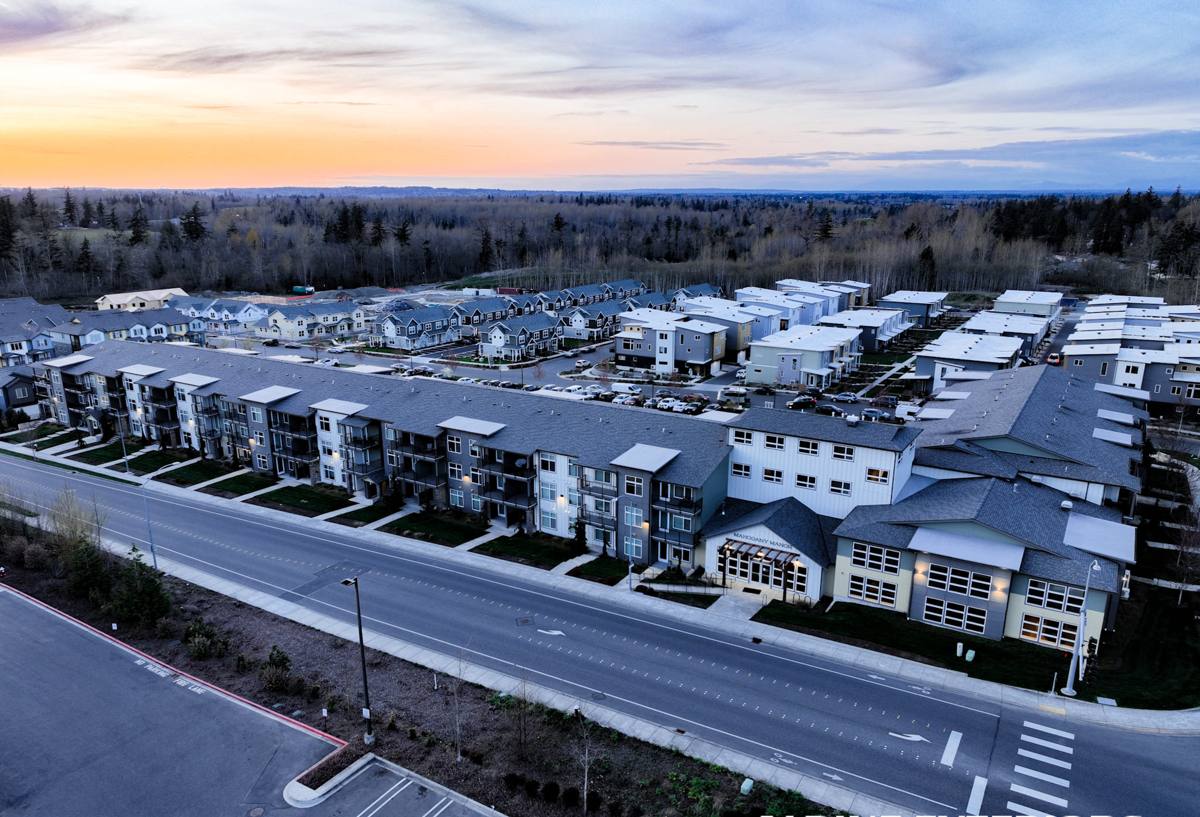
What Delta's Climate Actually Does to Siding
Salt Air and Corrosion
Homes within a few miles of Puget Sound pick up airborne salt that settles on exterior surfaces and accelerates the breakdown of fasteners, trim, and lower-quality coatings. It's a slow process, but it's constant. Siding systems that aren't formulated to resist that exposure show it first in faded, chalky finishes and corroding nail heads.
Driving Rain
Rain in this part of Washington rarely falls straight down. Wind off the Sound pushes it sideways, which means it hits siding at an angle and works its way behind poorly lapped panels, undersized flashing, and gaps around windows and trim. A siding job that looks fine on a calm day can fail during the first real winter storm if the water management details weren't done right.
Moss and Prolonged Moisture
Shaded elevations, tree-lined lots, and the general dampness of a Pacific Northwest fall through spring create ideal conditions for moss and algae growth on exterior surfaces. Siding that stays damp longer because it can't shed water efficiently, or that has a finish moss can grip and hold onto, ends up needing more frequent cleaning and touch-up — and in worse cases, trapped moisture behind the siding leads to rot in the sheathing underneath.
Why We Only Install James Hardie Fiber Cement
We don't install vinyl, LP SmartSide, primed spruce, cedar, or other fiber cement brands like Cemplank or Allura. That's a deliberate standard, not a sales pitch. James Hardie's HardiePlank and related HZ5 product lines are engineered specifically for climates like ours — non-combustible, dimensionally stable when wet, and finished with the ColorPlus factory coating system, which is baked on and cured rather than field-applied. That matters directly for the conditions described above: a factory finish resists the fading and chalking that salt air causes to field-painted products, and it holds up to repeated wet-dry cycling without the swelling that wood-based siding is prone to.
Vinyl siding is inexpensive and low-maintenance in mild weather, but it isn't rigid, it can warp or crack in temperature swings, and it isn't the same class of product for fire resistance. LP SmartSide and similar engineered-wood products use treated wood strand technology that performs reasonably well when installed and maintained exactly to spec, but any breach in the coating — a scratch, a poorly sealed cut edge, a caulking failure — gives moisture a path into the wood substrate, and once that starts, it doesn't reverse. In a climate with this much sustained dampness, we don't think that risk is worth it. Fiber cement from Hardie holds its shape, its finish, and its warranty coverage under exactly the conditions Delta sees every year.
What Hardie's Warranty Actually Covers
James Hardie backs its siding with a transferable limited warranty on the product itself, and ColorPlus finishes carry their own separate finish warranty. That transferability matters to resale — a documented, professionally installed Hardie system is something a buyer's inspector can verify, not a maintenance question mark.
What a Correct Fiber Cement Installation Involves
Fiber cement is only as good as the installation behind it. Hardie publishes detailed installation specifications, and deviating from them — even in small ways — is where most siding failures actually originate, not from the material itself. On a Delta project, we pay particular attention to:
- Water-resistive barrier and flashing: a continuous weather barrier behind the siding, with properly lapped flashing at every window, door, and penetration, so wind-driven rain has nowhere to get behind the panels.
- Correct fastening: nailing patterns, fastener type, and embedment depth matter for how the panels perform over decades, not just how they look on install day.
- Proper clearances: siding held off the ground, decks, and roof lines by the minimum gaps Hardie specifies, so water can drain and surfaces can dry instead of wicking moisture into the bottom edge of the panel.
- Caulking and sealant at the right joints only: over-caulking traps moisture as often as gaps let it in; the goal is sealing where water needs to be stopped and leaving room for the assembly to breathe and drain where it should.
- Factory-cut edges kept factory-finished: field cuts get sealed per Hardie's specification so raw edges aren't left exposed to the weather.
Our Process for a Delta Siding Project
Assessment and Estimate
We start with an on-site look at the home — current siding condition, any signs of trapped moisture or rot in the sheathing, and the specific exposures on each elevation (which walls take the worst of the wind-driven rain, which stay shaded and damp longer). That drives the actual scope and the estimate, rather than a flat per-square-foot number that ignores the house in front of us.
Tear-Off and Sheathing Check
Old siding comes off and the sheathing underneath gets inspected before anything new goes up. This is the point where hidden moisture damage, if any exists, gets found and addressed — not covered over.
Weather Barrier and Flashing Installation
This is the step that determines how the house performs in a wind-driven rain event, and it's the step that's invisible once the siding is on. We don't shortcut it.
Hardie Panel Installation
Installed to Hardie's published specifications for fastening, clearance, and lap, with attention to the details that matter specifically in a salt-air, high-moisture environment.
Trim, Caulking, and Final Walkthrough
Final trim work and a walkthrough so the homeowner understands what was done and what, if anything, needs periodic attention going forward.
Cost Factors on a Delta Fiber Cement Project
Every home is different, so we don't publish flat pricing, but these are the variables that actually move the number on a Delta job:
| Factor | Why It Matters Here |
|---|---|
| Home size and wall complexity | More corners, dormers, and roof lines mean more cutting, flashing, and labor time. |
| Current siding removal | Tear-off scope and disposal depend on what's coming off and whether multiple layers exist. |
| Sheathing repair, if needed | Moisture-related rot found during tear-off has to be repaired before new siding goes on — this is the most common source of a mid-project cost change. |
| Exposure and elevation | Sides of the home facing prevailing wind-driven rain or heavy shade may warrant extra attention to flashing and drainage detail. |
| Product line and profile | Hardie offers multiple plank widths, textures, and panel styles; the choice affects material cost and labor. |
| Trim and accessory work | Fascia, soffit, and trim replacement alongside siding affects overall scope. |
Signs a Delta Home's Siding Needs Attention
Because moisture damage from driving rain and prolonged dampness often starts behind the siding before it's visible on the surface, it's worth knowing the early warning signs:
- Soft or spongy spots when you press on the siding, especially near the bottom edge or around window trim
- Persistent moss or algae growth that comes back quickly after cleaning
- Paint or finish that's peeling, bubbling, or chalking heavily, particularly on walls facing the water or prevailing wind
- Visible warping, cupping, or gaps opening up between boards
- Rust streaking from fastener heads
- Rising energy bills that might point to a compromised weather barrier letting in drafts and moisture
Why a Crew That Already Works Delta Matters
A contractor who regularly works this specific area already knows which elevations tend to take the worst wind-driven rain, how long moss season actually runs on shaded lots, and what the salt exposure does to fasteners and finishes over time. That's not something you can fully substitute with a generic installation checklist. It shows up in small decisions — where to add extra flashing attention, which panel orientation drains best on a given exposure — that make the difference between siding that looks good on install day and siding that's still performing well in fifteen years.
It also matters for accountability. A local crew is easy to reach if a question comes up after the job, and has a reputation in the community worth protecting.
Maintenance After Installation
One of the practical advantages of Hardie fiber cement with a ColorPlus finish is how little ongoing maintenance it actually needs compared to wood-based or field-painted siding. In this climate, that still means:
- An occasional gentle rinse to keep salt residue and moss spores from building up, especially on shaded or water-facing walls
- Periodic visual checks of caulking at trim and penetrations, since sealant is the one component that ages faster than the siding itself
- Prompt attention to any landscaping that's grown up against the siding, since it traps moisture and speeds moss growth
If you're in Delta and dealing with aging siding, visible moisture damage, or you're simply planning ahead for a home that can handle what this climate does year after year, we're happy to take a look and put together a straightforward estimate — no pressure, no obligation. Use the form below to get started.