 Everett
 Why Delta Roofs Wear Out Differently Than Roofs Inland
Delta is one of Everett's established residential neighborhoods, and like most of the city, it sits close enough to Puget Sound to feel the effects of salt-laden air moving in off the water. That air doesn't just smell like the coast — it accelerates corrosion on exposed metal, works into fastener heads and flashing seams, and shortens the working life of roofing components that would last longer in a drier, inland climate. Combine that with Snohomish County's long wet season, and you've got a roof that's under more sustained stress than most manufacturers' warranty language accounts for.
Driving rain is the other half of the equation. Everett doesn't just get rain — it gets wind-driven rain that hits roof planes at an angle instead of falling straight down. That matters because a roof that sheds water fine in a calm drizzle can still leak under sideways rain if the underlayment, flashing, and shingle overlap weren't installed with that specific condition in mind. And wherever tree cover keeps a roof shaded and damp longer than it needs to be, moss gets a head start — often before homeowners notice anything is wrong.
None of this means a Delta home needs anything exotic. It means the ordinary parts of a roof replacement — deck condition, underlayment choice, flashing detail, ventilation balance — have to be done right, not just done. That's the difference between a roof that looks fine for five years and one that actually performs for its full expected lifespan.
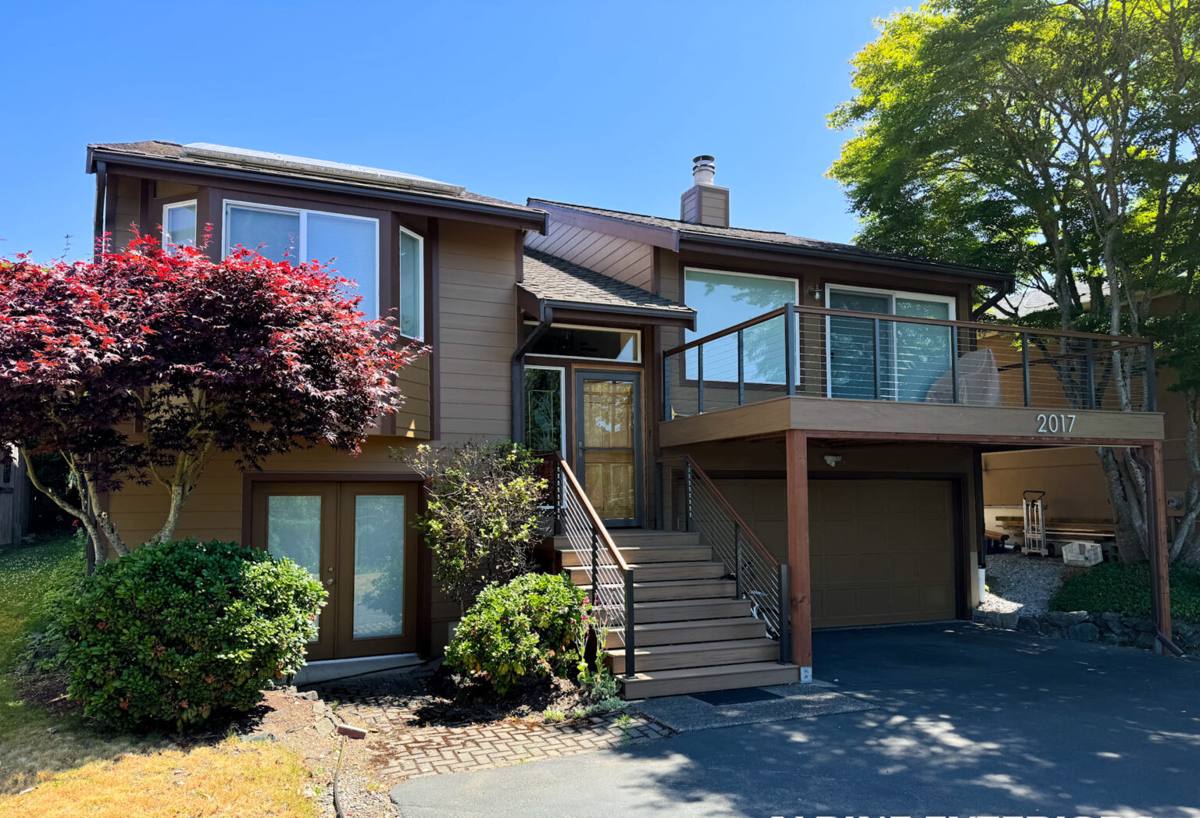
Signs a Delta Roof Needs Replacement, Not Another Repair
Repairs make sense when a roof has isolated damage and years of usable life left. Replacement makes sense when the roofing system as a whole has aged out or the damage is spread across enough of the roof that patching it becomes a losing game. Here's what tends to tip a Delta home from "repair" to "replace":
- Granule loss heavy enough that you can see bare, shiny patches on asphalt shingles, or granules collecting in gutters and downspouts
- Shingles that are curling, cupping, or cracking across multiple roof planes rather than one localized area
- Thick moss mats (not just surface staining) that have been lifting shingle edges and holding moisture against the roof deck
- Soft or spongy spots when walking the roof, which usually means the decking underneath has taken on water
- Daylight visible through the roof boards from inside the attic, or damp insulation after a storm
- A noticeable jump in heating bills, which can point to a ventilation or insulation problem tied to the roof
- An asphalt roof already at or past the 20–25 year mark, especially if it's had multiple smaller repairs already
If your roof shows one or two of these, a repair or a moss treatment may still be the right call. If you're seeing several at once, it's worth getting a straight answer on whether you're extending the roof's life or just delaying the inevitable.
What a Correct Roof Replacement Actually Involves
Tear-Off and Deck Inspection
A full tear-off is the only way to actually see the roof deck. Installing new shingles over old ones, or over a deck nobody inspected, just buries problems that will surface later as leaks or soft spots. Any water-damaged or rotted decking gets identified and replaced before anything new goes down — this is the step that's easiest to shortcut and most expensive to skip.
Underlayment and Flashing
Given how much wind-driven rain Everett sees, the underlayment layer matters as much as the shingles themselves. Synthetic underlayment with proper overlap, along with ice-and-water shield in vulnerable areas like valleys, eaves, and around penetrations, is what actually keeps water out when rain isn't falling straight down. Flashing around chimneys, skylights, vents, and roof-to-wall transitions has to be replaced or properly integrated — reused flashing is one of the most common causes of "mystery" leaks after a roof replacement.
Ventilation Built In, Not Added Later
Balanced intake and exhaust ventilation controls attic moisture and temperature, which affects both how fast moss regrows and how long the shingles themselves last. It's a detail that's invisible once the job is done, which is exactly why it's worth confirming before the crew leaves.
Fasteners and Metal Components Suited to Salt Air
In a coastal-influenced climate like Everett's, fastener and flashing material choice isn't cosmetic — it's a durability decision. We favor corrosion-resistant fasteners and flashing metals over standard-grade hardware specifically because of the salt air exposure common across the Puget Sound area, including Delta.
Roofing Material Options for Everett's Climate
There's no single "best" roofing material — the right choice depends on your home, your budget, and how much long-term maintenance you're willing to take on. Here's an honest comparison of the main options we install and repair in the Everett area:
| Material | Moss & Algae Resistance | Salt Air Durability | Typical Lifespan | Trade-offs |
|---|---|---|---|---|
| Standard 3-Tab Asphalt | Low — needs regular cleaning | Fair with quality fasteners | 15–20 years | Lowest upfront cost, shortest lifespan here |
| Architectural/Laminate Shingle | Moderate; algae-resistant granule options available | Good with corrosion-resistant flashing | 25–30 years | Best balance of cost, looks, and durability for most homes |
| Standing Seam Metal | High — sheds moss and debris well | Requires marine-grade or coated finishes near the Sound | 40–50+ years | Higher upfront cost; installation sensitivity is real |
| Synthetic/Composite Shingle | Moderate to high depending on product | Generally good; check manufacturer coastal rating | 30–50 years | Premium pricing; product-specific warranty terms vary |
We don't push one product on every roof. What we will tell you plainly is when a cheaper material is going to cost more over time in this climate specifically because of how it handles moisture and salt exposure — that's a maintenance-burden conversation, not a brand judgment.
What Actually Drives the Cost of a Roof Replacement
| Factor | How It Affects Your Estimate |
|---|---|
| Roof size and pitch | Larger and steeper roofs take more material, labor, and safety setup |
| Number of existing layers | Tearing off multiple layers of old roofing adds labor and disposal cost |
| Deck condition | Rotted or soft decking found during tear-off requires replacement before install |
| Material selected | Asphalt, architectural, metal, and composite options span a wide price range |
| Ventilation upgrades | Adding or correcting intake/exhaust venting is a smaller add-on, but a real one |
| Flashing and penetrations | Chimneys, skylights, and multiple roof valleys add detail work |
| Access and staging | Steep lots, limited driveway access, or tall roofs affect equipment and time |
We won't quote a number without seeing the roof, but we also won't let a low bid hide the fact that deck repair or proper flashing got left out to make the price look better. A real estimate accounts for what your specific roof needs.
How Our Roof Replacement Process Works
- On-site inspection and an honest assessment of whether you need repair or replacement
- A written scope of work covering materials, ventilation, flashing, and any deck repair allowance
- Property protection before work starts — landscaping, siding, and windows covered or shielded
- Full tear-off with the deck inspected board by board before anything new is installed
- Underlayment, ice-and-water shield, and flashing installed to handle Everett's wind-driven rain
- Ventilation checked and corrected so the finished roof isn't trapping moisture
- Shingle or panel installation following manufacturer specs and proper fastening patterns
- Full cleanup, including a magnetic sweep for stray nails, plus a walk-through and warranty paperwork
Every step is something you can ask us about directly while the work is happening — we're not asking you to take any of it on faith.
Ventilation and Moisture: The Detail Most Roofs Get Wrong
A lot of premature moss regrowth and shortened shingle life traces back to poor attic ventilation, not the shingles themselves. When intake and exhaust airflow aren't balanced, heat and moisture build up under the roof deck. That extra moisture keeps the underside of the roof damp longer after every rain, which is exactly the condition moss and algae need to establish themselves again. On heavily treed lots — common throughout Everett and the wider Snohomish County area — that shaded, damp cycle repeats more often than on an open, sun-exposed roof. Correcting ventilation during a replacement is one of the few upgrades that pays for itself in reduced maintenance over the life of the roof.
Why It Matters to Hire a Crew That Already Works in Delta
Roofing crews that work regularly in and around Delta and the rest of Everett already know how this climate treats a roof, because they've pulled off enough failed ones to see the patterns firsthand — which fasteners hold up, which underlayment details actually stop wind-driven rain, and how fast moss comes back on a shaded lot versus an open one. That local track record matters more than a manufacturer brochure. It also means faster response if a storm causes damage, familiarity with City of Everett permitting requirements, and a crew that isn't learning the local climate on your roof for the first time.
Questions Worth Asking Any Roofing Contractor Before You Hire
- Will you inspect and photograph the deck before covering it, and how are repairs handled if it's damaged?
- What underlayment and ice-and-water shield will you use, and where specifically will it go?
- How will you balance intake and exhaust ventilation on this roof?
- What fastener and flashing materials are you using, and are they rated for coastal exposure?
- Is the estimate a fixed scope, or are there allowances that could change once tear-off starts?
- What does the workmanship warranty cover, separately from the manufacturer's material warranty?
A contractor who answers these clearly, without hedging, is usually one who's done the work enough times to know exactly what your roof needs.
If your Delta home's roof is showing its age or you just want a straight answer on repair versus replacement, we're glad to take a look. Reach out for a free, no-pressure estimate — we'll tell you what we actually see, not just what sells the job.