 Everett
 Why Bayside Windows Take More Punishment Than People Expect
Homes in Bayside sit close enough to Puget Sound that the air itself works against your windows year-round. Salt-laden moisture rides in on the wind and settles on glass, frames, and hardware. Add Snohomish County's long wet season — driving rain that hits west- and south-facing walls at an angle, not just straight down — and you've got conditions that push ordinary windows past their limits faster than they would in a drier inland neighborhood. Then there's moss season, which stretches for months here and isn't just a roofing problem. Moss and algae hold moisture against sills, tracks, and exterior trim, and that constant dampness is exactly what breaks down seals, swells wood, and corrodes hardware over time.
None of this means windows in Bayside fail faster than they should. It means the margin for error in materials and installation is smaller. A window that would perform fine for fifteen years in a sheltered inland spot can start showing problems in half that time here if it wasn't built or installed with this specific exposure in mind.
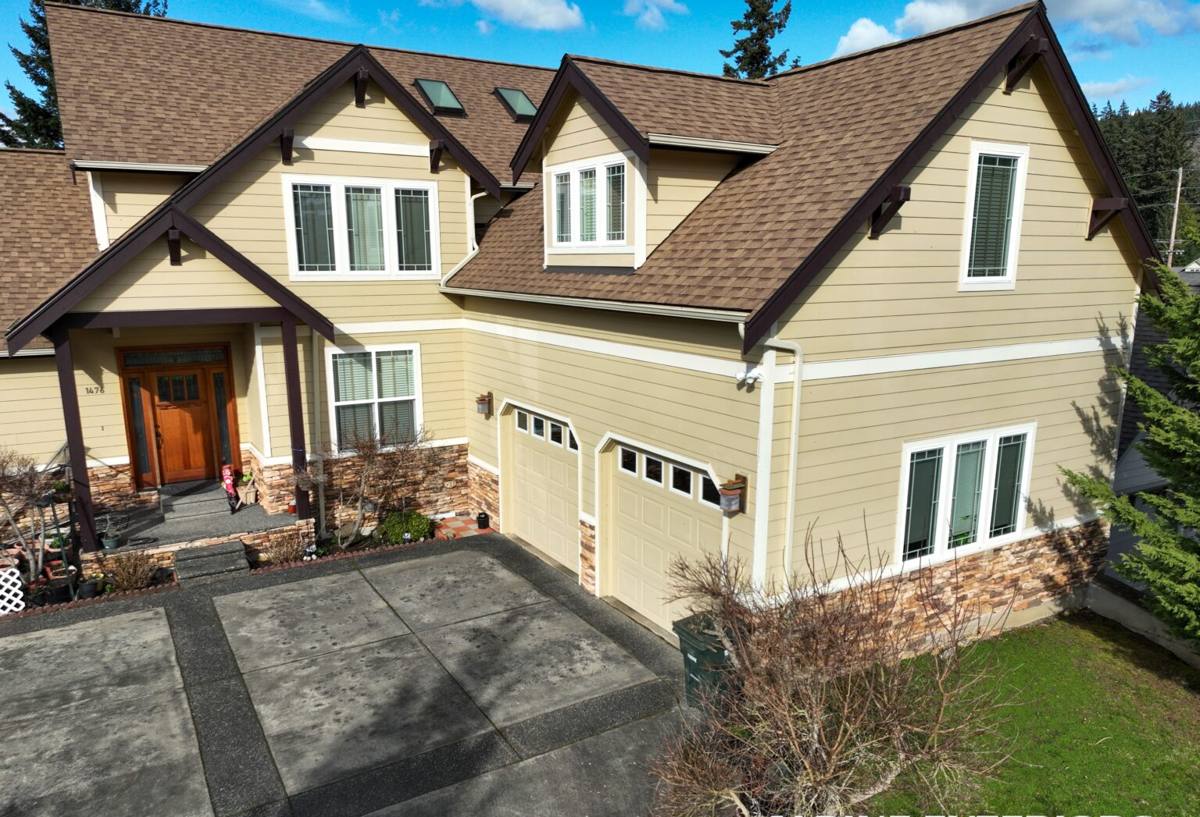
What "Energy-Efficient" Actually Means in This Climate
It's Not Just About Heating Bills
Most homeowners think of energy-efficient windows purely in terms of lower heating costs, and that's part of it. But in a marine climate like Everett's, efficiency is just as much about keeping moisture and drafts out as it is about keeping heat in. A window with a strong energy rating but a poor installation will still let wind-driven rain past the frame, and once water gets behind the trim, the insulation value stops mattering — you've got a bigger problem than a slightly higher power bill.
Moisture Management Matters as Much as R-Value
The window itself — the glass package, the frame material, the weatherstripping — only does half the job. The other half is how it's flashed and sealed into the wall. A high-end window installed without proper flashing will underperform a mid-range window installed correctly, especially on the sides of a house that catch the brunt of driving rain. This is the piece that gets skipped most often, because it's invisible once the trim goes back on.
Signs Your Current Windows Are Costing You
Before assuming you need full replacement, it helps to know what to actually look for. Some of these are efficiency problems, and some are early warning signs of moisture damage that will get more expensive the longer they sit.
- Visible condensation or fogging between panes (a sign the seal has failed and the gas fill, if any, is gone)
- Cold drafts near the frame even when the window is fully latched
- Soft or discolored wood on the interior sill or exterior trim
- Windows that stick, won't latch fully, or have visibly sagged in the frame
- Paint or finish peeling specifically around the window opening rather than the wall generally
- A musty smell near a window that doesn't clear with ventilation
- Visible gaps between the frame and the siding or trim
Any one of these on its own might just mean a repair. Several of them together, especially on the same window, usually means the unit or its installation has reached the end of its useful life.
Frame Materials: What Holds Up Near Salt Air and Rain
There's no single "best" frame material for every home — it depends on your budget, your home's style, and how much maintenance you're willing to do. Here's how the common options actually perform in a marine, high-moisture climate like this one.
| Frame Material | Performance in This Climate | Maintenance |
|---|---|---|
| Vinyl | Handles moisture and salt air well; won't rot or corrode; good insulation value | Low — occasional cleaning |
| Fiberglass | Excellent stability in temperature and humidity swings; very durable against moisture | Low — occasional cleaning |
| Aluminum-clad wood | Attractive and strong, but the exterior cladding must be properly sealed at joints or moisture can reach the wood core underneath | Moderate — watch cladding seams |
| Solid wood | Classic look, but wood is the most vulnerable material to a long wet and moss season without diligent upkeep | High — regular painting/sealing |
We're not going to tell you wood windows are a bad choice — plenty of homeowners want that look and are willing to maintain it. But we do think it's our job to be upfront that in a neighborhood this close to the water, wood asks more of you over time than vinyl or fiberglass does. That's a maintenance conversation, not a quality judgment.
Glass Packages and What They Actually Cost You Over Time
The glass itself is where a lot of the real energy performance comes from, and it's also where people tend to overspend on features they don't need or underspend on ones they do.
| Option | What It Does | Worth It Here? |
|---|---|---|
| Double-pane, Low-E coated | Standard efficient baseline; reflects heat while letting light through | Solid choice for most homes, most walls |
| Argon or krypton gas fill | Improves insulation between panes | Worth it — inexpensive upgrade with real benefit |
| Triple-pane | Better insulation and sound dampening than double-pane | Best value on north-facing or wind-exposed walls; often unnecessary on sheltered elevations |
| Impact-rated or laminated glass | Added durability against wind-driven debris | Situational — worth discussing for exposed upper stories or storm-facing sides |
A reasonable approach for most Bayside homes is to prioritize a good double-pane Low-E package with gas fill on the whole house, then consider triple-pane selectively on the walls that take the worst weather. Upgrading every window to the top-tier package rarely pays for itself compared to targeting the exposures that actually need it.
What a Correct Installation Actually Involves
Flashing and Weatherproofing Detail
This is the part that separates a window that lasts twenty-plus years from one that fails at year eight. Proper installation means integrating the window with the home's existing weather-resistive barrier — flashing tape or pan flashing at the sill, correctly lapped house wrap at the head and jambs, and a drainage path so any water that does get behind the trim has somewhere to go instead of pooling against the framing. Skipping or rushing this step is invisible on install day and expensive five years later.
Sealing and Insulation
Around the frame itself, low-expansion foam or backer rod and sealant fills the gap between the window unit and the rough opening — enough to stop air and moisture infiltration without bowing the frame out of square. Exterior caulking at the trim joints needs a sealant rated for this climate's temperature and moisture swings, not a bargain caulk that shrinks and cracks within a couple of seasons.
Our Process From Estimate to Cleanup
- We walk the exterior with you and look at each window's exposure, current condition, and any visible moisture or rot around the openings
- We measure precisely for the openings — retrofit vs. full-frame replacement is decided window by window, not as a blanket rule
- We go over frame and glass package options against your budget and each wall's actual exposure to wind and rain
- Installation includes flashing, insulation, and sealing to the standard described above — not just setting the unit and trimming it out
- We clean up the work area and walk you through the finished windows before we consider the job done
Why Local Experience in Bayside Matters
A crew that only occasionally works this close to the water can still install a window correctly on paper and still get the details wrong for this specific environment — under-flashing a sill because it's "usually fine," or not accounting for how much harder the salt air is on hardware and finishes over time. Working in Everett and around Snohomish County regularly means we've seen how these houses actually age near the water, not just how a manufacturer's spec sheet says they should perform. That shows up in small decisions — sealant choice, flashing detail, hardware finish — that don't matter in a drier climate but matter a lot here.
Living With New Windows: Maintenance in This Climate
Energy-efficient windows still need some upkeep in a place with this much salt air and moss growth, though far less than older or poorly sealed units. A little routine attention keeps them performing the way they're supposed to for the long haul.
- Rinse frames and glass periodically to clear salt residue, especially on sides facing open water or prevailing wind
- Keep weep holes and tracks clear of moss, debris, and standing water
- Check exterior caulking annually and touch up any cracked or separated sections before wet season
- Operate and lubricate hardware a few times a year so mechanisms don't seize from disuse and moisture
If you're dealing with drafty, foggy, or sticking windows, or you're just planning ahead before the next wet season sets in, we're happy to take a look and give you a straightforward, no-pressure estimate — no obligation, just an honest read on what your home actually needs.