 Everett
 Windows Built for the Way Pinehurst Actually Weathers
Pinehurst sits close enough to Puget Sound that salt-laden air, wind-driven rain, and long stretches of shaded dampness all factor into how a window performs here — not just how it looks the day it's installed. In Everett and the rest of Snohomish County, we see a mix of housing stock in this neighborhood: older homes still running original aluminum or early dual-pane vinyl windows, and newer construction that's due for its first major upgrade in a decade or two. Both categories share the same problem — windows that were fine when installed are now working against the house instead of for it.
Energy-efficient windows aren't a one-size upgrade. What works on a dry-climate rebuild three states over isn't necessarily right for a Pinehurst home dealing with saturated ground, low winter sun angles, and months of overcast humidity. This page is about what actually matters for windows on this specific stretch of Everett — not a generic pitch.
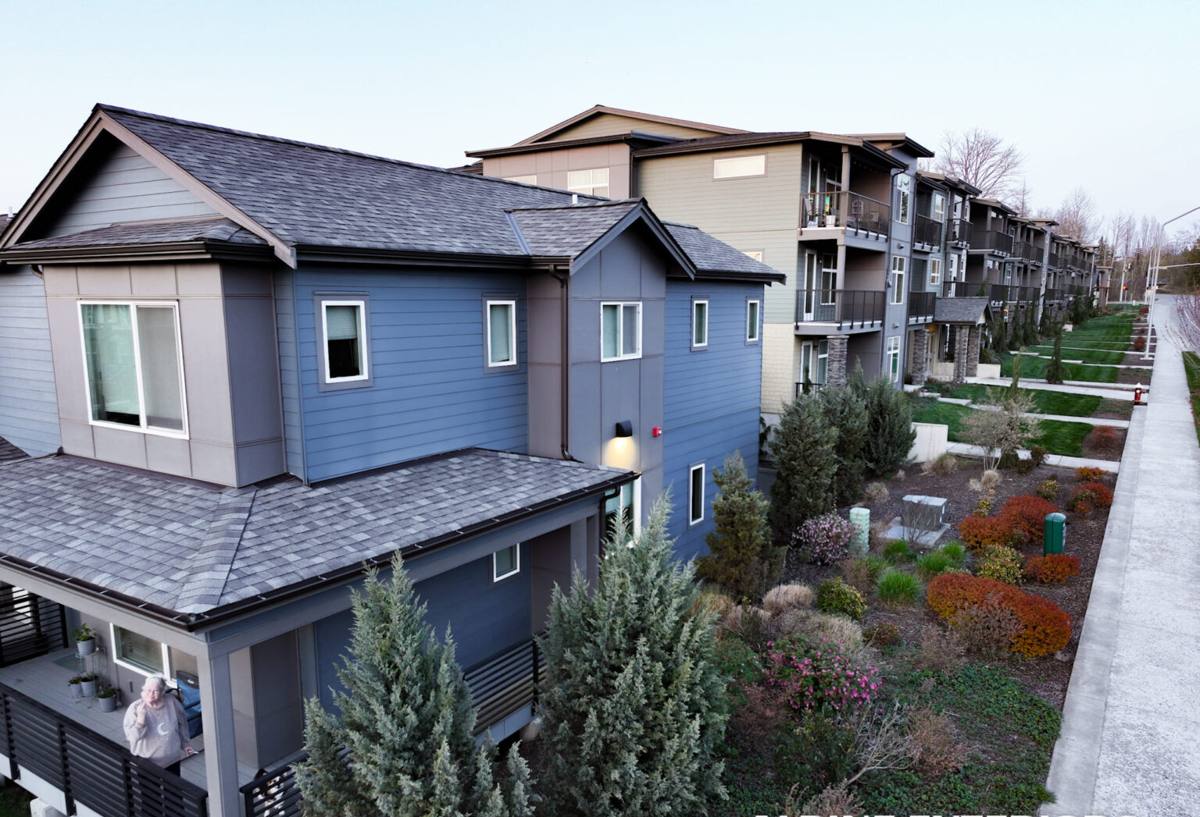
How the Local Climate Wears Down Windows
Three conditions do most of the damage here, and they compound each other over time.
Salt Air
Proximity to the Sound means airborne salt settles on exterior surfaces more than homeowners further inland ever notice. Over years, it accelerates corrosion on window hardware — locks, hinges, balance systems — especially anything with exposed aluminum or lower-grade steel components. It also degrades certain sealants faster than manufacturers' inland test data would suggest.
Driving Rain
Wind off the Sound doesn't just fall — it pushes water sideways into any gap in the flashing, sill, or trim. A window that would be fine in a calm rain climate can leak here if the installation didn't account for wind-driven moisture getting behind the frame rather than just running down the glass.
Moss Season
Shaded, north-facing, or tree-lined elevations in Pinehurst hold moisture long after a storm passes. That persistent dampness feeds moss and mildew growth on sills, trim, and cladding, and it keeps humidity higher right at the window opening — exactly where seals and wood components are most vulnerable to slow rot if the install wasn't sealed correctly the first time.
None of these three conditions are dramatic on their own. The problem is they run nearly year-round in this part of Everett, so a marginal installation doesn't fail in one storm — it fails slowly, and often the damage is inside the wall cavity before anyone notices it at the sill.
Signs Your Windows Are Already Underperforming
Most homeowners call us after noticing one or two of these, not because they set out to research window replacement. Worth checking for before you decide whether it's a repair or a replacement:
- Visible condensation or fogging between panes (a failed seal — the argon or air gap has broken down and the insulating value is gone)
- Cold drafts near the frame even with the window fully latched
- Soft or discolored wood on the interior sill or exterior trim
- Difficulty opening, closing, or locking — often a sign the frame has shifted or hardware has corroded
- Persistent moss, black streaking, or mildew smell concentrated around one or two windows rather than the whole house
- A noticeable jump in heating costs without any other explanation
- Noise transmission that seems worse than it used to be (a sign the seal or gas fill has degraded)
One or two of these usually means a repair or resealing job is worth trying first. Several at once, especially combined with soft wood, usually means the window and possibly the surrounding frame need to come out.
What "Energy-Efficient" Means in This Climate
Manufacturers market a lot of numbers. In a marine climate like Everett's, three of them actually matter for day-to-day performance:
U-Factor
This measures how much heat escapes through the window. Lower is better. Given how many months of the year Pinehurst homes are running heat rather than air conditioning, U-factor is the single most relevant number on the label here — more relevant than it would be in a hot, dry climate where solar heat gain matters more.
Solar Heat Gain Coefficient (SHGC)
This measures how much solar heat passes through the glass. Because this region gets limited direct sun for large stretches of the year, we're less concerned with blocking heat gain and more concerned with not losing what little free solar warmth is available — the balance point is different than it would be in a sunnier climate.
Gas Fill and Glazing
Double-pane with argon fill is the practical baseline for this climate; triple-pane adds real value mainly on north-facing walls, homes near busier roads, or rooms that run consistently cold. Low-E coatings help manage both heat retention and UV fading on interior furnishings, which matters given how much glare-free daylight this region actually gets.
| Package | Best For | Trade-off |
|---|---|---|
| Double-pane, argon, Low-E | Most Pinehurst homes, standard elevations | Solid all-around value; the common-sense default |
| Triple-pane | North-facing rooms, road noise, chronically cold rooms | Higher upfront cost and added frame weight |
| Impact-resistant laminated glass | Exposed elevations catching direct wind-driven rain | Premium cost; overkill for sheltered walls |
Frame Material: What Actually Holds Up Here
Frame material matters as much as the glass package, especially with salt air and sustained moisture in the mix.
| Frame Material | How It Handles This Climate | Maintenance |
|---|---|---|
| Vinyl | Doesn't corrode from salt air, handles moisture well, good value | Low — occasional cleaning, no painting |
| Fiberglass | Very stable in temperature swings and moisture, strong long-term option | Low, though higher upfront cost |
| Wood-clad | Attractive but the wood core is the most sensitive component to sustained moss-season dampness if cladding or seals fail | Higher — exterior cladding still needs periodic inspection |
| Aluminum | Prone to corrosion and thermal transfer in salt air and cold; generally our least-recommended option for this specific climate | Moderate to high |
We're not against wood-clad or aluminum outright — there are situations where appearance or budget make one the right call. But we tell homeowners upfront what the maintenance burden and moisture risk look like for their specific elevation and exposure before they commit, rather than after.
What a Correct Installation Actually Involves
The window itself is only part of the job. Most of the failures we get called out to inspect trace back to installation shortcuts, not product defects.
- Sill pan flashing — creates a drainage path so any water that does get behind the frame exits the wall instead of soaking into it
- Proper flashing sequence — integrated correctly with the house wrap or building paper, lapped so water sheds outward and down, never trapped behind the siding
- Air sealing and insulation — the gap between the rough opening and the window frame needs to be filled correctly, not just caulked over on the surface
- Level, plumb, square setting — a window installed even slightly out of square puts ongoing stress on seals and hardware, accelerating exactly the kind of failure salt air and moisture already push toward
- Exterior trim and caulk detail — the visible finish work, but also the last line of defense against wind-driven rain finding a way in
Skipping or rushing any one of these is invisible on installation day and expensive two or three winters later.
Our Process
- Assessment — we look at each window's current condition, the wall assembly behind it, and the specific exposure (sun, wind, shade, elevation) rather than quoting off a generic checklist
- Product selection — we walk through frame material and glass package trade-offs for your specific home, not just the manufacturer's standard pitch
- Removal — old windows and any compromised trim or sheathing are removed carefully so we can actually see what's happening in the wall cavity before closing it back up
- Installation — sill pan, flashing, insulation, and setting done in the sequence that actually keeps water out in this climate
- Finish work — exterior trim, caulking, and interior finish restored cleanly
- Walkthrough — we show you the work, explain what we found, and answer questions before we consider the job done
Why a Crew That Already Works Pinehurst Matters
Window replacement crosses into permitting, code, and structural questions more often than homeowners expect, especially on older Pinehurst homes where the original rough openings weren't built to current standards. A crew that regularly works this part of Everett already knows the local permitting expectations through the city and Snohomish County, has seen the common failure patterns in this specific housing stock, and isn't guessing at how a given elevation handles wind-driven rain versus one two neighborhoods over with different exposure.
That local pattern-recognition is the difference between a crew that installs windows and a crew that installs windows that hold up through a decade of Pacific Northwest winters. It's also why we're straightforward about which frame materials and glass packages we'd actually put on our own homes in this climate, rather than upselling whatever carries the best margin.
Get a Straight Answer for Your Home
If your windows are fogging, drafting, sticking, or just costing you more to heat than they should, it's worth a second look before you decide what to do. We offer a free, no-pressure estimate — we'll look at your specific windows, your home's exposure, and give you an honest read on repair versus replacement, with the reasoning behind it. Fill out the form below to get started.