 Everett
 Siding Repair in Forest Park: What Everett's Climate Puts Your Siding Through
Forest Park is one of the older, established residential pockets of Everett, and the siding on these homes has usually seen more weather cycles than most homeowners realize. Snohomish County sits close enough to Puget Sound and the Possession Sound shoreline that salt-laden air reaches inland neighborhoods on a regular basis, especially during winter storms. Add in Everett's driving, wind-pushed rain and a moss season that can stretch from October through April under the tree canopy common in Forest Park's older lots, and you have a combination that finds every weak point in a siding system.
Repair work in this neighborhood is rarely about one bad board. It's usually about understanding why that board failed — a caulk joint that gave up, a J-channel that's trapping water, a section shaded by mature trees that never fully dries out between rains. A repair that doesn't address the underlying cause just buys a homeowner a year or two before the same spot fails again.
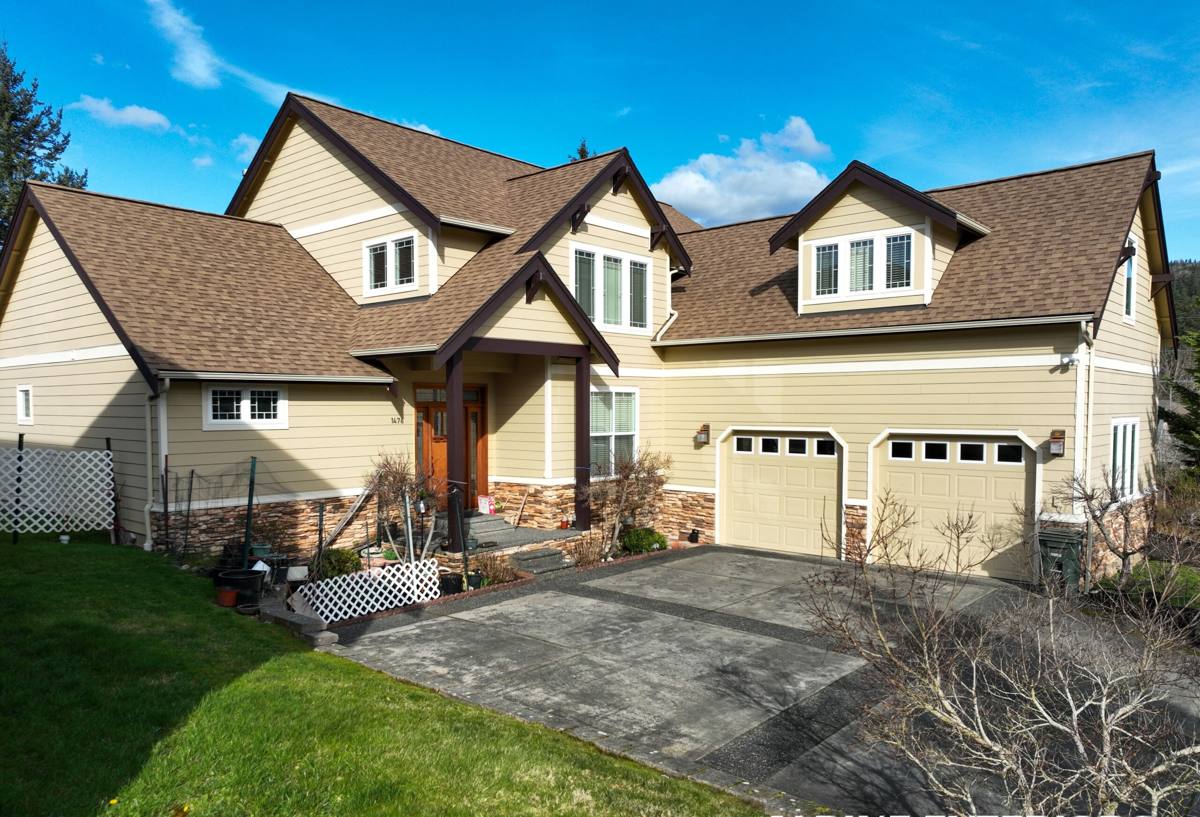
Signs a Forest Park Home Needs Siding Repair — Not Just Paint
Because moss and moisture damage often start hidden behind the siding surface, homeowners in this area should know what to look for before a small issue becomes a rot repair:
- Soft or spongy siding when pressed, especially near the bottom courses and around window trim
- Dark green or black streaking that keeps returning within weeks of cleaning
- Paint that's bubbling or peeling in the same spots year after year
- Visible gaps, cracks, or separated seams at butt joints and corners
- A musty smell near an exterior wall, which can mean moisture has already reached the sheathing
- Siding that looks fine from the street but is warped or buckled when viewed at an angle
Any one of these on its own might be a minor fix. Several together, especially on a north- or west-facing wall that takes the brunt of Everett's weather, usually mean the repair needs to go past the surface layer.
What a Correct Siding Repair Job Actually Involves
A siding repair that's done right is as much about what's underneath as what's on top. In Forest Park's damp conditions, that means:
Finding the actual source of water intrusion
Replacing a damaged board without figuring out why it failed is the single most common shortcut in cheap repair work. Water almost always enters through a flashing gap, a failed sealant joint, or a penetration point — not through the flat face of the siding itself.
Checking the sheathing and framing behind the damage
If moisture has been sitting behind the siding for any length of time, the wood sheathing or framing underneath can be soft or compromised. A repair that just covers this up with new siding is cosmetic, not structural, and it will fail again from the inside out.
Matching materials, texture, and reveal
A patch that doesn't match the surrounding siding's texture, color, or exposure (the amount of each board showing) stands out and can also create new water paths at mismatched seams. Getting this right matters as much for function as for appearance.
Re-flashing and re-sealing correctly
Every opening — windows, hose bibs, vents, light fixtures — needs proper flashing and compatible sealant reinstalled. This is the step most likely to get rushed on a budget repair, and it's usually the reason repairs fail again within a couple of seasons.
Repair vs. Replace: How We Make That Call
Not every problem area needs a full re-side, and not every "repair" is actually worth doing. Here's how we generally think through it with Forest Park homeowners:
| Situation | Usually Repair | Usually Replace |
|---|---|---|
| Damage limited to one or two wall sections | Yes, if sheathing underneath is sound | Only if rot has spread further than expected |
| Original siding is wood, hardboard, or an aging composite nearing end of life | Short-term only | Yes — repairing failing material just delays the same problem |
| Moisture damage found at multiple, unrelated points on the house | Rarely a lasting fix | Yes — points to a system-wide moisture or installation issue |
| Home is otherwise in good shape, damage is isolated and recent | Yes | Not necessary |
| Siding is James Hardie fiber cement with isolated impact or install damage | Yes, straightforward | Rarely needed for isolated damage |
We'll always tell a homeowner honestly when a repair is the right call and when it's a temporary patch on a bigger problem. A repair that's set up to fail again isn't a favor to anyone.
Why Repairs on This Property Type Often Come Back to James Hardie
A large share of the repair calls we get in Forest Park involve the same handful of materials: aging cedar that's cupping and checking, older composite or hardboard siding reaching the end of its service life, or vinyl that's cracked, warped, or faded past matching. Each of these can be patched, but each also has a ceiling on how much a repair can realistically accomplish, because the underlying material is what's driving the failure in the first place.
This is why, on Forest Park homes where we're repairing or rebuilding a damaged section, we install James Hardie fiber cement rather than trying to match failing original material board-for-board. Hardie's HZ5 product line is engineered specifically for wetter, harsher climates like western Washington's — it resists moisture absorption far better than wood-based products, it doesn't feed moss and mildew growth the way untreated wood can, and it's non-combustible. The factory-applied ColorPlus finish also means a repaired section holds its color instead of fading unevenly against older paint over the following seasons.
We don't install LP SmartSide, vinyl, Cemplank, Allura, primed spruce, or raw cedar siding. Each of those has legitimate uses and each has its defenders, but we've standardized on Hardie because it holds up to repeated exposure — salt air, standing moisture under tree cover, freeze-thaw cycles — with the least long-term maintenance and the strongest transferable warranty backing it. When we're already opening up a wall to make a repair, it's the material we trust to not bring us back to the same spot in three years.
Our Repair Process for Forest Park Homes
- On-site inspection. We look at the visible damage and check adjacent areas, trim, and flashing points that commonly fail alongside it.
- Diagnosis, not just patching. We identify the actual water path or failure cause before quoting the repair.
- Honest scope discussion. We explain what's a true repair, what's a rebuild of a section, and what would just be a short-term patch — in plain terms, with the reasoning behind it.
- Remove and inspect. Damaged siding comes off, sheathing and framing underneath get checked and, if needed, repaired before new siding goes back on.
- Correct flashing and sealant. Every opening and seam in the repair area is properly flashed and sealed — this is where most shortcut repairs fail.
- Match and finish. New material is matched for reveal and color as closely as possible, or a defined section is refreshed for a clean, intentional look.
- Final walkthrough. We show the homeowner what was found, what was fixed, and what to keep an eye on going forward.
Why a Crew That Already Works Forest Park Matters
Siding repair isn't uniform across Everett. A house a few blocks from Puget Sound deals with more direct salt exposure than one further inland, and a lot shaded by mature trees holds moisture and grows moss differently than one in full sun. A crew that's already worked this neighborhood has a head start on knowing which wall orientations tend to fail first, how tree cover on older Forest Park lots affects drying time, and what corners tend to get cut in the hardboard and composite siding jobs that were common on homes built here a few decades ago.
That local pattern recognition speeds up diagnosis and keeps repair estimates realistic instead of guesswork. It also means less disruption — a crew that knows the area typically knows how to work around narrower lots, mature landscaping, and the parking realities of an established residential neighborhood.
Maintenance After the Repair: Keeping Moss and Moisture at Bay
A good repair should reduce future maintenance, not create a new spot to watch. A few habits make a real difference in Everett's climate:
- Rinse siding annually, focusing on shaded, north-facing, and tree-covered walls where moss takes hold fastest
- Keep gutters clear so overflow doesn't run down the face of the siding
- Trim back branches and shrubs that keep a wall damp and shaded for most of the day
- Re-check and refresh exterior caulking at trim and penetration points every couple of years
- Watch the repaired area (and its neighbors) for the first two rainy seasons to confirm the fix is holding
Checklist: What to Ask Before Hiring a Siding Repair Contractor
Repair work gets shortcuts more often than full replacements, simply because less of the wall is opened up for anyone to double-check. Before hiring, ask:
- Will you check the sheathing and framing behind the damage, not just replace the surface boards?
- What's causing this failure, and how does the repair address that cause specifically?
- Will flashing and sealant be replaced at every opening in the repair area, not just caulked over?
- What material will be used for the patch, and how will it be matched to the existing siding?
- Is the estimate itemized enough to show what's repair versus what's a section replacement?
- Do you have experience with homes in this specific area and its typical siding issues?
A contractor who answers these clearly, without vague reassurances, is one worth trusting with an open wall.
If you're seeing moss buildup, soft spots, or recurring paint failure on your Forest Park home, we're happy to take a look and give you a straight answer on what it actually needs. Reach out for a free, no-pressure estimate — there's a form right below.