 Everett
 Deck Repair for Glenhaven Homes
Glenhaven decks work harder than decks in drier parts of the country. Between the salt-laden air moving in off Puget Sound, the long stretch of driving rain that defines a Snohomish County winter, and a moss season that can run from October well into spring, an untreated or aging deck in this part of Everett breaks down faster than most homeowners expect. We repair decks in this neighborhood regularly, and the damage patterns we see are consistent enough that we can usually tell you what's wrong before we even pull a board.
This page covers what actually goes wrong with decks in Glenhaven, what a correct repair involves, and how we approach the work. It's meant to help you understand your options, not just sell you a fix.
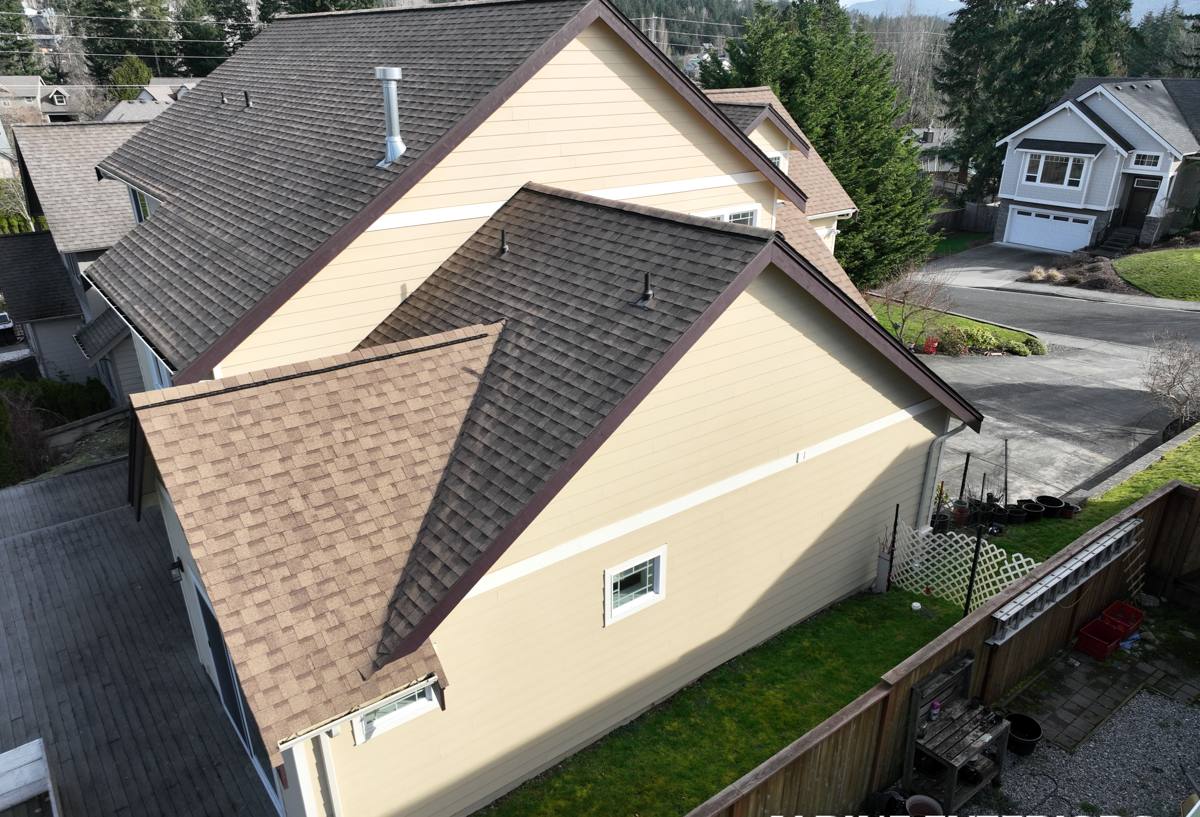
Why Glenhaven Decks Take a Beating
Three things combine to shorten deck life here more than most homeowners realize:
Salt Air
Proximity to the Sound means airborne salt settles on exposed wood, fasteners, and hardware. Salt accelerates corrosion in nails, screws, joist hangers, and structural bolts — and once a fastener starts to rust, it loses holding strength long before it looks obviously bad from the surface.
Driving Rain
Everett doesn't just get a lot of rain — a good share of it comes in sideways, which means water finds its way into joints, ledger connections, and end grain that would stay dry in a straight-down rain. That's exactly where rot starts.
A Long Moss Season
Shaded decking, north-facing structures, and the general dampness of a Western Washington fall through spring create ideal conditions for moss and algae. Beyond looking bad, a mossy deck surface holds moisture against the wood constantly and turns slick underfoot — a real fall hazard on stairs and ramps.
The Most Common Deck Problems We See in Glenhaven
Ledger Board and Ledger Attachment
The ledger board — where the deck bolts to the house — is the single most important structural connection on most decks, and it's also the one most prone to hidden rot. Water tracking behind poorly flashed ledgers soaks the rim joist and sheathing behind it, sometimes for years, before anyone notices. By the time you see staining or sponginess at the house wall, there's usually more damage behind the siding than is visible from the deck side.
Support Posts and Footings
Posts that sit directly on or too close to grade wick up ground moisture. Combined with our wet fall and winter, that means slow rot at the base of the post — often invisible until the post is probed or the deck develops a noticeable soft spot or bounce.
Decking Boards and Moss
Wood decking that isn't cleaned and sealed on a regular schedule cups, splinters, and holds moss. Composite decking resists rot but isn't immune to moss and algae staining, and can still have serious problems underneath if the framing beneath it was never properly maintained.
Fastener and Hardware Corrosion
Standard or under-rated fasteners near salt air corrode faster than their rated lifespan suggests. Rust streaks bleeding out around nail or screw heads are a visible warning sign of a bigger problem underneath.
Flashing and Water Diversion Failures
Missing or improperly installed flashing at the ledger, stair stringers, and any point where the deck meets the house is behind a large share of the structural repairs we do. Flashing is inexpensive; fixing what happens when it's missing is not.
Signs Your Deck Needs Attention
- Noticeable bounce, sponginess, or give when you walk across the deck
- Soft or discolored wood at the point where the deck meets the house
- Rust streaks around fasteners or hardware
- Visible gaps, splitting, or movement at post bases
- Persistent moss or algae that returns quickly after cleaning
- Loose, wobbly, or leaning railings
- Stair stringers that flex or feel unstable underfoot
- Standing water that doesn't drain off the surface after rain
What a Correct Deck Repair Actually Involves
Deck repair done right isn't just replacing the board that looks bad. A repair that ignores the cause just buys you a few more seasons before the same problem resurfaces somewhere nearby. Our approach on every Glenhaven deck repair includes:
- Checking the ledger board and its flashing, not just the visible decking, whenever rot is suspected near the house
- Probing posts, beams, and joists at connection points — the places moisture concentrates — rather than only the exposed top surfaces
- Replacing corroded fasteners and undersized hardware with connectors rated for exterior, corrosion-prone environments
- Confirming joist hangers and structural bolts meet current code requirements, since older decks were often built to standards that have since been tightened
- Re-establishing proper drainage and flashing so water sheds away from the structure instead of collecting in it
Skipping any one of these steps is how a deck ends up needing the "same" repair again in a few years.
Repair vs. Rebuild: How We Help You Decide
Not every deck problem calls for a full rebuild, and not every deck is worth patching. The honest answer depends on how much of the structure is affected and how old the deck already is.
| Factor | Repair Usually Makes Sense | Rebuild Usually Makes Sense |
|---|---|---|
| Extent of rot | Isolated to a few boards, one post, or a small section | Found at multiple structural points or spreading through the framing |
| Ledger condition | Solid, well-flashed, no hidden moisture damage | Rotted, unflashed, or attached with outdated hardware |
| Age of deck | Under 15-20 years with good overall bones | Older deck nearing or past typical structural lifespan |
| Cost to fix vs. replace | Repair cost is a modest fraction of a full rebuild | Repairs would approach the cost of starting over |
| Code compliance | Structure already meets current requirements | Framing, railings, or stairs fall short of current code |
Repairs for isolated problems — a rotted board, a corroded connector, a single failing post — typically run from a few hundred dollars into the low thousands depending on access and how much has to come apart to fix it right. A full rebuild is a bigger investment, but it resets the clock and lets everything, from flashing to fasteners, be done to current standards at once. We'll give you a straight assessment of which situation you're in before we recommend either path.
Materials That Hold Up Here
What we use for a Glenhaven repair depends on what's already there and what the homeowner wants going forward.
Wood Decking
Pressure-treated lumber and cedar both remain solid, cost-effective choices, but they require a real maintenance commitment in this climate — cleaning, sealing, and inspection on a regular schedule. Skip that maintenance and you're back to premature rot regardless of how good the initial install was.
Composite Decking
Composite resists rot and doesn't need staining, which appeals to homeowners who want to spend less time on upkeep. The trade-off is a higher upfront material cost and the fact that composite still needs periodic cleaning to keep moss and algae from staining the surface — and it does nothing to protect framing underneath that isn't also addressed.
Fasteners and Hardware
Given how much salt air this area sees, we favor stainless steel or heavy-coated exterior-rated fasteners and connectors over standard galvanized hardware wherever budget allows. It costs more up front and saves you from another repair call in a few years once corrosion sets back in.
Our Deck Repair Process
- Inspection: We check the full structure — ledger, posts, footings, joists, and decking — not just the spot you called us about, since deck problems rarely stay isolated.
- Honest assessment: We tell you what's actually wrong, what's optional, and what's a safety issue that shouldn't wait.
- Plan and permit check: If the scope involves structural work, we confirm what Snohomish County or the City of Everett requires before we start.
- Repair: We replace what's failed, correct the underlying cause — usually water intrusion or corrosion — and bring connections up to current standards.
- Cleanup and walkthrough: We leave the site clean and walk you through what was done and what to watch going forward.
A Basic Maintenance Checklist to Extend Your Deck's Life
- Sweep debris and standing leaves off the deck surface regularly, especially in fall
- Clean moss and algae off boards and stairs before it builds a slick film
- Reseal or restain wood decking every 1-3 years depending on sun and rain exposure
- Check the ledger area at the house wall each fall for staining or soft spots
- Confirm gutters and downspouts near the deck aren't dumping water onto it
- Look at post bases and any wood touching or near grade for softness or discoloration
- Tighten or replace any hardware showing rust streaks before it worsens
Why a Crew That Already Works Glenhaven Matters
A contractor who repairs decks across the Puget Sound region generally knows to plan for rain. A crew that regularly works Glenhaven specifically knows how this neighborhood's mix of tree cover, salt exposure, and drainage patterns tends to show up in the decks themselves — which posts rot first, where ledgers get missed on older builds, how fast moss comes back on a shaded north side. That local pattern recognition means fewer surprises once we open things up, and it means we're not learning Everett's and Snohomish County's permitting requirements on your job.
We're also a phone call away if something we repaired needs a follow-up look, rather than a crew that did one job in the area and moved on.
If your deck has a soft spot, a moss problem that keeps coming back, or you just want an honest read on its condition, we're happy to take a look. Fill out the form below for a free, no-pressure estimate — we'll tell you what we find, plainly.