 Everett
 Why Decks in Lynnwood Wear Out Faster Than the Manual Says
Every deck material sold in this country comes with a lifespan estimate, and almost none of those estimates were written with western Washington in mind. Lynnwood sits in Snohomish County, close enough to Puget Sound to pick up salt-laden air on windy days, and squarely inside a weather pattern that delivers driving, wind-blown rain for months at a stretch. Add a moss and algae season that can run from early fall through late spring, and you have conditions that push most deck materials toward failure well ahead of their rated life.
The damage isn't usually dramatic. It shows up as a soft spot near a post base, a stair stringer that flexes a little more than it used to, fasteners weeping rust streaks down a board, or a green film that never quite dries out between rains. None of that means the whole deck is a loss. It means the deck needs an honest inspection and repairs that actually address how water and moisture move through the structure here — not a generic patch job.
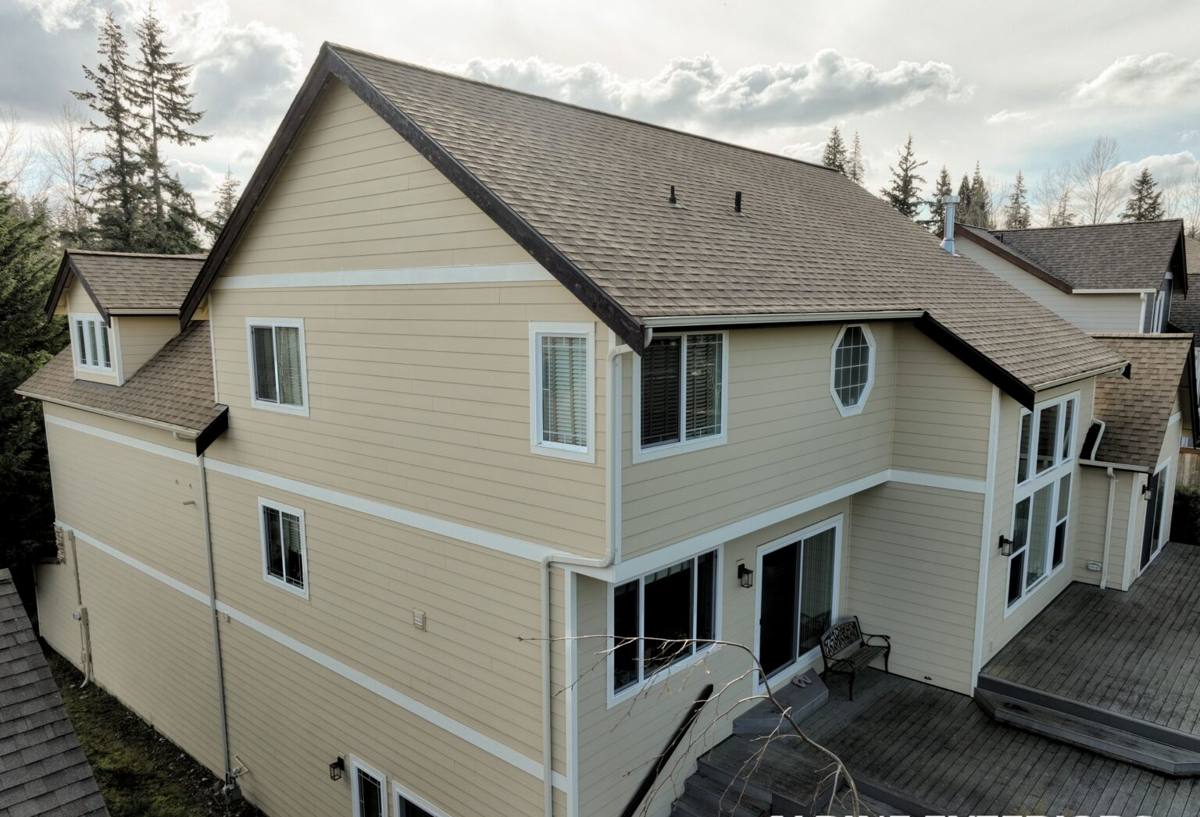
Warning Signs It's Time for a Repair
Most deck problems in this climate start small and stay hidden until someone finally probes the wood with a screwdriver or notices a board give slightly underfoot. Catching these signs early is the difference between a repair and a full rebuild.
- Boards that feel spongy, springy, or noticeably cooler and damper than the boards around them
- Persistent green or black staining that comes back within weeks of cleaning
- Rust bleeding from screw heads or nail holes, or fasteners backing out on their own
- A ledger board (where the deck attaches to the house) with any visible gap, staining, or soft wood at the connection
- Railings or stair stringers that flex, wobble, or feel less solid than they did a year or two ago
- Standing water that takes more than a day to fully drain after a storm
- Gaps opening up between boards, or boards cupping and pulling away from joists
- Visible daylight or gaps where flashing should be sealing a joint
What a Proper Deck Repair Actually Involves
A repair that just swaps out the obviously rotten board and calls it done tends to fail again within a season or two, because it doesn't address why that board rotted in the first place. A correct repair traces the moisture path back to its source.
Ledger Board and Flashing
The ledger board — the framing member that bolts the deck to the house — is the single most consequential connection on the structure. If flashing behind it is missing, damaged, or was never installed correctly, water tracks straight into the rim joist and wall framing behind it. This is one of the most common failure points we find on older decks in this area, and it's not optional to fix correctly: a deck that separates from the house at the ledger is a structural and safety issue, not a cosmetic one.
Framing and Structural Members
Joists, beams, and posts sit closer to grade and catch more splashback and standing moisture than the decking surface above them. When we open up a section for repair, we check these members for soft spots, checking (splitting along the grain), and any post base sitting in standing water or buried soil contact. Compromised framing gets replaced or sistered with new lumber — never just capped over.
Decking Boards and Fasteners
Individual board replacement only works well when the framing underneath is sound. We match board profile and, where possible, material so the repair doesn't stand out as an obvious patch. Fasteners matter more than most homeowners expect — mismatched or undersized screws in a damp climate are a common source of the rust staining and loosening that shows up a year or two after a DIY fix.
Railings and Stairs
Because these are the parts of a deck people actually grab and lean on, any looseness gets treated as a priority repair, not something to defer. Loose railing posts are almost always a sign of a fastening or moisture problem at the post base, not just a tightening job.
Structural vs. Cosmetic: Getting the Diagnosis Right
Not every stain or discoloration means trouble, and not every solid-looking board is actually sound. Part of doing this work honestly is telling a homeowner when a deck needs real structural attention versus when it just needs cleaning, a fresh seal coat, or a handful of board swaps. We probe suspect areas with an awl or screwdriver rather than guessing from appearance alone, because moss and mildew staining can make a perfectly solid board look worse than it is, while rot can hide under boards that look fine from above.
Deck Materials We Repair — What Changes by Material
| Material | Common issue in this climate | Repair approach |
|---|---|---|
| Pressure-treated lumber | Surface checking, fastener rust, rot at ground contact points | Replace affected boards/framing; re-seal exposed cuts; upgrade to corrosion-resistant fasteners |
| Cedar | Graying, splintering, softening where moisture sits between boards | Sand and reseal where sound; replace boards with rot rather than patch |
| Composite decking | Moisture trapped under boards, fading, occasional board-end swelling on older product lines | Replace individual boards; correct ventilation/spacing so moisture can escape underneath |
| Older/mixed repairs | Inconsistent fastening, mismatched boards from prior patch jobs | Assess whole system rather than repeating the same patch approach |
We work on all of the above. Our standard on any repair is the same regardless of material: fix the moisture path first, then the visible damage. Capping a wet problem with new boards on top just delays the next repair call.
Repair or Replace? How We Help You Decide
Homeowners often assume any deck showing damage needs full replacement. In our experience, that's true less often than people think — but there is a point where repeated repairs cost more over time than doing the job once, correctly.
| Factor | Leans toward repair | Leans toward replacement |
|---|---|---|
| Framing condition | Joists and beams are sound; damage is isolated | Multiple structural members are soft or compromised |
| Age of deck | Within or near expected lifespan for its material | Well past typical service life, especially untreated framing |
| Extent of damage | Limited to a few boards, one railing section, or one connection point | Damage is spread across the surface and substructure |
| Ledger connection | Solid, properly flashed | Compromised or never correctly flashed to begin with |
| Prior repair history | First real repair needed | Deck has been patched repeatedly without lasting results |
We give you our honest read on where your deck falls on that spectrum before any work begins — including telling you when repair is the right call, even though a replacement is a bigger job for us.
Our Deck Repair Process
- On-site assessment — we inspect decking, framing, the ledger connection, posts, and railings, probing any suspect areas rather than relying on a visual pass alone
- Straight explanation — you get a clear picture of what's cosmetic, what's structural, and what your realistic options are, in plain language
- Written scope and estimate — no vague "we'll see once we open it up" pricing without a clear plan for what happens if we find more damage
- Repair work — moisture source addressed first (flashing, drainage, ventilation), then framing, then surface boards, railings, and fasteners
- Final check — connections tightened, drainage confirmed, and the repaired area matched as closely as practical to the rest of the deck
Why a Crew That Already Works in Lynnwood Matters
Deck repair looks different here than it does in a drier region, and a crew that regularly works Snohomish County jobs isn't guessing at how local weather affects fastener choice, flashing details, or how long a board needs to dry out before it can be sealed properly. We know what a deck that's been through several wet seasons here typically looks like underneath, which speeds up an accurate diagnosis and avoids repairs that look right on day one but fail again by the next moss season. We're also familiar with the permit and inspection expectations that come up on structural deck work in this area, which matters most on ledger, railing, and stair repairs.
Keeping a Repaired Deck Healthy Afterward
A good repair buys you years, but the same climate that caused the original damage doesn't stop. A little seasonal attention goes a long way toward protecting the work.
- Clear leaves and debris from between boards before fall rains set in — trapped debris holds moisture against the wood
- Rinse or lightly scrub moss and algae growth before it establishes rather than after it's thick
- Check the ledger flashing and any visible fasteners once a year for early rust or gaps
- Reseal wood decking on the schedule appropriate to the product — sun and rain exposure vary even within the same yard
- Keep gutters and downspouts near the deck clear so runoff isn't draining directly onto or under it
If you're noticing soft spots, rust staining, or a railing that doesn't feel as solid as it used to, we're happy to take a look and give you a straight assessment. Fill out the form below for a free, no-pressure estimate on your Lynnwood deck repair.