 Everett
 Roof Repair Built for Marysville's Weather, Not Generic Weather
Marysville sits close enough to Puget Sound and the Snohomish River delta that its roofs deal with a specific combination of stresses: salt-tinged air moving in off the water, long stretches of driving rain that comes in sideways during winter storms, and a moss season that can run eight or nine months out of the year in shaded, north-facing sections of a roof. None of that is dramatic on its own. It's the accumulation over years that causes trouble — a roof that would hold up fine in a dry inland climate can start failing early here simply because it never gets a real chance to dry out between weather systems.
A roof repair in this area has to account for that reality. Patching a leak without understanding why moss built up around it, or replacing a few shingles without checking the flashing underneath, tends to buy a homeowner a year or two before the same problem resurfaces. We repair roofs in Marysville the way we'd want one repaired on our own house: fix what's actually wrong, not just what's visible from the ground.
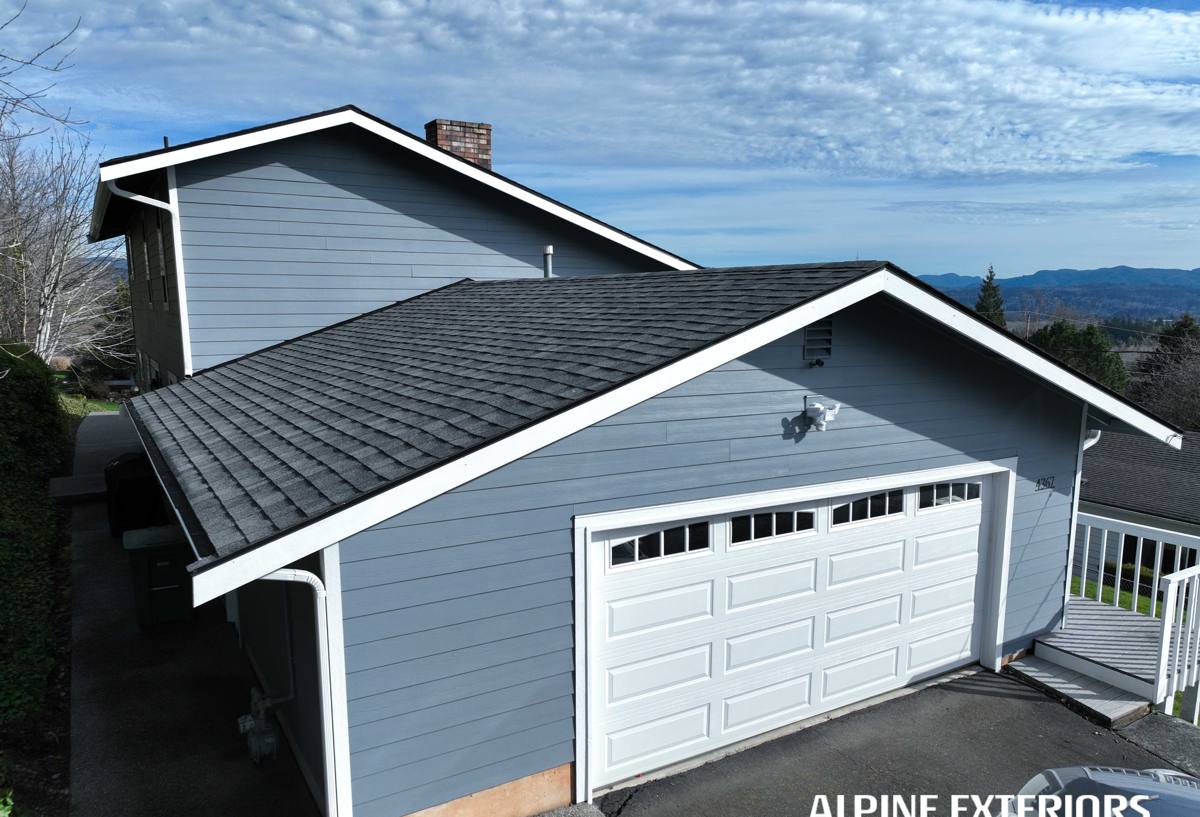
Signs a Marysville Roof Needs Repair
Most roof problems in this climate show up gradually. Homeowners often notice a stain on a ceiling and assume that's the whole story, when the actual cause is a foot or more away from where the water is showing up inside. Here's what we look for, and what you can check for yourself before calling anyone out.
- Shingles that are cracked, curling at the edges, or missing outright after a windstorm
- Dark streaking or thick moss growth, especially on north-facing slopes or under tree cover
- Granules collecting in gutters or at the base of downspouts
- Soft or spongy spots when walked on, which usually means the decking underneath has taken on moisture
- Rusted, lifted, or cracked flashing around chimneys, skylights, and roof-to-wall intersections
- Water stains, peeling paint, or a musty smell in the attic or upper-floor ceilings
- Daylight visible through the roof deck from inside the attic
If you're seeing more than one of these, it's worth having someone look before the next big rain event rather than after.
Why Flashing Fails First, Not the Shingles
In our experience, most active leaks trace back to flashing and sealant details rather than the shingle field itself. Chimney step-flashing, skylight curbs, valley metal, and roof-to-wall transitions all rely on overlapping metal and, in some spots, sealant to shed water correctly. Constant rain cycles combined with wind-driven moisture push water sideways into gaps that would never leak in a drier climate. When we evaluate a repair, these transition points get checked first, before we even talk about shingles.
Moss, Algae, and Marysville's Long Wet Season
Moss isn't just a cosmetic issue. Once it takes hold on a roof, it holds moisture directly against the shingle surface instead of letting rain run off, which accelerates granule loss and, over time, lets water work its way under shingle edges. Roofs with heavy tree cover or shaded north-facing slopes are the most affected, and in Snohomish County that describes a large share of residential lots.
A proper repair addresses moss at the source rather than just scraping the visible growth. That means treating the affected area correctly, clearing debris from valleys and gutters where organic material collects and holds water, and — where it makes sense — installing zinc or copper strips near the ridge that release trace metal ions with each rain to slow regrowth. Pressure washing a roof to remove moss is something we specifically avoid; it strips protective granules and shortens the life of the shingles it's supposedly cleaning.
What a Correct Roof Repair Actually Involves
Diagnosis Before Anything Gets Touched
We start on the roof itself, not just the ceiling stain that prompted the call. Water travels along decking and rafters before it shows up inside, so the entry point is often several feet from where the damage is visible. Getting this wrong is the most common reason repairs don't hold — the crew fixes the spot near the stain, and the actual leak keeps running.
Matching Materials, Not Just Covering the Spot
When a section of shingles needs replacing, we use materials that match the existing roof as closely as possible in both product line and, where the roof is recent enough, color batch. A repair that leaves a visibly different patch isn't doing the homeowner any favors even if it's watertight — and mismatched or incompatible shingle types can also age at different rates, creating a repair that looks fine for a season and then stands out more each year.
Decking Repair, Not Just Surface Repair
If a leak has been active for a while, the plywood or OSB decking underneath is often softened or delaminated in that spot. Laying new shingles over compromised decking is a shortcut that fails within a year or two. We replace damaged decking sections as part of the repair, not as an upsell added later.
Ventilation Checked, Not Assumed
Poor attic ventilation traps moisture that condenses on the underside of the decking, which can look identical to a roof leak from below but has nothing to do with the shingles at all. Part of a thorough repair is confirming whether the source is actually weather intrusion or trapped interior moisture, because those two problems have completely different fixes.
Repair vs. Replacement: How We Make the Call
Not every roof problem needs a full replacement, and we don't default to recommending one. The table below covers the factors that typically decide which direction makes sense.
| Factor | Leans Toward Repair | Leans Toward Replacement |
|---|---|---|
| Roof age | Under roughly 15 years, or well-maintained older roof | Near or past the shingle's rated lifespan |
| Extent of damage | Isolated to one slope, valley, or penetration point | Multiple slopes affected, or widespread granule loss |
| Decking condition | Solid, with only localized soft spots | Extensive soft or delaminated decking |
| Moss/algae history | Manageable with treatment and maintenance | Chronic regrowth despite repeated treatment |
| Material availability | Matching shingles still available | Discontinued product, poor color/style match |
We'll walk you through exactly where your roof falls on this list and why, so the recommendation makes sense rather than feeling like a sales pitch.
Our Repair Process, Start to Finish
1. On-Site Inspection
We get on the roof, not just in the attic or on a ladder from the ground. Photos of the specific problem areas are shared with you so you can see exactly what we saw.
2. A Written Scope and Estimate
You get a clear description of what's being repaired, what materials will be used, and a price before any work begins — no vague line items.
3. The Repair Itself
Work is scheduled around the weather when possible, since roofing over wet decking or during active rain leads to trapped moisture and a worse outcome. Debris, old materials, and nails are cleared from gutters and the yard when we're done.
4. Follow-Up
We tell you what to watch for afterward and what routine maintenance — gutter clearing, moss treatment timing — will help the repair last.
Why Hiring a Crew That Already Works Marysville Matters
A roofer who mainly works drier climates, or who's new to this specific corner of Snohomish County, doesn't always know which failure points to check first. Someone who repairs roofs around Marysville regularly already knows which shingle lines hold up against sustained coastal moisture, which flashing details tend to fail on homes built in certain eras, and how aggressive the moss season gets on shaded lots near the river and the Sound. That local pattern recognition shortens the diagnosis and reduces the odds of a repair that has to be redone.
It also matters for timing. Scheduling a repair between storm systems, and understanding how long a temporary tarp or patch needs to hold during a wet stretch, is something a crew learns from working this specific weather pattern year after year, not from a general roofing background alone.
Maintenance That Extends the Life of a Repair
A good repair can be undone quickly by neglect, especially in a climate this wet. A few habits go a long way:
- Clear gutters and valleys of leaves and needles at least twice a year, more often under heavy tree cover
- Trim back branches that shade the roof or drop debris directly onto it
- Have moss treated before it becomes thick growth, not after
- Check the attic after major storms for new stains or damp insulation
- Get a roof looked at every couple of years even without an obvious problem, since small issues are far cheaper to fix early
None of this requires getting on the roof yourself — most of it is visible from the ground or the attic hatch, and it's worth doing before problems get expensive.
Get an Honest Look at Your Roof
If you're dealing with a leak, visible moss, storm damage, or you just want a second opinion before committing to a repair or replacement, we're glad to come take a look. We'll tell you plainly what we see, what it means, and what your options actually are — no pressure either way. Reach out using the form below for a free estimate.