 Everett
 Metal Roofing in Marysville: Built for the Climate Here
Marysville sits close enough to Puget Sound and its tidal waterways that salt-laden air is a real factor in how a roof ages, not just a coastal talking point. Combine that with the driving rain that comes off the Sound in fall and winter storms, plus a moss season that runs longer here than it does in drier parts of the state, and you have a climate that is genuinely tough on roofing materials. Metal roofing holds up well against all three of those conditions when it is specified and installed correctly for this area. It does not hold up well when it is installed the same way you would install it in a dry inland climate. That difference — knowing what Snohomish County weather actually does to a roof over a decade or two — is the whole point of this page.
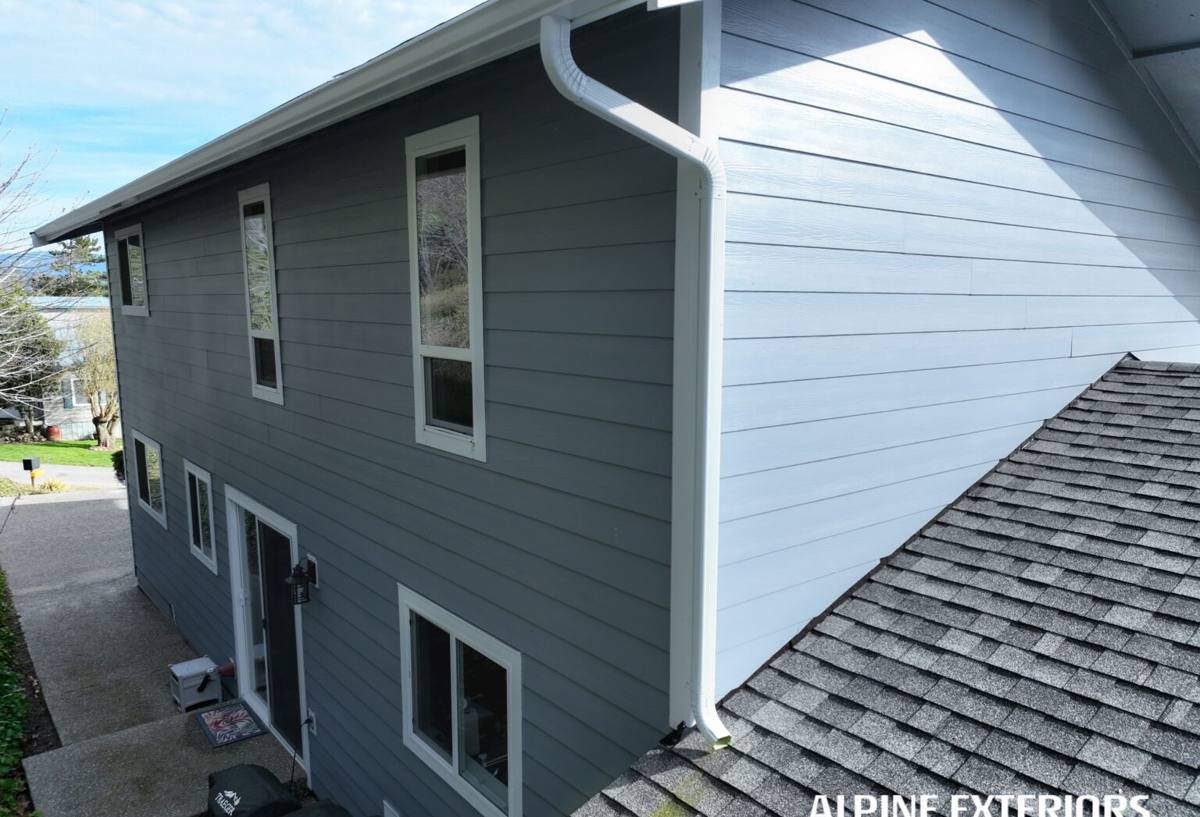
What Salt Air, Driving Rain, and Moss Season Do to a Roof
Salt Air and Corrosion
Airborne salt accelerates corrosion on any metal it touches, including fasteners, flashing, and panel edges. It is not usually a problem for the panel finish itself if you choose a coating rated for it, but it is a real problem for cheap fasteners, mismatched metals, and cut edges left unsealed. Two different metals in direct contact — say, an aluminum panel against a steel fastener that is not compatible — can set up galvanic corrosion that eats away at one of them over time. This is a detail question, not a brand question, and it is where a lot of budget installs quietly fail years down the road.
Driving Rain
Wind-driven rain does not fall straight down. It gets pushed sideways and upward under laps, around penetrations, and into valleys. A metal roof's weather resistance depends less on the panel itself and more on what is underneath it and how the seams, flashing, and valleys are detailed. A roof that looks fine on a calm day can leak during a real Puget Sound windstorm if those details were rushed.
Moss Season
Snohomish County's wet season runs long, and shaded lots with mature trees stay damp for weeks at a time. Moss needs sustained moisture and organic debris to get a foothold, and while metal roofing is far more moss-resistant than asphalt shingles, it is not moss-proof — especially in valleys, under low tree cover, or anywhere debris collects and holds water against the panel. Roof design and gutter capacity matter as much as the roofing material itself.
Choosing a Metal Roofing System That Fits Your Home
Not all metal roofing is the same product wearing different colors. The two systems homeowners in this area choose between most often are standing seam and exposed-fastener (sometimes called corrugated or ribbed panel) roofing. Each has a legitimate place, but they perform differently under the conditions Marysville sees.
| Factor | Standing Seam | Exposed Fastener |
|---|---|---|
| How panels attach | Hidden clips under raised seams — no exposed screws | Screws driven through the panel face, with gaskets |
| Driving rain performance | Very strong — no penetrations through the weather surface | Good, but gasketed screws are the weak point over time |
| Long-term maintenance | Minimal — nothing to re-tighten or reseal | Gaskets and fasteners should be checked periodically |
| Typical cost | Higher material and labor cost | More budget-friendly upfront |
| Best fit | Full re-roofs, homes near open water or heavy wind exposure | Outbuildings, shops, budget-conscious re-roofs |
For a primary residence in Marysville, especially anywhere with direct exposure to wind and moisture off the Sound, we generally steer homeowners toward standing seam. The absence of exposed fasteners removes the single most common long-term failure point in coastal-adjacent installs. Exposed-fastener systems are a legitimate, honest option too — they just come with a maintenance conversation we make sure homeowners understand up front, not after the fact.
Materials, Coatings, and Fasteners That Actually Hold Up Here
Metal roofing panels are typically steel or aluminum, and both can perform well in this climate when specified correctly. Steel is stronger and generally less expensive; aluminum resists corrosion inherently and is a strong choice for homes closer to open water, since it does not rust the way steel can if a coating is ever compromised. The finish matters as much as the base metal — a quality PVDF (often sold under the Kynar name) coating resists fading and chalking far better than a basic painted finish, which matters under our long gray winters and the UV exposure we do get in summer.
Fasteners and flashing deserve the same attention as the panels themselves. We use fasteners and flashing metals that are compatible with the panel material to avoid galvanic corrosion, and we do not cut corners on gasket quality on any exposed-fastener install. None of this shows up in a photo of a finished roof, but it is the difference between a roof that looks the same in year fifteen and one that starts showing rust streaks and loose panels in year six.
What a Correct Installation Actually Includes
Underlayment
Metal panels are the visible weather shield, but the underlayment underneath them is what protects the deck if wind-driven rain or ice ever gets past a seam. We use synthetic underlayment across the field and self-adhered, ice-and-water-type membrane in valleys, around chimneys, and at eaves — the spots where water is most likely to find a way in during a hard storm.
Flashing and Penetrations
Valleys, skylights, vent pipes, and chimney flashing are where the majority of roof leaks actually originate, on metal roofs and every other type. Each penetration gets properly formed flashing and correct lap sequencing so water is always directed downhill and away from the seam, never funneled toward it.
Ventilation
Metal roofing needs proper attic or roof-deck ventilation to prevent condensation from forming on the underside of the panels. This is a detail that gets skipped on rushed installs and shows up later as moisture damage that has nothing to do with the roof leaking from the outside — it is condensation forming from the inside.
Our Process, Start to Finish
- On-site inspection of your current roof, deck condition, ventilation, and any problem areas (valleys, penetrations, shaded sections prone to moss).
- Honest conversation about panel type, material, and finish based on your home's exposure, budget, and how long you plan to stay in the house.
- Tear-off of the old roofing material and inspection of the deck underneath for any rot or damage that needs to be addressed before new material goes down.
- Installation of underlayment, ice-and-water membrane at vulnerable areas, and correct ventilation.
- Panel installation with attention to fastener compatibility, seam alignment, and flashing at every penetration and valley.
- Final walkthrough with you so you know what was done and what, if anything, to keep an eye on.
Living With a Metal Roof in Marysville
A correctly installed metal roof is genuinely low-maintenance compared to asphalt shingles, but "low-maintenance" is not the same as "no-maintenance" in this climate. Gutters need to stay clear so water has somewhere to go during a heavy rain event, and any organic debris that collects in valleys or against a chimney should be cleared before it holds moisture against the panel long enough for moss or algae to take hold. None of this is a big time investment — it is a once or twice a year task, more often if your property has heavy tree cover.
- Clear leaves and needles from valleys and around penetrations, especially before winter
- Keep gutters and downspouts flowing freely so driving rain has an exit path
- Walk the yard periodically to look for streaking, rust spots, or loose panels rather than climbing the roof yourself
- Trim back tree limbs that overhang the roof to reduce shade and debris buildup
- Have a professional check fastener and gasket condition every few years if you have an exposed-fastener system
Why Hire a Crew That Already Works Marysville
A lot of what protects a metal roof in this area is judgment that comes from having installed and revisited roofs here for years — knowing which streets sit closer to open water and need extra corrosion protection, which lots hold shade and moisture long enough to need extra attention to valley design, and how the local permitting and inspection process actually works so your project does not stall. That local knowledge does not replace good workmanship, but it does mean fewer surprises and a roof that is specified correctly for your actual property, not a generic template.
If you are weighing a metal roof for your Marysville home, we are happy to take a look and talk through what makes sense for your situation — no pressure, no upsell. Fill out the form below for a free estimate.