 Everett
 North Everett Decks Face a Specific Set of Problems
A deck in North Everett doesn't fail the way a deck fails in Arizona or Texas. Out here, the enemy isn't UV — it's water that never fully goes away. Between the rain that settles in for months at a time, the humidity that comes off Port Gardner Bay and the Sound, and the tree cover that shades a lot of North Everett lots, decks in this part of Snohomish County are under constant low-grade attack from moisture, mildew, and moss. Add in salt-tinged air near the water and you've got a corrosion problem for any fastener or connector that isn't rated for it.
None of this means a deck can't last decades here. It means the build has to account for these conditions from the footings up, not just at the surface. A lot of the decks we get called out to repair or replace weren't built badly in an obvious way — they were built to a generic standard that doesn't hold up to a long Everett wet season repeated year after year.
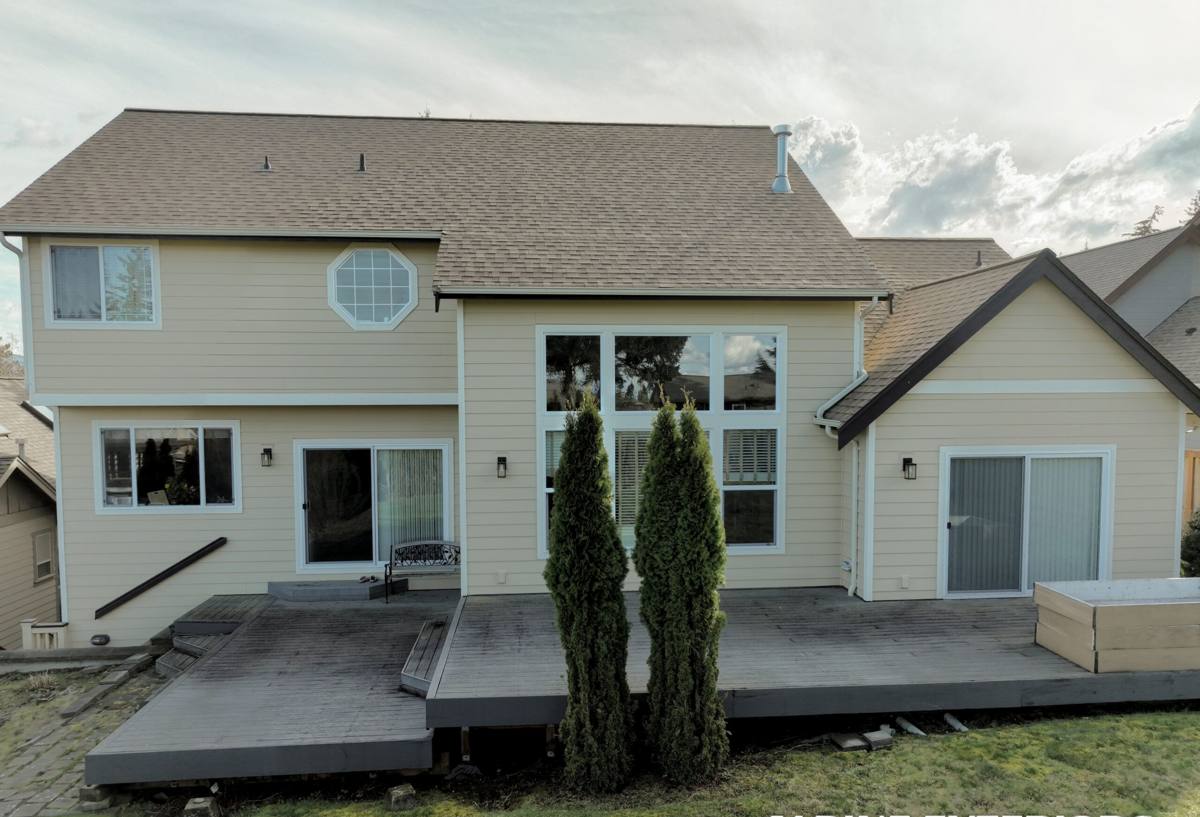
What Actually Goes Wrong on Decks Around Here
Before we talk about how to build one right, it's worth knowing what we see when we tear an old deck apart:
- Ledger boards rotted where they attach to the house, usually from missing or failed flashing that let water track behind the band board for years
- Rusted or corroding joist hangers and fasteners that weren't rated for exterior or coastal-adjacent exposure
- Footings that were poured too shallow or undersized for the soil, leading to frost heave or settling over time
- Decking boards holding moisture between boards because they were installed tight with no drainage gap
- Moss and algae buildup on north-facing or shaded sections that were never designed to shed water or dry out between rains
- Stairs and guardrails that were never engineered for the loads code actually requires, discovered only when something starts to flex
Every one of these is preventable. They're all decisions made (or skipped) during the build, not inevitable wear.
The Structural Work That Determines Whether a Deck Lasts
Ledger Attachment and Flashing
The ledger board — where the deck ties into your house — is the single most common failure point we see on Everett decks. If that connection isn't flashed correctly, with proper metal flashing that directs water away from the band board and sheathing, water gets in behind the ledger and rots the framing from the inside. This can go on for years without a visible sign on the surface. We flash every ledger connection properly and use structural screws or through-bolts rated for the load, not just nails.
Footings for Snohomish County Soil
Soil conditions vary across North Everett — some lots sit on tighter clay-heavy soil, others have more variable fill, and a fair number of properties have some slope to deal with. Footings need to be sized and set to the depth the site actually requires, not a one-size guess. On sloped lots this often means engineered footings rather than standard sonotubes. We size footings to the deck's actual load and the soil we find when we dig, not to whatever's fastest.
Fasteners and Hardware
In an area with salt air influence and near-constant moisture, hardware grade matters more than most homeowners realize. We use hot-dip galvanized or stainless connectors, hangers, and fasteners rated for exterior and corrosive-adjacent exposure — not the cheaper coated hardware that starts rusting and staining the wood within a couple of wet seasons.
Drainage and Airflow Underneath
A deck that can't dry out will always have a moss and rot problem, no matter what decking material sits on top. We build in proper board spacing for drainage, and where the deck is low to the ground or shaded, we think through grading and airflow underneath so water has somewhere to go instead of sitting under the structure.
Choosing a Decking Material for This Climate
There's no single "best" decking material — there's a best material for your budget, your maintenance appetite, and how much sun or shade your specific spot in North Everett gets. Here's how the common options actually perform in a wet, moss-prone climate:
| Material | How It Handles PNW Moisture | Maintenance | Typical Lifespan Here |
|---|---|---|---|
| Pressure-treated wood | Resists rot with proper sealing; still needs a dry-through design | Annual cleaning, resealing every 1–2 years | 10–15 years with upkeep |
| Cedar | Naturally moisture- and insect-resistant, but greys and can hold moss if not maintained | Cleaning and oiling every 1–2 years to keep appearance and shed water | 15–20 years with consistent care |
| Composite | Doesn't rot or absorb water into the board itself; surface can still grow moss/algae if shaded and dirty | Periodic washing; no sealing or staining | 25+ years, backed by manufacturer warranty |
We don't push one material on every job. A shaded North Everett backyard under mature trees is a different conversation than a sunnier, more open lot. What we do insist on is that whatever material you choose sits on framing and connections that will outlast it — there's no point putting a 25-year composite board on a deck with a 10-year structure underneath.
Moss, Mildew, and the Long Wet Season
Everett's moss season isn't a minor cosmetic issue — moss and algae hold moisture against the board surface and make decking slick and dangerous underfoot, especially on stairs. Design choices that help: adequate board spacing, avoiding decking spans with no sun exposure where possible, and using materials with a textured or grooved surface that doesn't trap standing water. On existing decks, we can advise on cleaning approaches and whether a surface is due for replacement versus routine maintenance.
Permits and Code in Everett
Most deck projects above a certain height or attached to the house require a permit through the City of Everett, and the structural requirements — footing depth, guardrail height, stair geometry, ledger attachment — are all inspected against current code. Skipping the permit might save time up front, but it creates real problems at resale and, more importantly, means nobody with authority ever checked that the structure is safe. We pull the required permits and build to what inspection actually requires, not the minimum that might slide by unnoticed.
How We Build a Deck in North Everett
- Site visit and assessment — we look at your slope, soil, sun/shade exposure, and how the deck will tie into the house before we talk materials or price
- Design and material selection — sized to your actual use (dining, grilling, gathering space) and matched to the exposure your lot gets
- Permitting — we handle the permit application and design documentation the City requires
- Footings and framing — built to the load and soil conditions on your specific lot, with corrosion-rated hardware throughout
- Ledger flashing and waterproofing — the step that determines whether your siding and framing stay dry for the next 20 years
- Decking, railing, and stairs — installed to code for guardrail height and stair rise/run, with proper spacing for drainage
- Final walkthrough and inspection — we don't consider the job done until it's passed inspection and you've walked it with us
Keeping a Deck Healthy Once It's Built
A well-built deck still needs some attention in this climate. A short seasonal checklist we give clients:
- Clear leaves and debris from between boards before the wet season sets in — trapped debris holds moisture
- Check and clean gutters and downspouts near the deck so runoff isn't dumping directly onto or under it
- Inspect the ledger area at the house connection once a year for any staining, soft spots, or gaps in flashing
- Wash off moss and algae buildup before it gets slick, especially on stairs and shaded sections
- Reseal or oil wood decking on the schedule appropriate to that material — don't wait until it's visibly grey and dry
- Check railing and stair connections periodically for any looseness
Why It Matters That We Already Work in North Everett
Building codes, soil behavior, and weather exposure aren't the same everywhere, and a crew that mostly builds decks in drier climates will make different assumptions than one that works Snohomish County year-round. We know which details — ledger flashing, hardware grade, footing depth — actually matter for a structure that has to survive an Everett winter, spring, and the long stretch of grey in between. That's not a marketing line; it's the difference between a deck that needs major repair in eight years and one that's still solid at twenty-five.
If you're planning a new deck or replacing one that's showing its age, we're happy to come take a look and talk through what your specific lot and exposure call for. Reach out for a free, no-pressure estimate using the form below.