 Everett
 Siding That Actually Fits North Everett
North Everett is one of the older, more established parts of the city — a mix of character homes from earlier decades alongside newer infill, set on hilly, tree-lined streets with a good number of houses within sight or a short walk of Port Gardner Bay. That combination matters more than it might seem when it comes to siding. Older housing stock in this part of Everett has usually been resided at least once already, often over an original wood exterior, and the homes sit under mature tree canopy that keeps north and shaded walls damp longer than a homeowner might expect. Add in steady exposure to salt-tinged air off the bay and the driving rain that comes with Snohomish County's wet season, and you've got a set of conditions that punishes the wrong siding choice faster than it would in a drier, more sheltered inland neighborhood.
We install James Hardie fiber cement siding exclusively, and this page is specifically about what that looks like for a North Everett home — what the climate here actually does to an exterior, what a correct fiber cement install involves, and why a crew that already works this neighborhood is worth choosing over one that doesn't.
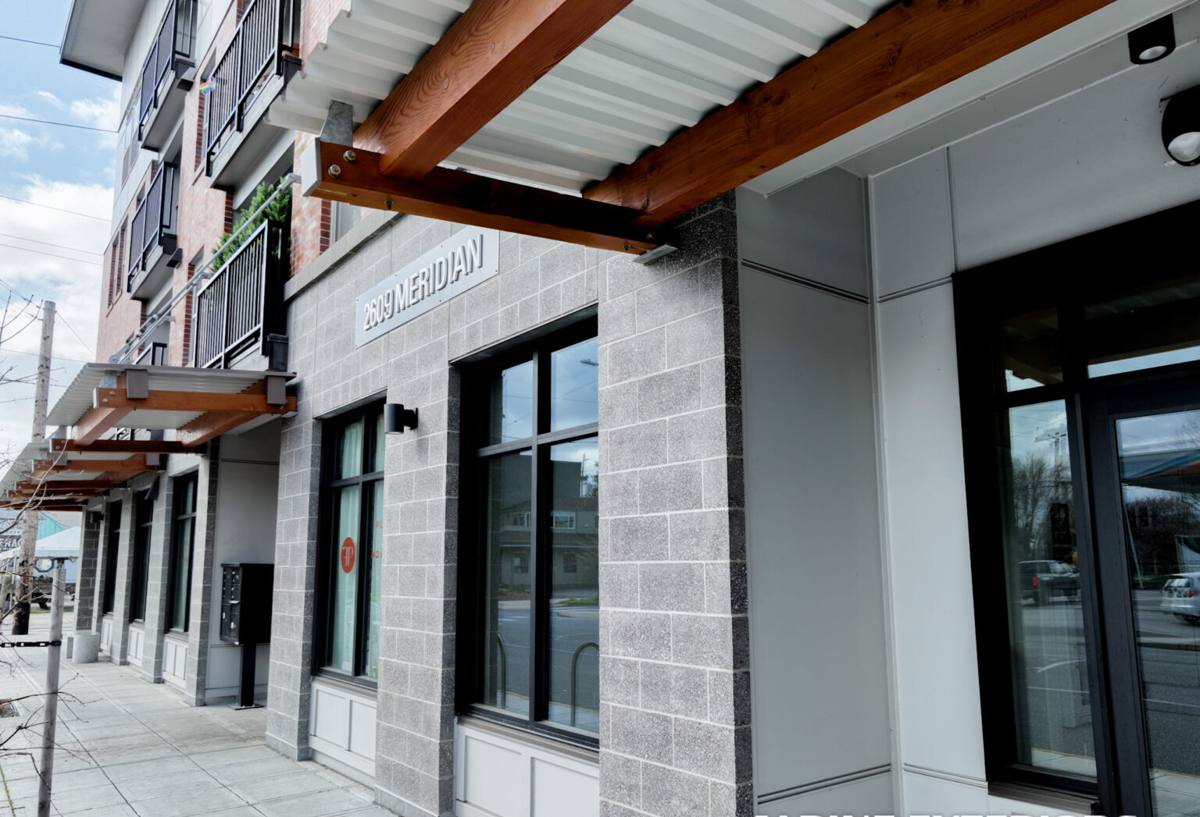
What North Everett's Climate Does to a Home's Exterior
Salt Air Off Port Gardner Bay
Homes in North Everett sit close enough to Port Gardner Bay that salt-laden air is a regular feature of the local climate, not just an occasional coastal breeze. Salt exposure accelerates corrosion in exposed metal fasteners and trim, and it can speed up fading and chalking on siding finishes that aren't built to handle it. It's a slow, cumulative effect — nothing fails overnight — but it shows up years earlier on the wrong materials than homeowners expect.
Driving Rain and Wind
Storms coming off the water don't fall straight down; wind pushes rain sideways, drives it up under lap joints, and forces it into any seam, corner, or penetration that isn't properly flashed and sealed. On a hillside lot with more open exposure, that wind-driven pattern is more pronounced than it is on a sheltered, low-lying street. Siding that relies on paint or caulk alone to keep water out, rather than a correctly built drainage plane behind it, tends to let moisture in exactly where a homeowner can't see it happening.
A Moss Season That Runs Most of the Year
Mild temperatures and near-constant moisture give moss, algae, and mildew a long growing season here, and North Everett's mature tree canopy makes it worse — shaded walls and north-facing elevations stay damp far longer between storms than open, sun-exposed walls do. Siding with any real surface porosity gives moss something to grip onto, and once it takes hold, it holds moisture directly against the material underneath.
Why Fiber Cement Is the Right Answer Here
Fiber cement doesn't rot, it doesn't feed moss and mildew the way wood-based products can, and it isn't vulnerable to the same heat and impact issues that make vinyl a poor long-term fit for a marine-influenced climate like this one. That's true of fiber cement broadly. But we install James Hardie specifically, and for North Everett homes the reasons come down to three things: the board itself, the finish, and the warranty.
The Board — Engineered for This Climate Zone
We install Hardie's HZ5 product line, which is engineered specifically for colder, wetter climate zones like the Pacific Northwest rather than a single formulation sold everywhere. That matters on a coastal-adjacent lot in North Everett more than it would somewhere drier, because the board is formulated to handle the moisture cycling this region puts it through, season after season.
The Finish — ColorPlus Factory Application
Most Hardie siding we install carries ColorPlus Technology, a color finish baked onto the board at the factory under controlled conditions rather than brushed or rolled on-site after installation. That matters directly for salt air and moss resistance — a factory-cured finish holds up to fading and chalking better than field-applied paint, and it doesn't give moss the same textured surface to grip that a weathered paint film can develop over time.
The Warranty and Non-Combustible Material
Fiber cement is non-combustible, which matters given how many North Everett properties border wooded lots and mature landscaping. James Hardie backs its siding with a strong, transferable warranty structure — a real consideration on a home in a neighborhood where houses tend to change hands to owners who care about the character and condition of what they're buying.
Fiber Cement vs. the Alternatives for an Older North Everett Home
Homeowners in this neighborhood often ask how fiber cement stacks up against vinyl, engineered wood, or keeping the original wood siding in place. Here's how those options compare against the specific conditions this part of Everett puts an exterior through:
| Material | Salt Air & Moisture Resistance | Moss Resistance | Fits Older Home Profiles | Long-Term Upkeep |
|---|---|---|---|---|
| James Hardie fiber cement | Strong — HZ5 formulation, ColorPlus finish | Good — dense, low-porosity surface | Yes — accurate lap, shingle, and panel profiles | Low — periodic washing |
| Vinyl siding | Moderate — can warp or fade with sun and heat cycling | Fair — seams and laps can trap debris | Limited — thinner profile reads differently on character homes | Low, but repainting isn't possible if it fades |
| Engineered wood siding | Weaker — wood-based core sensitive to sustained moisture | Fair to poor depending on coating | Yes — close to traditional wood look | Moderate to high — coating and edge sealing matter |
| Original wood siding (repaired/repainted) | Weak against sustained coastal moisture over time | Poor without frequent maintenance | Yes, if original material is sound | High — regular painting and rot repair |
None of this is a knock on a homeowner who's kept original wood siding going through careful maintenance — some of it holds up fine when it's been well cared for. But when that siding is failing and it's time to replace it, fiber cement is what gives a North Everett home the closest match to traditional profiles without the ongoing rot and moisture risk that comes with wood in this climate.
What a Correct Fiber Cement Install Actually Involves
Fiber cement performs the way it's supposed to only when it's installed to spec, and a lot of the work that determines whether it lasts happens behind the board, where a homeowner never sees it. On an older North Everett home — especially one being resided over a previous layer of siding — that means:
- Full tear-off to sound sheathing rather than installing over old siding, so any hidden rot or moisture damage gets caught and fixed rather than sealed in
- A correctly installed weather-resistive barrier and drainage plane behind the siding, giving wind-driven rain somewhere to go besides into the wall assembly
- Manufacturer-specified fastening — right fastener type, spacing, and penetration depth — since under- or over-driven fasteners are one of the most common install defects that shorten a fiber cement job's life
- Correct clearance between the bottom of the siding and grade, decks, roof lines, and hardscaping, so splash-back and standing moisture don't sit against the board
- Properly flashed and sealed windows, doors, and penetrations, since those transitions are where wind-driven rain finds its way in on a poorly executed job
- Factory-cut and field-cut edges sealed per Hardie's specifications, since an unsealed cut edge is a weak point for moisture intrusion regardless of how good the board itself is
- Correct joint and corner treatment appropriate to the specific Hardie product line being installed — lap, panel, or shingle profile each have their own detailing
Skip any one of those steps and the siding can still look right for a while. The problems that show up later — moisture behind the board, a fastener line telegraphing through the finish, a corner that starts letting water in — usually trace back to one of these details being rushed or skipped at install.
What We Typically Find on Older North Everett Homes
Because a lot of North Everett's housing stock has already been resided once, or still has original wood siding under a layer of paint, a few patterns come up often enough to be worth naming honestly. Homes previously sided without a proper drainage plane behind the material sometimes have hidden moisture damage in the sheathing that only surfaces during tear-off. Homes with heavy tree cover often show more advanced moss and algae growth on north-facing and shaded walls than the rest of the exterior, even when the front of the house looks fine. And older trim, fascia, and window flashing details sometimes need attention alongside the siding itself, since a new install over compromised trim just moves the moisture problem rather than solving it. None of these are reasons to worry — they're simply what a straightforward assessment on an older home in this neighborhood tends to turn up, and they're addressable as part of a properly scoped project.
How Our Process Works
We start with a site visit to look at the home's actual condition — existing siding and trim, signs of moisture or rot, tree cover and shade patterns, and how exposed the lot is to wind off the bay. From there we talk through what a correct install looks like for that specific house, including whether a full tear-off is warranted and what any hidden sheathing repair might involve once the old siding comes off. We handle the required permitting through the City of Everett as part of the job. Installation follows the sequence above — sheathing repair first if needed, then the weather-resistive barrier and drainage plane, then the Hardie siding itself with manufacturer-spec fastening and flashing throughout. We finish with a walkthrough covering what the finished exterior actually needs from the homeowner going forward, which for a properly installed ColorPlus system is minimal.
What Your Siding Still Needs From You
A correctly installed Hardie exterior is low-maintenance, not no-maintenance. A short list worth keeping in mind for a North Everett home specifically:
- Rinse the siding periodically to clear salt residue, pollen, and organic buildup, especially on walls facing the bay or sitting under trees
- Keep tree branches and shrubs trimmed back from the siding so shaded walls get more airflow and sun exposure between rain events
- Check caulking around windows, doors, and trim yearly and have any cracked or missing sealant addressed before the wet season sets in
- Watch for early moss or algae growth on north-facing and shaded walls and have it gently cleaned before it spreads or holds moisture against the board
- Have any impact damage or cracked boards repaired promptly rather than left, since a compromised board is a potential entry point for moisture behind it
Why It Matters That We Already Work North Everett
A crew that mostly works other parts of the county can still install fiber cement competently, but a North Everett project has variables that come up more often here than elsewhere in Everett — older construction that sometimes hides a layer or two of previous siding work, hillside lots with more open wind exposure, and shaded, tree-covered walls that need a closer look for moss and moisture than a sun-exposed street would. Working this neighborhood regularly means we're not guessing at those conditions when we scope your project. We've seen what tends to be hiding behind a second layer of old siding here, which walls typically need extra attention for moss and drainage, and which details are worth the extra time rather than being treated as an upsell.
If you're considering a Hardie re-side for a North Everett home and want a straightforward look at what your specific house needs, we're happy to walk the property with you for a free, no-pressure estimate.