 Everett
 Building a Deck That Actually Holds Up in Pinehurst
A deck in Pinehurst spends its entire life outside, unprotected by walls or roofline, absorbing whatever Snohomish County weather throws at it that week. Salt-tinged air moving in off Puget Sound and Port Gardner Bay, rain that comes in sideways during a real storm, and a moss season that can stretch across most of the calendar year all put more strain on an outdoor deck than most homeowners expect when they're picking out board colors and railing styles. None of that means a deck can't be built to last here — it means the build has to account for those conditions from the framing up, not just at the finish.
This page is about custom deck building specifically for Pinehurst homes: what the local climate actually does to a deck over time, what a correctly built one involves, how we approach the project from first site visit to final walkthrough, and why it's worth hiring a crew that already knows this neighborhood rather than one learning the area on your job.
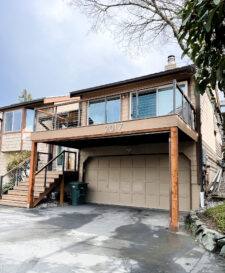
What Pinehurst's Climate Does to an Outdoor Deck
Salt Air
Everett sits on Port Gardner Bay, and homes throughout the surrounding area, Pinehurst included, get a steady dose of salt-carrying air even at a distance from the water. Salt is corrosive to exposed metal, and a deck has a lot of exposed metal — fasteners holding the decking down, brackets tying joists to beams, post bases, railing hardware. Corrosion on a fastener doesn't announce itself; a screw or bolt can lose real holding strength well before it looks obviously rusted, which matters a great deal on a structure people stand and walk on.
Driving Rain
Rain here rarely just falls straight down during a real system. Wind pushes it sideways, up under railing caps, and into any gap where two building materials meet without proper flashing. The connection where a deck ties into the house — the ledger board — is one of the most common places water gets in on a deck that wasn't detailed correctly, and it's also one of the hardest problems to catch early, because the damage happens inside the wall framing, out of sight.
A Long Moss Season
Cool, wet, and mild describes most of the year here, and that's exactly the combination moss and algae need to establish themselves. A horizontal deck surface holds water longer than a vertical wall does, which makes it one of the first places moss shows up on a property — especially under tree cover or on the shaded side of the house, both common on Pinehurst's residential lots. Once moss gets a foothold on a deck surface, it's not just unsightly; it holds moisture against the board and turns a dry-looking deck into a slip hazard after a light rain.
Choosing a Decking Material for This Climate
The surface material is usually the first decision homeowners want to make, and it's a real one — different materials handle moisture, salt exposure, and moss very differently. The three main categories are wood, composite, and cellular PVC, and the right choice depends on budget, maintenance appetite, and how exposed the specific site is.
| Material | Moisture & Salt Air Performance | Moss Resistance | Ongoing Upkeep |
|---|---|---|---|
| Cellular PVC | Excellent — no wood fiber to absorb water | Strong on smooth, non-porous surfaces | Occasional rinsing |
| Capped composite | Strong — protective cap resists moisture and staining | Good on most product lines | Occasional cleaning |
| Uncapped composite | Moderate — exposed fiber can absorb moisture over time | Fair — more prone to buildup | Periodic cleaning |
| Cedar | Moderate — natural rot resistance, but needs sealing | Fair when sealed and maintained | Regular oiling or staining |
| Pressure-treated wood | Weakest against sustained salt and moisture exposure | Poor without regular treatment | Regular sealing or staining |
Why Material Choice Matters More Here Than It Might Elsewhere
In a drier or more sheltered climate, the gap between a well-suited decking material and a mismatched one can take years to show. In Pinehurst, that gap shows up faster — a wood deck left unsealed even one season can start graying and hosting moss noticeably sooner than the same board would inland or under cover. That doesn't rule wood out; plenty of homeowners want the look and are willing to keep up with the sealing schedule. It just means going in with clear eyes about what each material actually asks of you going forward.
The Structural Details That Determine How Long a Deck Lasts
The decking surface gets most of the attention, but the framing, fasteners, and drainage underneath are what actually decide whether a Pinehurst deck is still solid in fifteen years or showing soft spots in five. A correctly built deck for this area includes:
- Pressure-treated framing lumber sized correctly for the actual span and load, not the minimum the plans allow
- Stainless steel or coastal-grade corrosion-resistant fasteners and hardware throughout — not standard-grade hardware that starts corroding within a few wet seasons
- Proper ledger board flashing at the house connection, since that's the single most common point of hidden water intrusion on an incorrectly built deck
- Correct board spacing for drainage and seasonal material movement, so wind-driven rain can actually shed and boards can dry between storms
- Joist and beam sizing matched to the specific decking product's span rating, not a generic framing layout reused across every job
- Adequate ventilation and grading beneath the deck so moisture doesn't sit trapped against the framing between rain events
- Railing and post connections built for real wind exposure, particularly on elevated or open decks
Skip any of those and the deck will very likely still look fine when it's finished. The consequences of cutting a corner underneath a deck don't show up on day one — they show up as a soft joist or a railing post that's started to work loose a few winters later, usually right when you'd want the deck at its most solid.
Permits and Footings in the Everett Area
Deck projects in and around Everett typically require a building permit, and footing depth and design get reviewed against local frost and soil-bearing requirements before work starts. We handle the permitting process as part of the job — pulling the permit, sizing footings to what the specific soil and structure call for, and scheduling required inspections — rather than leaving that paperwork for the homeowner to sort out mid-project. Skipping or shortcutting this step is one of the more common ways a deck ends up structurally undersized, and it's also a real problem if you ever go to sell the house and a past addition shows up unpermitted.
Design Considerations Specific to Pinehurst Lots
Beyond material and structure, a handful of site-specific questions shape a good custom deck design here. Many lots in this part of Everett carry mature tree cover, which affects sun exposure, moss pressure, and how much of the yard actually stays dry enough to be usable — a deck design that accounts for where the shade actually falls through the day tends to get used a lot more than one that doesn't. Grade and slope around the house also matter: a lot of Pinehurst homes sit on lots with some elevation change, which affects stair placement, railing height requirements, and how the substructure needs to be graded to keep water moving away from the house rather than pooling underneath the deck. None of this is guesswork we want to do on paper alone — it's why a site visit comes before any design gets finalized.
How Our Process Works
We start on site, not at a desk. That means walking the actual space, looking at drainage and grade, checking sun and shade patterns through the day, and — if it's a replacement — assessing what condition the existing structure is really in underneath the surface. From there we go through material and layout options that fit your budget and how you actually plan to use the space, whether that's a small deck off a kitchen door or a larger space built for entertaining.
Once the design and materials are set, we handle permitting and footing design, then build in sequence: substructure and framing first, sized and fastened for what this site actually needs, followed by the decking surface, railing, and any stairs or trim details. We close out with a walkthrough covering exactly what your specific material choice needs from you going forward — for most modern decking that's a short list, but it's not nothing, and we'd rather you hear it from us than find out the hard way.
Keeping a New Deck Ahead of Pinehurst's Weather
Even a correctly built deck in a well-matched material still needs some routine attention here to hit its full lifespan. A short list worth keeping on the calendar:
- Rinse the deck surface periodically to clear salt residue, pollen, and organic debris before it works into the surface or wears at a cap layer
- Keep the gaps between boards clear of leaves and needles so water and airflow can move the way the design intends
- Check railing posts, stair stringers, and hardware once a year, ideally before the wet season sets in, for early corrosion or loosening
- Trim back branches or plantings that shade the deck and hold moisture against it longer than necessary
- Treat any soft framing, standing water, or persistent moss underneath the deck as a structural issue worth addressing right away, not a cosmetic one that can wait
Why It Matters That We Already Work Pinehurst
A crew that mainly builds decks in drier, more sheltered parts of the state can still put together a competent structure, but a Pinehurst project has variables that don't come up as often elsewhere — the fastener grade that actually holds up to sustained salt exposure, the moss pressure that runs longer here than it does further from the water, and the tree cover and grade changes common to this part of Everett. Working this neighborhood regularly means we're not guessing at any of that on your project. We've seen which decking products actually perform against this specific combination of conditions and which framing and flashing details are worth the extra time rather than a line item to skip.
That familiarity also shows up in smaller, harder-to-quantify ways — knowing how a particular lot's drainage tends to behave, or being straightforward with you about what your deck genuinely needs to last versus what's just an upsell dressed up as a necessity. Whether you're replacing a tired deck, starting from scratch, or just want an honest read on what a custom deck would take on your Pinehurst property, we're glad to walk the site with you and lay out the real options. Use the form below to request a free, no-pressure estimate.