 Everett
 Roofing in Pinehurst: A Different Set of Conditions
Pinehurst sits in south Everett, close enough to Puget Sound and the Snohomish River lowlands that roofs here take a different kind of beating than roofs twenty miles inland. It's not just "it rains a lot in Western Washington." It's the combination of salt-laden marine air, wind-driven rain that gets pushed sideways under poorly lapped shingles, and a moss season that can run eight or nine months out of the year under the tree canopy common to this neighborhood. A roof that would be perfectly fine in a drier, more open part of Snohomish County can fail early here if it wasn't built with these specific conditions in mind.
When we install a new roof in Pinehurst, we're not just swapping old shingles for new ones. We're building a system — decking, underlayment, flashing, ventilation, and the roofing material itself — that's matched to what this particular микро-climate does to a house year after year.
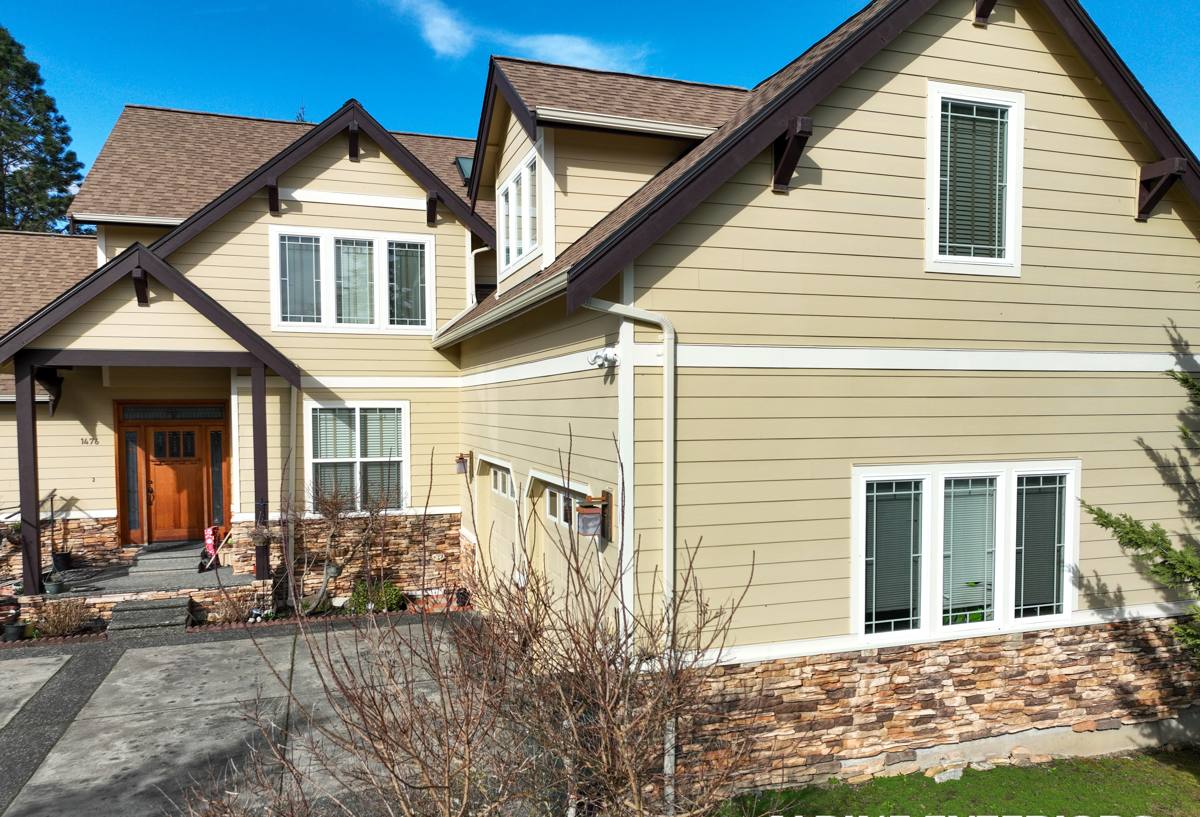
What Salt Air, Rain, and Moss Actually Do to a Roof
Salt Air
Even a few miles inland from the water, airborne salt accelerates corrosion on exposed metal — nail heads, flashing, vent stacks, gutter hardware. Cheap or under-coated fasteners and flashing corrode faster here than the same materials would in a dry inland climate, and once a fastener starts to rust, it's a slow leak waiting to happen.
Driving Rain
Everett gets weather that doesn't always fall straight down. Wind-driven rain off the Sound can push water sideways and upward under shingle edges, especially around valleys, chimneys, skylights, and low-slope transitions. A roof that only handles vertical rain well — meaning the underlayment and flashing details were done to the bare minimum — will eventually let water in at these transition points, even if the shingles themselves look fine.
Moss
Pinehurst's mature tree cover is part of what makes the neighborhood pleasant to live in, but it also means shade, moisture, and organic debris sit on roofs for long stretches. Moss and algae hold moisture against the shingle surface, work their way under tabs and granules, and shorten the usable life of a roof that isn't installed and maintained with moss resistance in mind.
Signs a Pinehurst Roof Needs Replacing, Not Just Patching
- Granules collecting in gutters and downspouts, or shingles that look bald and shiny in patches
- Moss or dark algae streaking that keeps coming back within months of cleaning
- Soft or spongy spots when walked (never walk a suspect roof yourself — this is for our inspection)
- Daylight visible through the attic roof deck, or damp insulation below the roofline
- Curling, cracked, or missing shingles, especially on the side of the house that faces prevailing wind and rain
- Flashing around chimneys, vents, or skylights that's rusted, lifted, or was caulked instead of properly re-flashed
- A roof approaching or past 20-25 years old (composition) or showing widespread wear regardless of age
If you're seeing two or more of these, a full inspection is worth it before deciding between repair and replacement. Patching a roof that's structurally at the end of its life usually costs more over a few years than doing the replacement once, correctly.
What a Correct New Roof Installation Involves
A new roof is more than the shingles you see. Every layer matters, and in a climate like Snohomish County's, cutting corners on any one of them shows up as a leak within a few years, not decades.
Deck Inspection and Repair
Once the old roofing is stripped, we inspect the sheathing for rot, delamination, or soft spots — common where old flashing failed or ventilation was inadequate. Any compromised decking gets replaced before anything new goes down. Roofing over bad decking is one of the most common corners cut in this trade, and it's not one we take.
Underlayment
Given how much wind-driven rain this area sees, we use a synthetic underlayment system with self-adhered ice-and-water membrane at the vulnerable points — eaves, valleys, around penetrations, and low-slope sections — not just a single layer of felt across the whole deck.
Flashing
New metal flashing at every chimney, wall intersection, valley, and vent penetration, properly stepped and lapped rather than caulked over old flashing. This is where most leaks originate, and it's also where the salt-air corrosion issue matters most — we use flashing and fasteners rated for coastal exposure.
Ventilation
Proper intake and exhaust ventilation keeps the attic dry and temperature-balanced, which reduces moisture buildup, extends shingle life, and helps limit the conditions moss needs to take hold. On a lot of older Pinehurst homes, ventilation was undersized or unbalanced by the original build — a re-roof is the right time to correct it.
Roofing Material
The visible layer, installed to the manufacturer's nailing and exposure specs, with algae-resistant materials specified for this climate wherever the budget allows.
| Component | Minimum-grade approach | What we install |
|---|---|---|
| Underlayment | Single-layer felt, uniform coverage | Synthetic underlayment + ice-and-water membrane at eaves, valleys, penetrations |
| Flashing | Re-used or caulked-over old flashing | New corrosion-resistant metal flashing, properly stepped and lapped |
| Fasteners | Standard galvanized | Corrosion-rated fasteners suited to coastal salt exposure |
| Ventilation | Whatever exists already | Assessed and balanced intake/exhaust for the actual attic volume |
| Shingle grade | Basic 3-tab, no algae treatment | Algae-resistant architectural shingles recommended for this moss climate |
Roofing Material Options for Coastal Everett Homes
Most Pinehurst homes are well served by a quality architectural (laminate) composition shingle with algae-resistant granules — it balances upfront cost, wind resistance, and moss resistance better than basic 3-tab shingles, and it's the product most manufacturers back with their stronger warranty tiers. For homeowners looking at longer-term options or a different look, metal roofing sheds moss and moisture more effectively and holds up well against driving rain, at a higher installed cost. We'll walk through what's right for your roof's pitch, exposure, and budget rather than push one product across every job.
| Material | Typical lifespan | Moss/algae resistance | Best fit |
|---|---|---|---|
| 3-tab composition | 15-20 years | Lower unless treated | Budget-driven projects, simpler roofs |
| Architectural (laminate) shingle | 25-30+ years | Good with algae-resistant granules | Most Pinehurst homes — best balance |
| Metal (standing seam) | 40-50+ years | Very good — sheds moisture, little for moss to grip | Homeowners planning long-term, heavier tree cover |
We don't install every product on the market. Where we steer homeowners away from a particular option, it's because of how it performs in this specific climate over time — moisture behavior, installation sensitivity, or warranty structure — not because the product is universally bad. We'll explain the trade-off plainly so you can decide with real information.
Our Installation Process
- On-site inspection — we walk the roof and attic, check the decking, ventilation, and existing flashing, and take photos of anything that affects scope or cost.
- Written estimate — a clear scope with material choice, tear-off approach, and price, no vague allowances buried in the fine print.
- Permit and scheduling — we handle the City of Everett or Snohomish County permit as required and schedule around weather windows, since a re-roof needs a reasonably dry stretch to do right.
- Tear-off and deck inspection — old roofing removed down to the deck, sheathing inspected and repaired as needed.
- Underlayment and flashing — ice-and-water membrane at vulnerable areas, synthetic underlayment across the field, new flashing at every penetration and transition.
- Ventilation correction — intake and exhaust balanced for the attic, not just left as-is out of convenience.
- Roofing installation — shingles or metal installed to spec, with attention to nailing pattern and exposure that manufacturers actually require for wind and warranty purposes.
- Cleanup and final walkthrough — magnetic sweep for nails, debris hauled off, and a walkthrough so you can see the finished work and ask questions before we consider the job done.
Permits and Local Requirements
Re-roofing in Everett and unincorporated Snohomish County generally requires a building permit, and the work needs to meet current wind and weather-exposure provisions of the adopted building code — which in this region accounts for exactly the kind of wind-driven rain and moisture exposure Pinehurst deals with. We pull the permit as part of the job so you're not left tracking down inspections yourself, and we build to pass, not just to look finished.
Why a Crew That Already Works Pinehurst Matters
Roofing crews that mostly work drier, more open parts of the region can underestimate what a shaded, tree-covered, near-marine neighborhood like Pinehurst actually needs — lighter underlayment, standard fasteners, minimal flashing detail. None of that shows up as a problem on day one. It shows up two or three winters later as a leak at a valley or a moss mat holding water against the shingles. A crew that regularly works this specific area already knows where the trouble spots tend to be on these roofs and builds accordingly from the start.
- Familiarity with how Snohomish County permitting and inspections actually run
- Experience specifying materials and fasteners for salt-air exposure, not just standard-grade parts
- A track record of flashing detail work in valleys and around penetrations — the most common leak points
- Understanding of how tree cover and shade affect ventilation and moss recommendations for this neighborhood
- Ability to schedule realistically around Western Washington's wet season
Maintaining Your New Roof in a Moss-Prone Climate
A correctly installed roof still benefits from basic upkeep in this environment. Keep gutters clear so water isn't backing up under the eave line, have moss and debris removed before it builds into thick mats (soft-washing rather than aggressive pressure washing, which can strip granules), and trim back overhanging branches where practical to reduce shade and debris load. None of this is difficult, but skipping it shortens the life of even a well-built roof.
If your Pinehurst roof is showing its age or you're just not sure whether repair or replacement makes sense, we're happy to take a look and give you a straight answer. Use the form below to request a free, no-pressure estimate.