 Everett
 Why Decks in Port Gardner Wear Out Faster Than the Manufacturer's Warranty Suggests
Port Gardner sits close enough to the water that salt-laden air is a daily fact of life, not an occasional weather event. Combine that with Western Washington's long stretch of driving rain and the moss season that follows it, and you have a set of conditions that ages a deck a lot faster than the same structure would age fifty miles inland. Fasteners corrode sooner. Ledger boards and joists stay damp longer than they should. Moss and algae take hold in shaded, north-facing spots and don't let go until late spring.
None of that means a deck in this part of Everett is doomed — it means the deck has to be built and replaced with those specific stressors in mind. A deck replacement done to a generic, one-size-fits-all standard will show its age within a few seasons here. One built for Snohomish County's marine climate holds up the way it's supposed to.
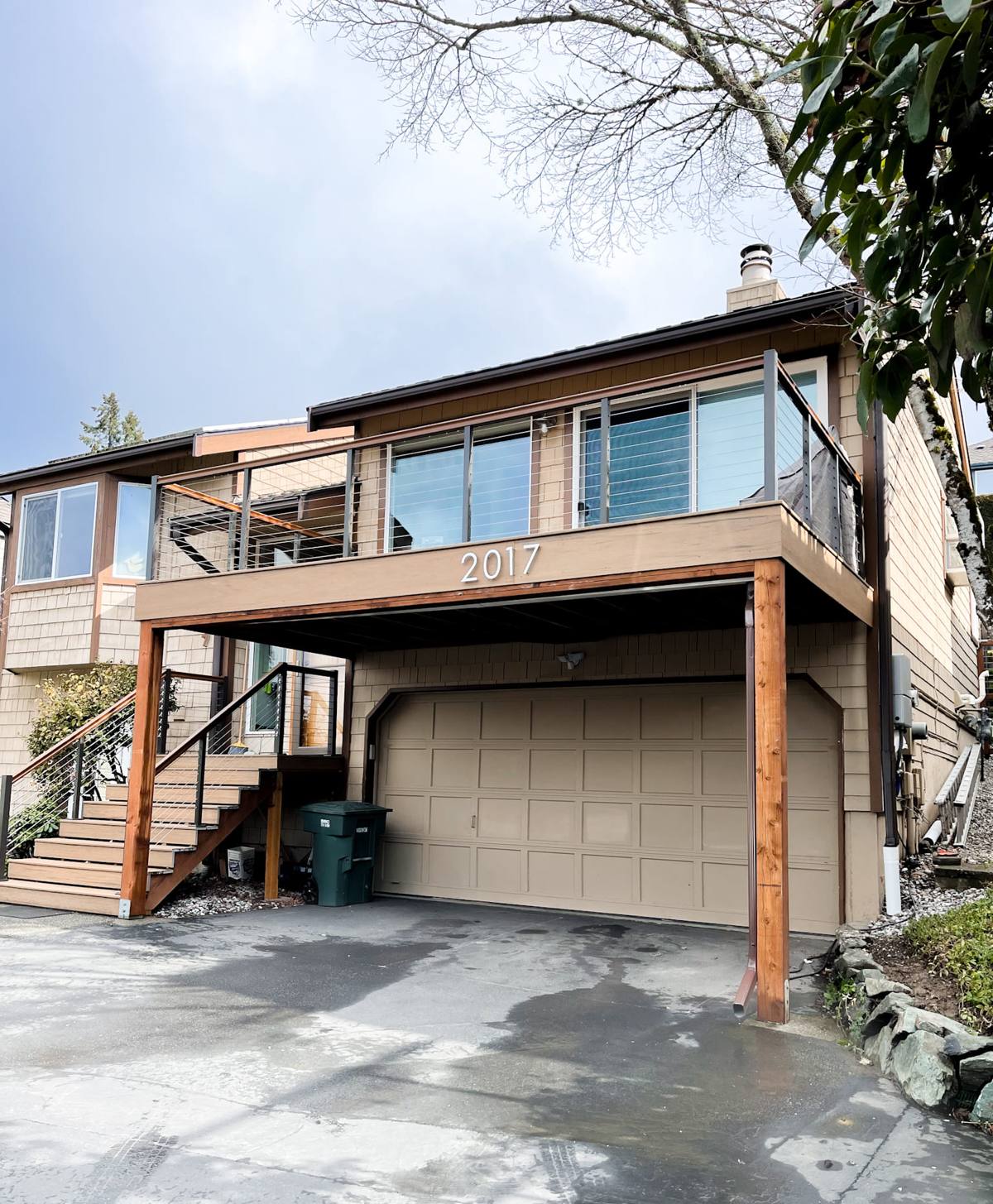
Signs a Port Gardner Deck Needs Full Replacement, Not Another Repair
Homeowners often ask whether a sagging or discolored deck can be patched instead of torn out. Sometimes it can. But there's a point where repair work is just delaying an inevitable, more expensive tear-out — and in a salt-air, high-moisture environment, that point arrives faster than most people expect. Here's what tells us a deck has crossed the line from "repairable" to "replace it":
- Soft, spongy decking boards, especially near the house or in shaded corners where moss holds moisture against the wood
- Visible corrosion or rust streaking around fasteners, joist hangers, or metal railing brackets
- A ledger board pulling away from the house, or gaps opening up where the deck meets the siding
- Persistent moss or algae growth that returns within weeks of cleaning, even after treatment
- Structural bounce or movement you can feel when walking across the deck
- Posts or footings that feel loose, or visible rot at the point where a post meets the ground or concrete
- Railings that wobble under normal hand pressure — a safety issue, not just a cosmetic one
When Repair Still Makes Sense
A deck with a sound frame, solid ledger attachment, and isolated surface damage — a few cracked boards, worn finish, a loose railing baluster — is usually a good repair candidate. The problem in this climate is that surface damage is often a visible symptom of moisture that's already working on the framing underneath. That's why we inspect the structure, not just the decking boards, before recommending either path.
What a Correct Deck Replacement Actually Involves
A deck replacement is more than pulling up old boards and screwing down new ones. Done right, especially in a wet, salt-exposed neighborhood like this, it's a full rebuild of everything that keeps water and salt from doing damage again.
Framing and Structure First
We replace or reinforce the framing wherever it shows softness, rot, or corrosion — joists, beams, posts, and footings all get evaluated on their own merits, not assumed to be fine because the surface boards were the visible problem. Joist spacing and beam sizing get set to current structural standards, not whatever spacing the original builder used decades ago.
Ledger Attachment and Flashing
The ledger board — where the deck attaches to the house — is the single most common failure point on older decks in wet climates. Water gets behind it, the framing rots from the inside, and by the time it's visible from outside, the damage is significant. A correct replacement means proper flashing that sheds water away from the house, not just caulk and hope.
Fasteners and Hardware
Salt air accelerates corrosion on standard fasteners and hangers. We use corrosion-resistant, coated fasteners and hardware rated for exterior and coastal-adjacent use throughout the structure, not just on the visible surface. Cutting corners here is exactly how a five-year-old deck starts showing rust streaks and loosening connections.
Choosing the Right Decking Material for This Climate
There's no universally "best" decking material — there's the best material for a given budget, maintenance appetite, and exposure. In a neighborhood dealing with salt air, heavy rain, and moss, some trade-offs matter more than they would somewhere drier and further inland.
| Material | Moss & Moisture Behavior | Maintenance | Typical Lifespan |
|---|---|---|---|
| Pressure-treated wood | Absorbs moisture; needs regular sealing to resist rot and moss staining | Annual cleaning and re-sealing recommended | 10-15 years with consistent upkeep |
| Cedar | Naturally rot-resistant but still absorbs surface moisture and can host moss in shaded areas | Periodic cleaning and finish maintenance | 15-20 years with upkeep |
| Capped composite | Does not absorb water like wood; moss and algae can still grow on the surface but don't damage the board | Occasional washing, no sealing or staining | 25-30+ years, per most manufacturer warranties |
| PVC decking | Fully synthetic, minimal moisture absorption, easiest surface to keep moss-free with routine washing | Low — occasional washing | 25-30+ years, per most manufacturer warranties |
We install all of these depending on what a homeowner wants, but we're upfront about the trade-offs. Wood costs less up front and looks the way people expect a deck to look, but it asks for real annual maintenance to hold up against this climate. Composite and PVC cost more initially and carry a higher up-front price, but they shift the long-term burden away from yearly sealing and staining — a meaningful difference for anyone who doesn't want moss scrubbing to be part of their spring routine every year.
Drainage and Moss Prevention Built Into the Design
A lot of moss and rot problems on Everett decks aren't a materials failure — they're a design failure. Water needs somewhere to go, and air needs to move underneath the deck. When a deck is built low to the ground, tight against a fence line, or without gapping that lets boards dry between rain events, moss and rot get a head start no material can fully resist.
Where a Port Gardner deck's layout allows it, we build in board spacing that supports proper drainage, keep decking clear of standing water pockets, and make sure ventilation underneath the structure isn't blocked by landscaping, skirting, or grade changes that trap moisture. On sites with heavy shade or a north-facing exposure, we'll talk through those choices specifically, since that's where moss problems concentrate.
Our Deck Replacement Process
1. On-Site Evaluation
We look at the whole structure — decking, framing, ledger, footings, and drainage — not just the parts that are visibly worn, so the plan addresses the actual cause of the deck's condition.
2. Straightforward Scope and Estimate
You get a clear breakdown of what's being replaced, what materials are involved, and why, before any work starts. No surprise change orders for problems we should have caught during evaluation.
3. Permitting
Deck replacements in Everett typically require a building permit, particularly for decks attached to the house or elevated above ground level. We handle that process as part of the job rather than leaving it for the homeowner to sort out.
4. Demolition and Structural Rebuild
Old decking, and any framing that doesn't pass inspection, comes out. Ledger flashing, joists, beams, and footings get addressed to current structural standards before a single new board goes down.
5. Decking, Railing, and Finish Work
Final decking, railings, and any stairs go in per the agreed material and layout, with fastener and hardware choices suited to this climate throughout — not just where it's visible.
6. Final Walkthrough
We walk the finished deck with the homeowner, cover basic maintenance expectations for the material chosen, and answer questions before calling the job done.
Why It Matters to Hire a Crew That Already Works This Neighborhood
Deck replacement isn't a one-size-fits-all trade, and a contractor who mostly works drier, inland areas can genuinely underestimate what salt air and a long moss season do to fasteners, framing, and finish over time. A crew that already works Port Gardner and the surrounding Everett waterfront-adjacent neighborhoods has seen how decks actually fail here — not in a manual, but on real houses a few years after installation.
That local pattern recognition shows up in small decisions: which fastener grade to spec, how much ventilation a low deck needs, where moss tends to concentrate on a given lot's orientation, and which material trade-offs are worth explaining to a homeowner before they choose. It's the difference between a deck that's technically built to code and one that's actually built for Snohomish County's climate.
Get a Straightforward, No-Pressure Estimate
If your deck is showing the wear this climate is known for — soft boards, stubborn moss, corroded hardware, or a structure that just doesn't feel as solid as it used to — we're glad to take a look and give you an honest read on repair versus replacement. Use the form below to request a free estimate, and we'll walk the deck with you before recommending anything.