 Everett
 Why Port Gardner's Location Puts Extra Stress on Siding
Port Gardner sits close to Everett's waterfront, and that location changes what siding has to deal with compared to homes further inland in Snohomish County. Salt-laden air off the bay, wind-driven rain, and a moss season that can stretch across most of the wet months all work on exterior walls at the same time. None of these on their own is unusual for Western Washington — but the combination, plus the proximity to open water, tends to show up as damage sooner than homeowners expect.
Salt Air and Metal Fasteners
Salt air speeds up corrosion on anything metal — nail heads, flashing, trim fasteners, and hardware. Once a fastener starts to rust, it can weep stains down the face of the siding and eventually lose its grip, which lets boards shift and open gaps at the seams. This is a slower process than storm damage, so it's easy to miss until the staining or the loose board is already there.
Wind-Driven Rain and Wall Assemblies
Homes closer to the water catch more sideways rain than sheltered lots do. Driving rain pushes water into laps, seams, and butt joints that would stay dry in a gentler storm. If those joints aren't sealed correctly — or if the caulking has aged out — water gets behind the siding instead of running off the face of it, which is where the real damage starts.
Moss Season and Hidden Moisture
Moss doesn't just look bad. It holds moisture against the siding surface for weeks at a time, especially on north-facing walls and anywhere shaded by trees or neighboring structures. That constant dampness can work into seams, fastener holes, and any spot where the surface finish has already been compromised, feeding rot in the material underneath even while the wall still looks intact from a few feet away.
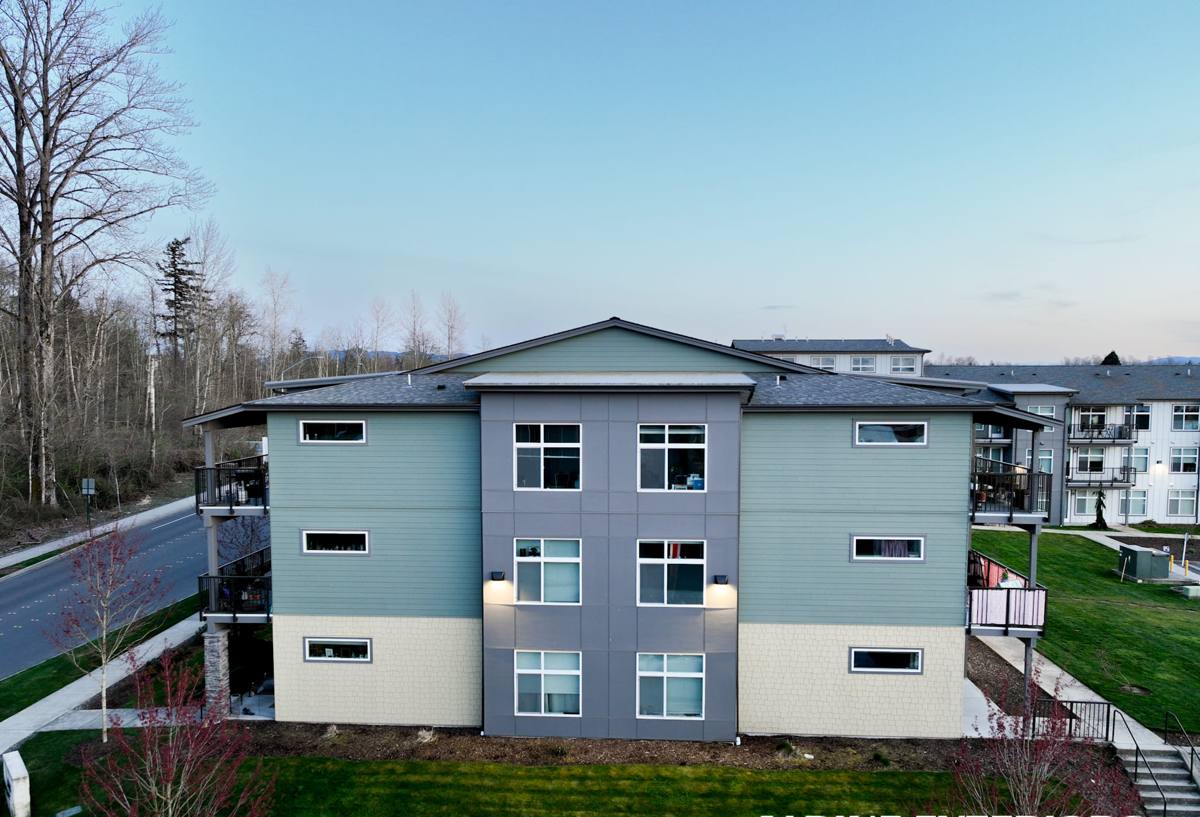
Signs Your Siding Needs Repair, Not Replacement
Most siding problems in Port Gardner show up gradually. Catching them early is usually the difference between a contained repair and a much larger job. Walk your exterior and look for:
- Soft or spongy spots when you press on the siding, especially near the bottom of walls or below windows
- Paint that's bubbling, peeling, or lifting away from the surface in patches
- Visible gaps or separation at seams, corners, or butt joints
- Moss or persistent green staining building up in the laps, not just on the roof
- Cracked, shrunken, or missing caulk around trim, windows, and joints
- Dark staining or streaking running down from a fastener, seam, or trim piece
- Boards that have visibly bowed, cupped, or pulled slightly away from the wall
Any one of these by itself might be a minor fix. Several showing up in the same area, or on the same wall, usually means water has been getting behind the siding for a while and the damage goes deeper than the surface.
What a Correct Siding Repair Actually Involves
A repair that's done right is not just cutting out a bad board, caulking the gap, and repainting. That approach treats the symptom and leaves the cause in place — which, in a wet, salty, moss-prone area like Port Gardner, means the same spot fails again within a season or two.
Checking What's Behind the Siding
Once a damaged section is pulled, we look at what's underneath: the house wrap or building paper, the sheathing, and the framing at that spot. If moisture has already reached the sheathing, that material has to be dried out or replaced before new siding goes back on — otherwise you're covering up rot instead of fixing it. This step is the one that gets skipped on rushed patch jobs, and it's the one that actually determines whether the repair holds.
Matching Material, Profile, and Color
A patch that doesn't match the surrounding siding in reveal, texture, or color stands out and can also create a seam that behaves differently in weather than the rest of the wall. On repairs we handle, we match the existing profile as closely as the product line allows, and on James Hardie siding specifically, ColorPlus finishes are formulated for touch-up and repair work, which keeps a patched section blending in rather than becoming a visible scar on the wall.
Repair or Replace? How We Help You Decide
Not every damaged wall needs a full re-side, and not every problem area is fixable with a patch. The honest answer depends on how far the damage has spread and how the rest of the siding is holding up. Here's roughly how we think through it on a Port Gardner home:
| Factor | Points Toward Repair | Points Toward Full Replacement |
|---|---|---|
| Extent of damage | Isolated to one or two areas | Recurring across multiple walls |
| Age of existing siding | Still well within its service life | Near or past its expected lifespan |
| Sheathing condition | Dry, sound wood behind the damaged section | Rot found in sheathing or framing |
| Material on the wall | Repairable, still-manufactured product | Discontinued profile or failing material system |
| Exposure | Sheltered side of the home | Direct salt air and wind-driven rain exposure |
We'll tell you plainly which side of that table your home falls on. If a repair is the honest answer, that's what we'll recommend — we're not trying to sell a full re-side when a targeted fix will hold.
Why We Repair Toward James Hardie, Not Vinyl or Wood
When a repair calls for replacing a full section — or when the damage is widespread enough that patching stops making sense — we do that work in James Hardie fiber cement, not vinyl, primed spruce, or cedar. That's a deliberate standard, not a default.
Vinyl siding can look like a quick, affordable patch, but it expands and contracts with temperature differently than fiber cement, and matching an old vinyl profile years later is often impossible since colors and lap sizes get discontinued. Wood species like cedar and primed spruce look good going on, but in an environment with this much salt air, driving rain, and moss, they need consistent repainting and sealing to keep moisture out — skip a cycle and rot can set in again in the same spot you just repaired. James Hardie fiber cement doesn't rot, doesn't feed moss the way wood can, and holds its factory ColorPlus finish far longer than field-applied paint on wood siding. It's non-combustible, engineered for the Pacific Northwest's wet climate in its HZ5 product line, and backed by a strong transferable warranty. When we're already opening up a wall to fix water damage, we'd rather put back a material that's built to handle the next twenty years of Port Gardner weather than one that's likely to bring us back out for the same repair.
Our Port Gardner Repair Process, Start to Finish
- Inspection. We walk the exterior, check the areas you're concerned about, and look for related damage nearby that isn't obvious yet.
- Diagnosis. We pull back the affected siding to check the house wrap, sheathing, and framing before quoting anything, so the estimate reflects what's actually there.
- Honest scope. You get a clear explanation of whether this is a contained repair or something that's spread further, along with the reasoning behind it.
- Repair. Damaged material is removed, any compromised sheathing is addressed, and new material is installed with correct flashing and sealing at every seam.
- Finish match. Replacement sections are matched to the surrounding siding as closely as the product allows so the repair doesn't stand out.
- Walkthrough. We go over the work with you and flag anything else on the exterior worth keeping an eye on going forward.
Living With Salt Air and Moss Season Between Repairs
Good repair work buys you years, but a little maintenance stretches that further, especially this close to the water. A soft wash — not a high-pressure blast, which can force water behind seams — once or twice a year keeps moss and salt residue from building up on the surface. Trimming back vegetation that shades north-facing walls cuts down on the moisture that feeds moss growth. And a quick visual check after a hard windstorm off the bay, looking for lifted caulk or a board that's shifted, catches small problems before a winter of driving rain turns them into bigger ones.
Why Local Experience in Port Gardner Matters
A contractor who mostly works drier, more sheltered parts of Snohomish County doesn't always know what to look for on a wall that's been catching salt air and wind-driven rain off Port Gardner Bay for years. The failure patterns are different, the exposure is different, and the repair has to account for that or it won't last. We work this area regularly, so when we're diagnosing a soft spot or a moss-stained seam, we already have a sense of what's likely underneath before we even pull the first board.
If you've got a section of siding that's showing damage, or you just want an honest read on whether it's a repair or something bigger, we're happy to take a look. Reach out for a free, no-pressure estimate — there's a form right below to get started.