 Everett
 Siding Installation Built for Riverside's Conditions
Riverside sits close to the Snohomish River and not far from the salt water of Puget Sound, which puts homes here in a tougher moisture environment than neighborhoods further inland. Between river humidity, wind-driven rain off the water, and a wet season that stretches for most of the year, siding in this part of Everett works harder than siding almost anywhere else in the state. A siding installation done right here isn't just about appearance — it's about managing water and organic growth for decades, not years.
We install siding across Everett and Snohomish County, and Riverside is one of the areas where we see the clearest evidence of what happens when siding is installed without accounting for local conditions: soft trim, streaked and mossy panels, swollen seams, and paint that fails years ahead of schedule. This page walks through what Riverside homes actually need from a siding installation, what a correct job involves, and how we approach the work.
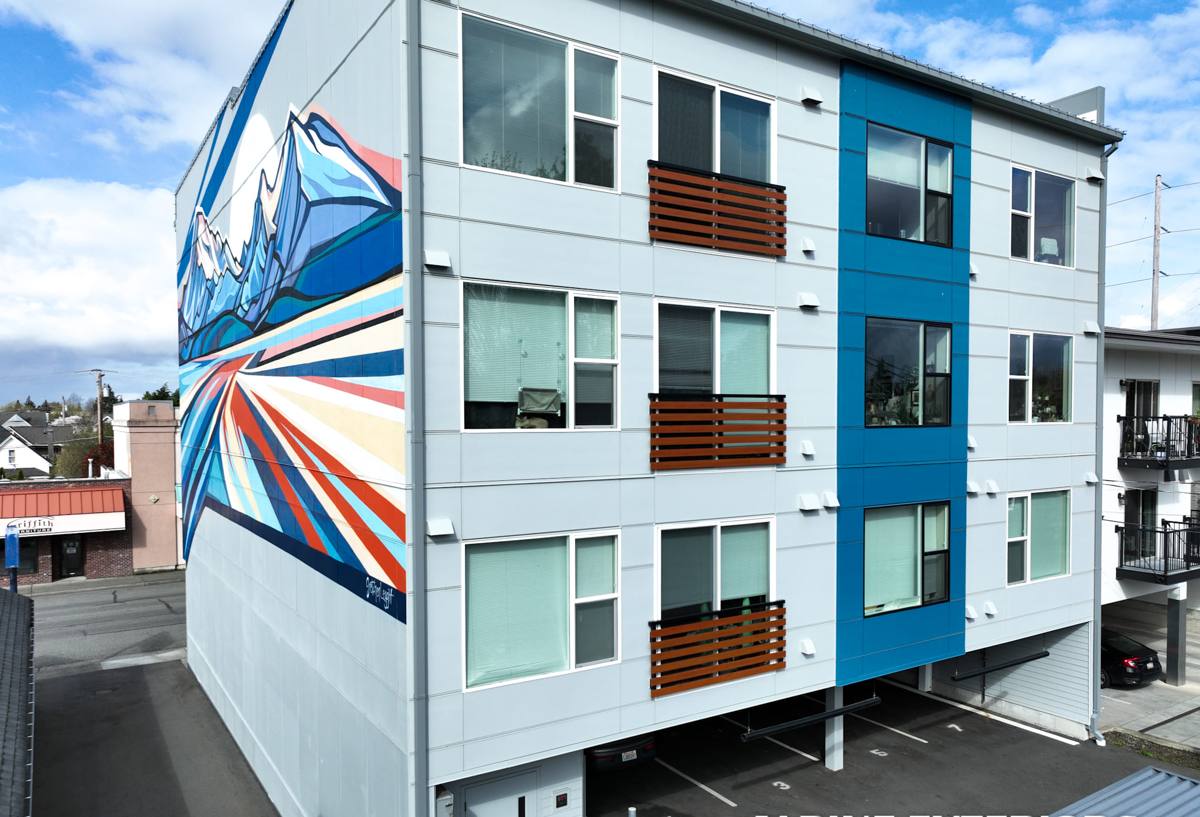
What Riverside's Climate Does to Siding Over Time
Three conditions define this neighborhood's exterior environment, and each one attacks siding in a different way.
Salt Air
Even a few miles inland from Puget Sound, airborne salt settles on exterior surfaces. It accelerates corrosion of exposed fasteners and metal flashing, and it degrades cheaper paint finishes faster than manufacturers' published fade ratings usually assume. Siding with a weak factory finish or unprotected fastener heads will show chalking, streaking, and rust bleed well before a homeowner expects it.
Driving Rain
Storms coming off the water tend to push rain sideways rather than straight down. That means siding here has to shed water that's being forced up under laps and into joints, not just rain falling vertically. Weak seams, under-lapped courses, and gaps at trim and window returns are where driving rain finds its way behind the cladding.
A Long Moss Season
Snohomish County's wet season runs long, and Riverside's proximity to the river keeps ambient humidity higher than drier pockets of Everett. Shaded walls, north-facing elevations, and anywhere air doesn't move freely become breeding ground for moss and algae. On absorbent materials, that growth doesn't just sit on the surface — it holds moisture against the substrate for months at a time.
Why We Only Install James Hardie Fiber Cement Siding
We've made a deliberate decision to install one product system — James Hardie fiber cement — and nothing else. That's not a marketing position; it's a response to what we've seen hold up in exactly this kind of environment and what hasn't.
Fiber cement is manufactured from cement, sand, and cellulose fiber. It doesn't absorb water the way engineered wood products do, and it doesn't expand and contract with humidity swings the way vinyl and some composite products can. That matters directly in Riverside, where humidity stays elevated for long stretches of the year. James Hardie also builds region-specific product lines (its HZ5 formulation, for example, is engineered for colder, wetter climates), and it finishes its boards with a factory-applied ColorPlus finish baked on under controlled conditions — a more consistent and better-adhered finish than most siding gets from a field-applied paint job.
We're not going to tell you every other product is worthless — plenty of homes around the country wear vinyl, LP SmartSide, or cedar without incident. But we don't install them, because in a salt-air, high-rainfall, long-moss environment like Riverside, the trade-offs (moisture sensitivity, seam and edge vulnerability, finish longevity, or ongoing maintenance) aren't ones we're willing to put our name behind. Fiber cement, installed correctly, is the product we trust to perform here for the long haul.
What a Correct Siding Installation Actually Involves
The material is only half the equation. Most siding failures we get called out to inspect — regardless of brand — trace back to installation shortcuts, not the product itself. A correct job includes:
- A continuous water-resistive barrier behind the siding, lapped correctly from bottom to top so any water that does get past the cladding drains out, not in
- Proper flashing at every window, door, and roof-to-wall intersection, integrated with the weather barrier rather than just caulked over the top
- Correct fastener type, spacing, and penetration depth — under-driven or over-driven fasteners are one of the most common causes of early siding failure
- Manufacturer-specified clearances from grade, roof lines, and decks so the bottom edge of the siding never sits in standing water or gets buried under landscaping
- Rain-screen or drainage gap detailing where the wall assembly calls for it, so moisture that reaches the back of the panel has somewhere to go
- Factory-cut or properly sealed field cuts on every board end, since an unsealed cut edge is the fastest way for fiber cement to take on water
Skip any one of these and the siding can look fine for a year or two while a moisture problem builds behind it — which is exactly the kind of failure that's expensive to diagnose after the fact.
How Our Process Works
1. Inspection and Assessment
We start by evaluating the existing wall assembly: what siding is there now, whether there's hidden water damage, how the current flashing and drainage details were handled, and what the wall needs corrected before new siding goes on. This step matters more in Riverside than in drier neighborhoods, because trapped moisture behind old siding is more common here.
2. Removal and Substrate Repair
Old siding comes off, and we address any sheathing rot, compromised flashing, or water-damaged framing before anything new goes up. Installing new siding over an unresolved moisture problem just hides it for another cycle.
3. Weather Barrier and Flashing
We install (or correct) the water-resistive barrier and integrate flashing at every penetration and transition — this is the layer that actually keeps a home dry, and it's the layer that's invisible once the job is done.
4. James Hardie Installation
Panels or lap siding go on to manufacturer specification: correct fastener schedule, correct exposure, correct clearances, and sealed or factory-finished edges throughout.
5. Trim, Caulking, and Final Finish
Trim and joints are sealed with products suited to this climate's UV and moisture exposure, and everything is inspected against the same standard we'd want on our own home.
6. Walkthrough and Cleanup
We walk the finished job with the homeowner, cover care and maintenance specific to their exposure (shaded elevations, water-facing walls, etc.), and leave the site clean.
Comparing Siding Materials for a Riverside Home
| Material | Behavior in Salt Air / High Moisture | Moss & Algae Resistance | Why We Don't Install It (where applicable) |
|---|---|---|---|
| James Hardie Fiber Cement | Doesn't absorb water into the board; factory finish resists salt and UV degradation | Dense, low-nutrient surface; ColorPlus finish sheds organic growth better than painted wood | — |
| Vinyl | Won't rot, but expands/contracts more with temperature and can warp or loosen at fasteners over time | Can trap moisture behind panels if drainage detailing is poor | Seam and expansion behavior isn't what we want backing our installations long-term |
| LP SmartSide (engineered wood) | Wood-based core is more moisture-sensitive at cut edges and butt joints | Requires diligent edge-sealing and maintenance to resist moss in shaded, damp areas | Moisture sensitivity at field cuts is a poor match for this climate |
| Cedar / Primed Spruce | Natural wood absorbs moisture readily; needs ongoing sealing and refinishing | Prone to moss and algae without frequent maintenance | Maintenance burden is high for a salt-air, high-rainfall environment |
Cost Factors for a Riverside Siding Project
Every home is different, but the same variables tend to move the price on a siding installation in this neighborhood:
| Factor | Why It Matters Here |
|---|---|
| Condition of existing sheathing | Homes with hidden moisture damage from past siding need repair before new siding goes on |
| Wall complexity | More corners, dormers, and trim details mean more flashing and cutting labor |
| Siding profile chosen | Lap siding, panel siding, and shingle-style Hardie products differ in material and labor cost |
| Access and exposure | River-adjacent lots with limited access or steep grades can add setup time |
| Trim and accessory scope | Full trim replacement adds cost but reduces long-term maintenance and moisture entry points |
We provide a written estimate that breaks these down so homeowners know exactly what they're paying for, rather than a single lump number.
Why Hiring a Crew That Already Works in Riverside Matters
Siding installation isn't uniform across Everett. A crew that mostly works drier, inland neighborhoods can do competent work and still miss the details that matter along the river — the extra attention drainage planes need on shaded, north-facing walls, the fastener corrosion resistance that matters more this close to salt water, or how much clearance to leave at grade on lots where soil stays damp longer into the season.
Working this neighborhood regularly also means we're familiar with the permitting expectations in Everett and Snohomish County, and we've seen how different lot orientations along the river handle sun, shade, and wind. That local pattern recognition is part of what keeps a siding job from becoming a callback.
Maintenance After Installation
James Hardie siding installed correctly needs far less upkeep than wood or engineered wood, but "less" isn't "none," especially in this environment. A simple annual routine keeps it performing as designed:
- Rinse the exterior annually to remove salt residue and organic buildup, especially on shaded or river-facing walls
- Check caulking at trim, windows, and joints yearly and re-seal any cracked or separated sections promptly
- Keep gutters clear so water isn't overflowing onto siding below the roofline
- Trim back vegetation and maintain clearance at grade so siding edges stay dry and ventilated
- Address any impact damage or chipped finish quickly, since exposed edges are the most vulnerable point on any siding material
If you own a home in Riverside and you're weighing a siding replacement, we're happy to take a look and give you a straight answer about what your home needs — no pressure, no inflated scope. Reach out for a free estimate and we'll walk the property with you.