 Everett
 Riverside Roofs Take a Different Kind of Beating
Homes in Riverside sit close enough to the water and the Snohomish River corridor that they catch weather most inland Everett neighborhoods don't deal with in the same combination. Wind funnels differently along the river, salt-tinged air off Puget Sound works on exposed metal and fasteners year-round, and tree cover in the older, established parts of the neighborhood means shaded roof sections that rarely dry out between storms. None of that is a problem on its own. It becomes a problem when a windstorm or heavy rain event finds the spot that was already weakened by months of moisture and moss, and turns a slow leak into a real repair.
A storm damage roof repair in Riverside isn't just "patch the hole." It's understanding why that spot failed first, so the fix holds through the next atmospheric river event instead of reopening in six months.
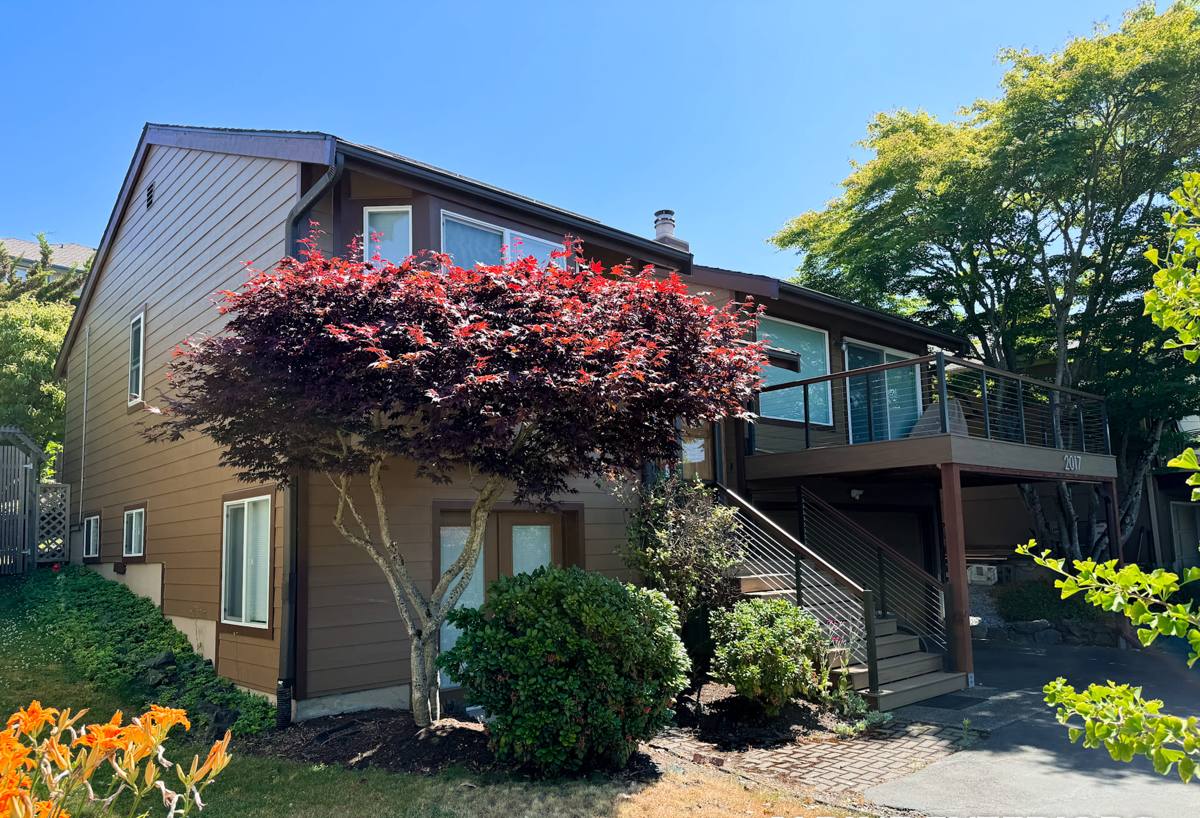
What Storm Damage Actually Looks Like Here
Not every storm-damaged roof is missing shingles. In our experience working Everett roofs, storm damage after a Pacific Northwest wind-and-rain event shows up in a few recurring ways:
- Shingles or shakes lifted or torn loose at ridges, hips, and eaves — the highest-wind-load areas
- Bruised or cracked composition shingles from wind-driven debris, which may not leak right away but fail early
- Flashing pulled or bent around chimneys, vents, and skylights, letting wind-driven rain track sideways under the covering
- Granule loss on shingles that were already thinning, which accelerates once the surface is exposed
- Gutters torn loose or clogged with storm debris, causing water to back up under the roof edge instead of running off
- Shingle edges that lift because moss growth had already worked underneath them, and wind finishes the job
That last one is the pattern we see most often in Riverside specifically. Moss doesn't cause storm damage by itself, but it sets the stage for it — and a homeowner who only deals with the visible storm damage without addressing the moss underneath is often looking at a repeat call in a year or two.
A Proper Inspection Comes Before Any Repair
We don't quote a storm repair from the ground or from a photo. A roof that looks fine from the driveway can have soaked decking underneath, and a roof that looks rough from below can sometimes be a straightforward fix. A real inspection covers:
On the roof
Walking the field to check for soft or spongy decking, lifted or cracked shingles, flashing seal condition at every penetration, and the condition of ridge and hip caps, which take the brunt of wind uplift.
In the attic
Checking for daylight through the decking, water staining on rafters or sheathing, damp insulation, and signs of long-term moisture that predate the storm. This is where we catch problems a surface look would miss entirely.
At the gutters and drainage path
Storm damage often isn't just the roof — it's what happens when water that should run off instead pools or backs up because a gutter or downspout failed during the same event.
Repair vs. Replacement: How We Make the Call
Most storm calls don't need a full roof replacement, but some do, and we'd rather tell a homeowner that honestly up front than sell a patch that won't last. Here's generally how we think through it:
| Factor | Leans Toward Repair | Leans Toward Replacement |
|---|---|---|
| Roof age | Under 12-15 years, otherwise sound | Nearing or past expected service life |
| Extent of damage | Localized to one slope or section | Spread across multiple slopes or the whole roof |
| Decking condition | Solid, dry, no rot found | Soft spots, rot, or repeated moisture damage |
| Matching materials | Shingle line still available or close match exists | Discontinued product, patch would visibly mismatch |
| Repair history | First storm-related repair on this roof | Several prior patches already on record |
When a roof lands in the middle of that table, we'll walk you through the trade-offs rather than push one direction. A well-executed repair on a sound roof is money well spent. Patching a roof that's already on its third repair usually isn't.
Our Storm Damage Repair Process
- Assessment and documentation. Full roof and attic inspection, with photos of the damage for your records and for any insurance claim.
- Emergency stabilization if needed. If there's active leaking or exposed decking, we get it weathertight first — tarping or temporary covering — before scheduling the permanent repair.
- Scope and estimate. A clear, written explanation of what's damaged, what needs to happen, and what it will cost, in plain language.
- Repair. Removing and replacing damaged shingles, shakes, or flashing; correcting the underlying cause where we find one, such as inadequate ventilation or a failed flashing detail, not just the symptom.
- Cleanup and final check. Debris removed, gutters cleared, and a final walk-through so you know exactly what was done.
Materials and Methods for a Marine, High-Moss Climate
What holds up in a dry climate doesn't always hold up here. On Riverside repairs we lean toward:
- Algae- and moss-resistant shingle lines where the existing roof allows it, since standard shingles pick up growth faster under tree cover and near the water
- Corrosion-resistant flashing and fasteners, given the salt content in air moving off Puget Sound
- Proper attic ventilation as part of any repair scope — trapped moisture from poor airflow is a bigger long-term threat here than in drier regions, and it accelerates decking rot from the inside
- Zinc or copper strips at the ridge on roofs with heavy shade, which discourage new moss growth without chemical treatment
On some older Riverside homes we run into untreated wood shake roofing. We're upfront with homeowners about the trade-offs: wood shake needs more frequent maintenance in a damp, shaded climate, holds moisture longer than composition or metal, and is more sensitive to installation quality during repairs. That's not a knock on the product — it's simply a maintenance and moisture-management commitment we want you to go in with eyes open about, especially if the roof sits under heavy tree canopy near the river.
Moss Season Is Its Own Maintenance Problem
Snohomish County's moss season runs long — cool, damp conditions for much of the year mean moss doesn't fully stop growing the way it might in a drier climate. On a Riverside roof with any tree cover, that means:
Moss holds moisture against the shingle surface far longer than open air and sun would allow. Over time it lifts shingle tabs, works into nail lines, and creates the exact weak points that wind and driving rain exploit during a storm. Regular moss removal and gutter clearing between storm seasons isn't cosmetic — it's what keeps a roof from becoming a repeat storm-damage call. If your roof already has visible moss, that's worth addressing at the same time as any storm repair, not as a separate project down the road.
Working With Your Insurance Company
Many storm damage repairs in this area involve an insurance claim. We can't promise what any specific policy will or won't cover, and we won't tell you otherwise. What we do is document the damage thoroughly — photos, a written scope, and a clear explanation of cause — so you and your adjuster have accurate information to work from. If your policy covers wind or storm damage, having a detailed, honest assessment on hand makes that process go smoother.
Why Hiring a Crew That Already Works in Riverside Matters
A roofer who works Everett regularly knows what a Riverside roof is actually dealing with — the moss cycle, the wind pattern along the river, the salt exposure, and the drainage quirks of homes on sloped or wooded lots near the water. That local familiarity matters more after a storm, when response time and getting the diagnosis right the first time both count. It also means we're familiar with Everett and Snohomish County permitting requirements, so repair work that needs a permit doesn't stall out on paperwork.
Here's a quick self-check if you're not sure whether a recent storm caused damage worth having looked at:
- New or growing water stains on interior ceilings or walls after a storm
- Shingles, granules, or shake pieces in the yard or gutters after high wind
- Visible daylight through the roof deck when viewed from the attic
- Gutters pulling away from the fascia or overflowing during rain
- A musty smell in the attic that wasn't there before
- Moss patches that seem to have expanded noticeably after a wet stretch
If any of that sounds familiar, it's worth having someone take a real look before the next storm finds the same weak spot.
If you're in Riverside and want an honest read on what a recent storm did to your roof, we're happy to come take a look. The estimate is free, there's no pressure, and you'll get a straight answer about whether it's a repair, a bigger job, or nothing to worry about yet.