 Everett
 Why Forest Park Roofs Wear Differently
Forest Park sits close enough to Puget Sound and the mature tree canopy that its roofs deal with a specific combination of stresses most inland neighborhoods never see. Salt-laden air off the water accelerates corrosion on exposed metal — nails, flashing, vent caps — long before it would in a drier climate. The tree cover that gives the area its shade also means constant leaf and needle litter collecting in valleys and gutters, holding moisture against the roof surface for days at a time. Add Snohomish County's long, wet fall-through-spring stretch and you get a roof that's rarely fully dry, which is exactly the condition moss and algae need to take hold.
None of this means a roof in Forest Park needs to fail early. It means the replacement has to be built with these conditions in mind from the start — the right underlayment, the right ventilation, and materials and details chosen for shade and moisture rather than a generic spec sheet.
Signs a Forest Park Roof Needs Replacing, Not Patching
Roofs in this neighborhood often show wear in a particular order because of the shade and moisture load. Knowing what you're looking at helps you decide whether a repair still makes sense or whether you're better off replacing before a small problem becomes a ceiling problem.
- Moss established in mats rather than a light green haze — once it's thick enough to hold water under the shingle tabs, cleaning only buys a little time
- Granule loss showing up in gutters as black or colored grit, especially on the north-facing or shaded slopes
- Shingles that are cupping, curling, or have gone brittle when you can safely check them from a ladder
- Dark streaking or soft, spongy decking felt underfoot near valleys and eaves
- Daylight visible through the attic roof deck, or insulation that's damp or matted
- A roof original to the house and past 20–25 years old, particularly on the shadier, moss-prone sides
If you're only seeing one or two of these and the roof is otherwise sound, a repair or a professional moss treatment may be the honest answer — we'll tell you that instead of selling a replacement you don't need yet.
What a Correct Roof Replacement Actually Involves
A roof replacement done right in this climate is not just stripping old shingles and nailing down new ones. The parts you don't see — decking, underlayment, ventilation, and flashing — determine whether the new roof lasts 25 years or starts showing the same moss and moisture problems in five.
Tear-Off and Deck Inspection
Every square foot of old roofing comes off down to the deck. This is the only point in the project where the sheathing is fully visible, so it's when we check for soft spots, delamination, or water staining from years of trapped moisture — common wherever moss has been sitting against the shingles. Any damaged decking gets replaced before anything new goes down; roofing over a compromised deck just hides the problem.
Underlayment and Moisture Control
This is where a lot of the climate-specific work happens. Self-adhered ice-and-water membrane goes down at eaves, valleys, and around every penetration — the spots where wind-driven rain and slow-draining moss cover put the most sustained pressure on a roof. The rest of the deck gets a synthetic underlayment rather than old-style felt, because synthetic holds up far better to the repeated wet-dry cycling and stays intact if weather moves in mid-project.
Ventilation
Balanced intake and exhaust ventilation keeps the attic close to outdoor temperature and lets moisture escape instead of condensing on the underside of the deck. Shaded roofs like the ones common in Forest Park dry out slower to begin with, so poor ventilation compounds the problem — it's one of the most common reasons a roof that looks fine from the street has a rotting deck underneath.
Flashing and Penetrations
Chimneys, skylights, vent stacks, and wall-to-roof transitions are where the vast majority of leaks actually start, not in the open field of shingles. We use new flashing at every penetration rather than reusing old pieces, and step-flash any wall intersections properly instead of relying on sealant alone — caulk is a maintenance item, not a waterproofing strategy.
Choosing the Right Material for a Shaded, Wet Lot
There's no single "best" roofing material — the right choice depends on how much shade the lot gets, how the house is priced, and how much moss maintenance a homeowner wants to take on long-term. Here's how the common options compare for a Forest Park property:
| Material | Moss & Moisture Behavior | Typical Lifespan | Maintenance |
|---|---|---|---|
| Architectural (laminate) asphalt shingle | Good with algae-resistant granules; still needs periodic moss removal on shaded slopes | 25–30 years | Low-moderate |
| 3-tab asphalt shingle | Thinner profile holds moisture longer against the deck; moss takes hold faster | 15–20 years | Moderate-high |
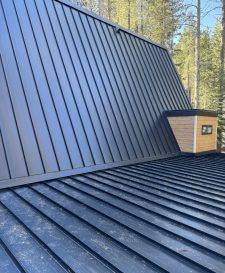
| Standing seam metal | Sheds water and debris fast; least hospitable surface for moss | 40–50+ years | Low |
| Synthetic/composite shingle | Resists moisture absorption well; performance varies by product line | 30–50 years | Low-moderate |
We install architectural asphalt shingle on most Forest Park homes because it strikes the right balance of upfront cost, appearance, and real-world moss resistance when it's paired with proper ventilation and algae-resistant granules. We steer away from basic 3-tab shingle for shaded, tree-covered lots specifically — not because it's a bad product everywhere, but because its thinner tab profile and shorter lifespan are a poor match for a roof that stays wet and shaded more days than not. Metal is a strong option where budget allows and a homeowner wants to largely stop thinking about moss.
What Drives the Cost
Every roof is priced on its own specifics, but these are the factors that move the number most on a typical Forest Park home:
| Factor | Why It Matters |
|---|---|
| Roof size and number of layers to remove | More tear-off labor and disposal, especially on older homes with two roofing layers |
| Roof pitch and access | Steeper roofs and limited ground access around mature trees add labor and safety staging |
| Deck condition | Rot or soft sheathing found during tear-off means plywood replacement, priced as it's found |
| Material selection | Asphalt, metal, and synthetic options span a wide price range per square |
| Ventilation upgrades | Adding proper intake/exhaust venting where an older roof was never balanced correctly |
| Number of penetrations | Chimneys, skylights, and multiple vents each need their own flashing detail |
We give a firm, itemized quote after an on-roof inspection — not a phone estimate — because the tree cover and older housing stock in this neighborhood make deck condition genuinely hard to predict from the ground.
Our Process
- Inspection. We walk the roof, check the attic from inside, and note moss, ventilation, flashing, and any soft decking we can identify before tear-off.
- Written estimate. A clear, itemized quote covering material, tear-off, disposal, and any anticipated deck or ventilation work.
- Scheduling around weather. We plan for realistic weather windows rather than rushing a roof open during a rain system — a common-sense call in this climate, not an excuse.
- Tear-off and deck check. Old roofing removed, deck inspected, any damaged sheathing replaced and documented before covering it up.
- Underlayment, flashing, and ventilation installed. The moisture-control layer that does the real long-term work.
- New roofing installed to manufacturer spec. Correct nailing pattern, exposure, and fastening for wind and rain exposure in this area.
- Final walk-through and cleanup. Magnetic sweep for nails, gutter check, and a review of the finished roof with the homeowner.
Why Local Experience in This Neighborhood Matters
A crew that regularly works Forest Park and the surrounding Everett neighborhoods already knows which slopes hold moss the longest, which older homes tend to have single-layer versus double-layer roofs, and how the tree canopy on a given street affects drying time and debris buildup. That's not a marketing point — it changes real decisions on the job, like where ventilation needs the most attention or which valleys need extra membrane. It also means we're a known, findable crew if a warranty question or a storm-related concern comes up years down the road, not a name from an out-of-town lead-generation site that won't answer the phone after the check clears.
Caring for a New Roof in This Climate
A properly installed roof still benefits from a bit of seasonal attention in a wet, tree-heavy area like this. A little upkeep goes a long way toward hitting the full lifespan of the materials:
- Clear gutters and valleys of needles and leaves at least twice a year, more often under heavy tree cover
- Have moss growth addressed early with a proper soft wash rather than scraping, which can lift granules
- Trim overhanging branches back from the roofline to cut down on shade, debris, and physical wear
- Check attic ventilation isn't blocked by insulation, which traps moisture against the deck
- Walk the roofline visually after major windstorms for lifted or displaced shingles
- Address any small leak or stain the day it's noticed — in this climate, small problems don't stay small long
If your Forest Park roof is showing moss, granule loss, or age, we're glad to take a look and give you a straight answer on repair versus replacement — no pressure, no upsell. Use the form below to request a free estimate.