 Everett
 Siding Repair Built for Edmonds' Coastal Climate
Edmonds sits right on Puget Sound, and that location shapes what happens to a home's exterior over time. Salt-laden air off the water, long stretches of driving rain through fall and winter, and a moss season that can run most of the year all put steady pressure on siding. A repair that works fine in a drier inland neighborhood can fail fast here if it doesn't account for these conditions. We work on homes throughout Snohomish County, and Edmonds properties consistently show a distinct pattern of wear tied directly to its waterfront exposure.
Siding repair in this environment isn't just about patching a hole or replacing a cracked board. It's about understanding why that board cracked in the first place, and making sure the repair doesn't just recreate the same failure a year or two later.
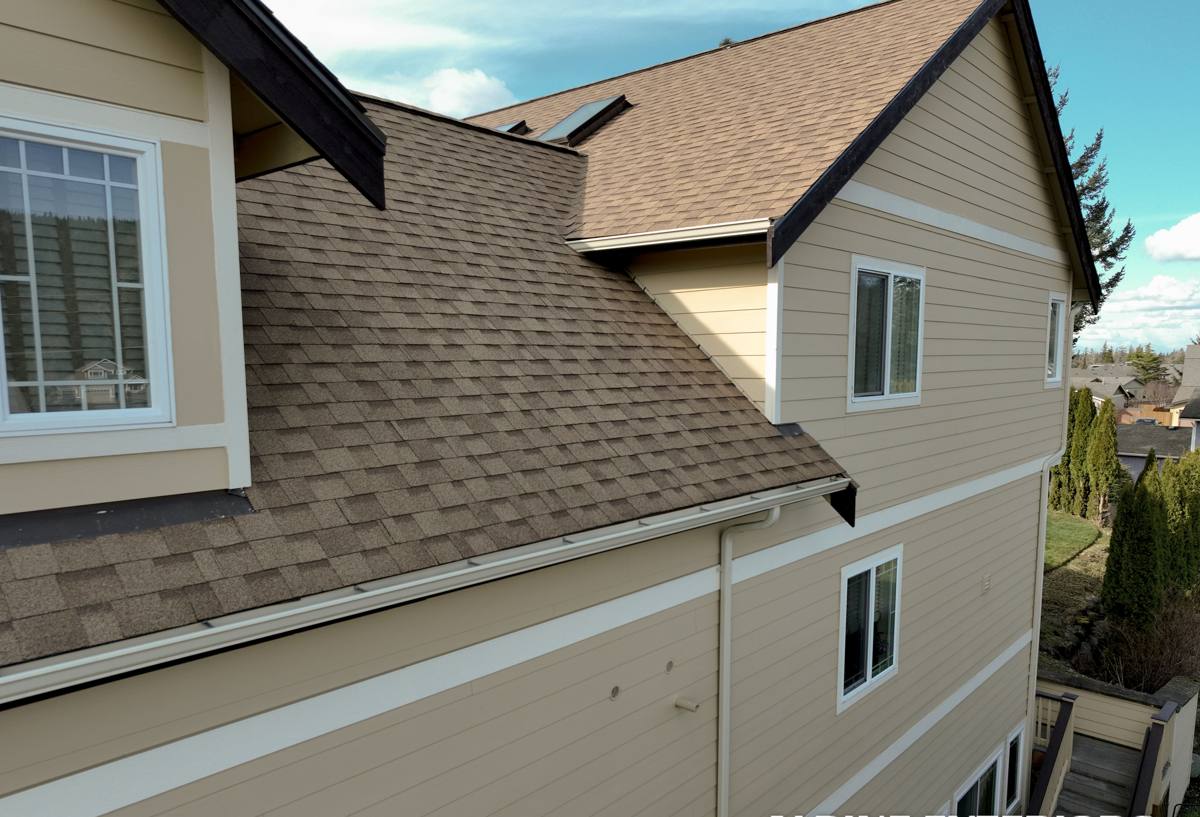
Signs Your Edmonds Home Needs Siding Repair
Most siding problems start small and get expensive if they're ignored through another wet season. Here's what we tell Edmonds homeowners to watch for:
- Soft or spongy spots when you press on the siding, especially near the bottom courses or around window trim
- Visible cracking, splitting, or buckling boards, particularly on walls facing prevailing wind and rain
- Persistent green or black staining that returns quickly after cleaning — a sign moss and algae have gotten a foothold
- Peeling or bubbling paint, which usually means moisture is trapped behind the finish, not just a cosmetic issue
- Gaps at seams, corners, or trim boards where caulking has shrunk, cracked, or pulled away
- Rust streaking near fasteners or flashing, a common sign in homes exposed to salt air
- A musty smell or visible staining on interior walls that share an exterior wall with damaged siding
Any one of these on its own might be minor. Several together, especially on the same wall, usually point to a moisture problem that's been building for a while.
What's Actually Damaging Siding in This Area
Salt Air
Even a few miles from the water, airborne salt accelerates corrosion on fasteners, flashing, and any metal trim components. It also breaks down lower-quality paint finishes faster than inland conditions would, which is part of why factory-applied, baked-on finishes hold up so much better here than field-painted siding.
Driving Rain
Puget Sound storms don't just drop rain straight down — wind pushes it sideways into seams, laps, and trim joints. Siding systems that rely on caulk alone to keep water out, rather than proper flashing and drainage behind the cladding, tend to show problems first at these pressure points.
Moss and Algae
Shaded, north-facing walls and anywhere tree cover keeps siding damp stay wet longer between rain events, which is most of the year in Snohomish County. Organic growth holds moisture against the siding surface, and on materials that absorb water, that moisture works its way into the substrate over time, causing swelling, rot, and eventual board failure.
Repair vs. Replacement: How We Decide
Not every damaged section needs a full re-side. We evaluate the scope of damage, the age and condition of the surrounding siding, and whether the underlying wall assembly is still sound before recommending a path.
| Situation | Usually a Repair | Usually Full Replacement |
|---|---|---|
| Damage location | Isolated to one or two walls or sections | Spread across most or all elevations |
| Underlying sheathing | Dry, solid, no rot found | Soft, rotted, or water-stained sheathing |
| Siding age | Relatively recent, matching material available | Old, discontinued profile, or already near end of service life |
| Cause of damage | Impact damage, isolated caulk failure, one bad flashing detail | Systemic moisture intrusion, widespread rot, chronic paint failure |
| Cost over time | Lower upfront cost, addresses the specific problem | Higher upfront cost, resets the clock on the whole exterior |
We'll tell you honestly which category your home falls into. If a repair is a reasonable fix, we won't push a full replacement just to increase the job size — but we also won't patch over rot that's going to keep spreading behind the wall.
What a Correct Repair Actually Involves
A siding repair is only as good as what happens underneath the visible surface. On every repair, we check the same things a full installation would address, just at a smaller scale:
Diagnosing the Real Cause
Before replacing a single board, we find out why it failed. Was water getting behind the siding from a flashing gap above a window? Was a gutter overflowing onto the wall below? Was the original installation missing a rainscreen gap or proper end-cuts sealed at the factory edge? Replacing the board without fixing the cause just buys a few years before the same spot fails again.
Removing Damaged Material Completely
Rot and water damage spread further than they appear from the outside. We remove material until we reach solid, dry substrate — not just the section that looks obviously bad.
Correcting Flashing and Drainage
Given how much driving rain this area gets, flashing details around windows, doors, and horizontal trim are usually where repairs actually need to happen, not just at the siding surface. We install or correct flashing per manufacturer specifications so water sheds outward instead of behind the cladding.
Matching Material and Finish
Because we install exclusively James Hardie fiber cement siding, repairs use genuine Hardie boards and trim rather than a mismatched substitute. Where possible, we match the existing ColorPlus factory finish so the repaired section blends with the rest of the wall instead of standing out as an obvious patch.
Sealing and Fastening to Spec
We use fasteners and sealants rated for coastal exposure, following James Hardie's installation and caulking guidelines rather than generalized shortcuts. Correct fastener placement and exposed-edge sealing matter more here than in drier inland areas.
Our Repair Process, Start to Finish
- Inspection and diagnosis — We walk the exterior, check problem areas from the ground and up close, and identify both the visible damage and its underlying cause.
- Honest scope assessment — We explain what we found, whether it's a targeted repair or something larger, and what it will take to fix it correctly.
- Written estimate — You get a clear breakdown of materials, labor, and any flashing or drainage corrections included, with no vague allowances.
- Material matching — We source James Hardie boards, trim, and ColorPlus finish colors to match your home as closely as possible.
- Removal and repair — Damaged material comes out, the wall assembly gets corrected where needed, and new siding goes in to Hardie's installation specifications.
- Final walkthrough — We review the completed repair with you before considering the job done.
Why We Only Repair With James Hardie Fiber Cement
We don't install or repair with vinyl, LP SmartSide, cedar, primed spruce, or comparable fiber cement alternatives like Cemplank or Allura. That's a deliberate standard, not a sales pitch. In a marine climate like Edmonds', material choice matters more than most homeowners realize.
James Hardie fiber cement is non-combustible, holds up to sustained moisture exposure far better than wood-based products, and doesn't experience the swelling and edge-deterioration that engineered wood siding can show when driving rain gets past the surface repeatedly. The ColorPlus factory finish is baked on under controlled conditions, which gives it better fade and wear resistance than field-applied paint — a real advantage against salt air and UV exposure off the Sound. Hardie's HZ5 product line is specifically engineered for climates with cold, wet weather patterns like ours.
None of that makes fiber cement maintenance-free. It still needs proper flashing, correct fastening, and periodic attention to caulking and paint film. But when it's installed and repaired to spec, it gives Edmonds homeowners a siding system that's genuinely matched to the conditions it has to survive.
Why Local Experience in Edmonds Matters
A contractor who works Snohomish County regularly already knows which walls in this area take the worst weather exposure, how moss establishes itself on shaded elevations, and what flashing failures look like before they turn into rot. That local pattern recognition speeds up diagnosis and reduces the chance of missing a related problem nearby the visible damage.
It also means we're not guessing at code requirements or typical construction details for homes built in this part of Washington. Repairs get done once, correctly, instead of needing a second visit because a detail specific to this climate got missed.
What Affects the Cost of a Siding Repair
| Factor | Why It Matters |
|---|---|
| Extent of hidden damage | Rot found behind the visible siding adds material and labor beyond the original scope |
| Wall height and access | Second-story or hard-to-reach sections require additional equipment and time |
| Flashing corrections needed | Fixing the underlying water entry point adds work beyond just replacing boards |
| Color and profile matching | Older or discontinued Hardie profiles may require broader replacement to keep a uniform look |
| Number of separate repair areas | Multiple isolated spots across different walls take more setup time than one contiguous area |
We don't quote broad numbers without seeing the actual damage — the range between a small trim repair and a multi-wall moisture repair is wide, and an honest estimate depends on what we find during inspection.
Get an Honest Look at Your Siding
If you're seeing soft spots, staining, or cracking on your Edmonds home's siding, it's worth having it looked at before another wet season pushes the damage further. We'll give you a straight answer about what's going on, whether it's a simple repair or something bigger, and what a correct fix involves — no pressure, no inflated scope. Fill out the form below to schedule a free estimate.