 Everett
 North Everett's Siding Problem Isn't Like Everywhere Else
North Everett sits close to Port Gardner Bay and the open water of Puget Sound, which means homes here deal with a specific combination of stresses that inland Snohomish County properties don't face as often: salt-laden air off the water, driving rain that comes in sideways during winter storms, and a moss and mildew season that can stretch across most of the year. Any one of these on its own is manageable. Together, they accelerate the wear on siding in ways that surprise a lot of homeowners who assumed their siding had another five or ten years left in it.
Salt air is corrosive to fasteners and metal trim, and it also holds moisture against exterior surfaces longer than dry inland air does. Wind-driven rain doesn't just fall on siding — it gets pushed sideways and upward into laps, seams, and trim joints that were never designed to handle water moving in that direction. And the Pacific Northwest's long damp season means anything that traps moisture — a cracked panel, a failed caulk joint, a spot where moss has taken hold — stays wet for weeks instead of drying out between storms. That combination is exactly why siding repair in this part of Everett needs to be evaluated differently than a general repair job somewhere drier.
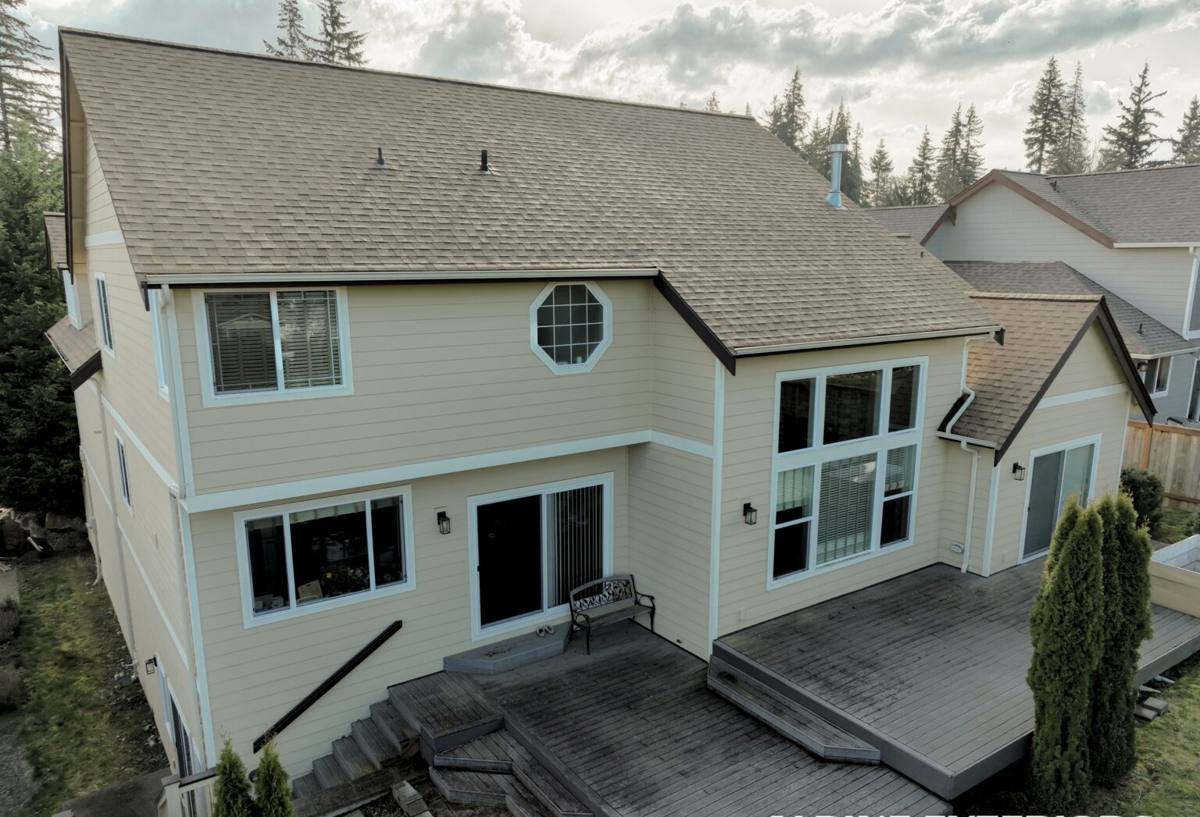
Signs Your Siding Needs Repair, Not Just a Look
Most siding problems don't announce themselves with a hole in the wall. They show up as smaller signs that are easy to write off as cosmetic. In our experience working on homes in this area, these are the ones worth taking seriously:
- Soft or spongy spots when you press on the siding, especially near the bottom courses or around window and door trim
- Visible cracking or splitting along panel edges, particularly on the side of the house that takes the most weather
- Persistent dark streaking or green-black growth that comes back quickly after cleaning
- Paint that's peeling, bubbling, or chalking well ahead of when it should
- Gaps opening up at butt joints, corner trim, or around penetrations like hose bibs and vents
- A musty smell near an exterior wall, or interior drywall that feels cool or damp to the touch
- Nail heads that have backed out or are showing rust stains bleeding down the siding
Any single item on that list might be minor. Several of them together, especially on a wall facing the water or prevailing weather, usually means moisture has already gotten past the surface and is doing damage you can't see yet.
Why Small Damage Doesn't Stay Small Here
In a drier climate, a cracked panel or an open seam might sit for a season without causing real harm. In North Everett's climate, that same gap is an entry point during nearly every rain event for months at a time. Water works its way behind the siding, soaks the underlying weather-resistive barrier and sheathing, and — if it goes unaddressed long enough — starts to compromise the framing itself. What would have been a same-day repair turns into a much larger, much more expensive project. That's the core reason we treat siding repair as a time-sensitive service rather than a someday-item on a homeowner's list.
What a Correct Siding Repair Actually Involves
A proper repair is more than swapping out a damaged board. It requires understanding why the damage happened in the first place, because replacing a cracked panel without addressing the cause just buys you a year or two before the same spot fails again. Our repair process looks at:
- The water management behind the siding — is the weather-resistive barrier intact, is flashing directing water outward instead of behind the wall, and is there a drainage gap where the assembly calls for one
- The extent of moisture intrusion — has water reached the sheathing, and if so, how far has it traveled from the visible damage
- The condition of surrounding material — sometimes the failure point is small but the material around it has also absorbed moisture and needs to come out too, even if it still looks fine on the surface
- The original installation details — clearance at grade, flashing at trim and penetrations, and fastening pattern, since a repair that repeats the same installation mistake will fail the same way again
This is the difference between a patch and a repair. A patch covers up the visible problem. A repair fixes the reason the problem happened, so the fix actually holds through another few decades of Everett winters.
Repair or Replacement? How We Help You Decide
Not every siding problem calls for a full re-side, and we don't push replacement when a targeted repair will genuinely solve the issue. But there's a point where patch-and-repeat stops making financial sense. The table below outlines how we think through that decision on North Everett homes specifically.
| Factor | Leans toward repair | Leans toward replacement |
|---|---|---|
| Extent of damage | Isolated to one or two areas | Spread across multiple walls or elevations |
| Underlying sheathing | Dry and structurally sound | Soft, delaminated, or rotted in multiple spots |
| Siding material and age | Sound material still under useful life | Material at or past its practical service life, or a product prone to repeat moisture problems |
| Water management design | Original flashing and drainage details were correct | Original installation lacked proper flashing or drainage, so the same failures will keep recurring |
| Cost over time | One-time fix resolves the issue | Repeated repairs are already costing more than a re-side would |
We'll walk the exterior with you, explain exactly what we're seeing, and give you an honest recommendation — not the answer that happens to be more profitable for us that week.
Our Siding Repair Process, Start to Finish
- On-site assessment. We inspect the damaged area and the surrounding siding, checking for soft spots, moisture readings, and signs the problem extends further than what's visible from the ground.
- Diagnosis, not just a quote. Before we talk numbers, we explain what caused the failure — whether it's a flashing detail, a caulk failure, moss holding moisture against the wall, or simple material fatigue.
- Careful removal. We pull damaged siding and trim without tearing into sound material around it, checking the weather-resistive barrier and sheathing underneath as we go.
- Correcting the cause. Any flashing, drainage gap, or fastening issue that contributed to the failure gets corrected during the repair — not left in place to cause the same problem again.
- Matched, code-compliant replacement. New material is installed to current best practice for clearance, fastening, and flashing, matched as closely as possible to your existing siding.
- Final walk-through. We review the completed work with you and point out anything else on the exterior worth keeping an eye on going forward.
When Repair Isn't Enough: Why We Only Install James Hardie
Sometimes a repair assessment turns up something bigger — siding that's failing broadly because of the material itself, not just one bad installation detail. When that's the case, we're straightforward about it, and we only offer one path forward: James Hardie fiber cement siding. We don't install vinyl, LP SmartSide, or other wood-based or composite products, and that's a deliberate standard, not a sales pitch.
In a climate that pairs salt air with driving rain and a long wet season, the materials that struggle most are the ones sensitive to sustained moisture exposure — wood-based products that can swell or deteriorate if water gets past a compromised seam, and vinyl that can warp or crack under the region's temperature swings and impact from wind-blown debris. James Hardie's fiber cement formulation is non-combustible and engineered specifically for wet, marine-influenced climates through its HZ10 product line, which is built for exactly the coastal Pacific Northwest conditions North Everett sees. The factory-applied ColorPlus finish also means the color layer is baked on under controlled conditions rather than field-applied, which matters in an area where humidity and rain can interfere with paint curing on a jobsite.
We're not going to tell you every other product on the market is worthless — plenty of homes have gotten reasonable service out of other siding materials. What we will tell you is that after years of doing repair work on this coastline, we've standardized on the one product system that consistently gives homeowners the fewest repeat moisture problems, and that's what we stand behind with our own installation work and warranty.
Moss, Mildew, and Coastal Grime: What to Do Between Repairs
A big part of protecting your investment in North Everett is simple maintenance between repair visits. Moss and algae don't just look bad — they hold moisture against the siding surface and, over time, can work into seams and fastener holes. A little routine attention goes a long way:
- Keep gutters clear so overflow doesn't run down the siding face repeatedly
- Trim back shrubs and trees so siding gets airflow and isn't shaded into staying damp all day
- Rinse siding gently once or twice a year to knock back moss and grime buildup before it takes hold
- Check caulking at trim joints, window edges, and penetrations annually, since it's often the first thing to fail
- Look at the bottom few courses of siding near grade each fall, since splash-back and standing water do the most damage there
- Address small cracks or gaps as soon as you notice them, before the next round of storms drives water behind them
None of this replaces a professional repair when there's real damage, but it meaningfully extends how long your siding — and any repair work done to it — actually lasts.
Why It Matters That Your Repair Crew Already Works This Area
Siding repair on a home near Port Gardner Bay isn't the same job as siding repair twenty miles inland, and a crew that mostly works drier, more sheltered areas can miss details that matter here. Knowing how wind-driven rain typically hits a given exposure, how quickly moss reestablishes in this climate, and which installation shortcuts tend to fail first in salt-influenced air isn't something you pick up from a manual — it comes from doing the work on homes like this one, repeatedly, through multiple wet seasons.
That local familiarity also means we're not guessing at what "normal wear" looks like for a North Everett home versus a genuine problem. We can tell you honestly whether what you're seeing is typical weathering or something that needs attention now, because we've seen the pattern before on homes just like yours in this same stretch of Snohomish County.
Get an Honest Look at Your Siding
If you've noticed cracking, staining, soft spots, or recurring moss on your siding, it's worth having it looked at before another wet season adds to the damage. We'll walk your exterior, tell you plainly what we find, and lay out your real options — repair or replacement — without pressure either way. Use the form below to request a free estimate, and we'll get back to you to schedule a time to take a look.