 Everett
 Why Silver Lake Decks Wear Out Faster Than the Brochure Says
A deck in Silver Lake doesn't fail because it was built badly. It fails because it sits outside, uncovered, in one of the wetter corners of Snohomish County, month after month, year after year. Between the driving rain off Puget Sound, the salt-laden air that works its way inland on windy days, and a moss season that can stretch from October clear into May, wood and fasteners take a beating that homeowners in drier climates never have to think about. We've worked on enough decks in this neighborhood to know the pattern: the parts that fail first are almost never the boards you can see. It's the ledger connection to the house, the fasteners, and the framing underneath — the stuff hidden below the decking that quietly rots while the surface still looks fine.
That's the core problem with deck repair done wrong: cosmetic fixes on top of a structural problem underneath. A pressure wash and a coat of stain make a deck look great for a season, but if the joists are soft or the ledger flashing was never installed correctly, the deck is still getting worse. Good repair work here means understanding what our climate actually does to a structure over time, not just patching what's visible.
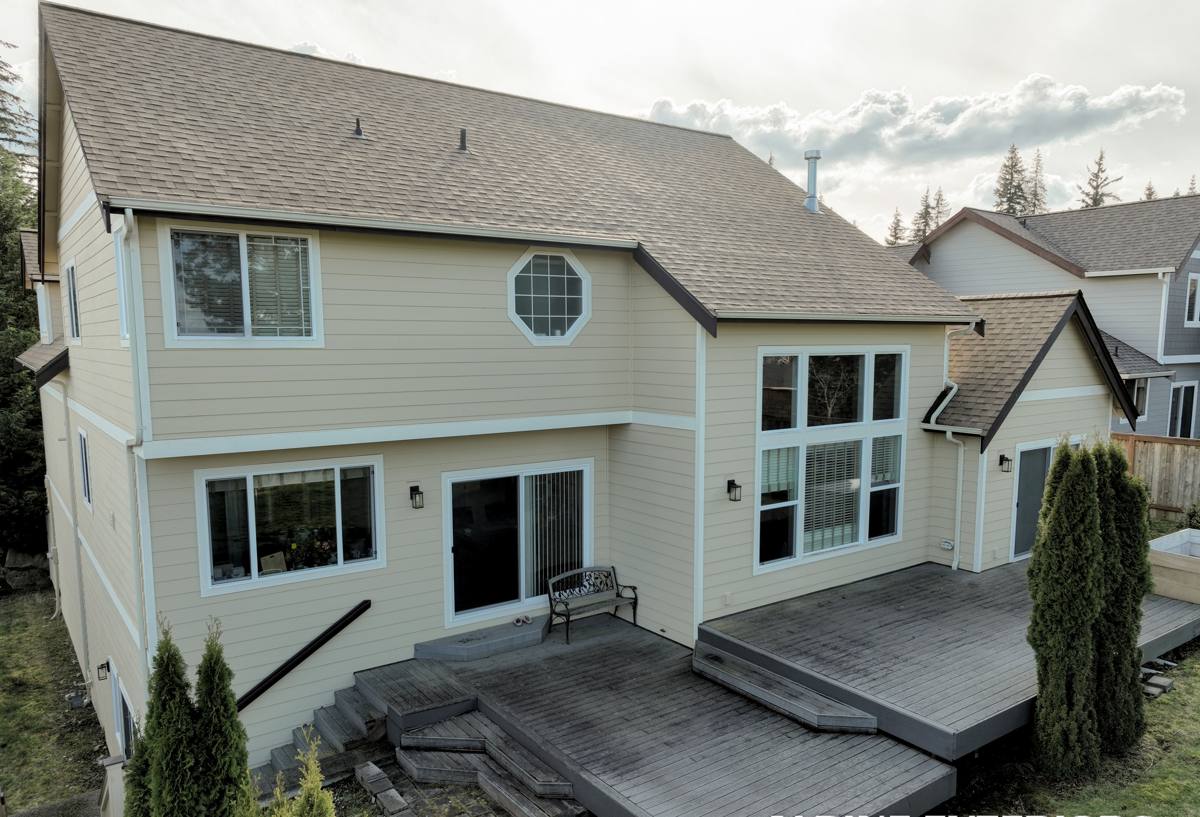
What the Local Climate Actually Does to a Deck
Moisture That Never Fully Dries Out
Everett's wet season is long, and Silver Lake's tree cover and lake-adjacent humidity mean decks here often don't get a real chance to dry between rain events. Wood that stays damp for weeks at a time is prime territory for rot fungus, especially where boards contact framing, around fastener heads, and anywhere water can pool instead of shed.
Moss and Algae Growth
A long moss season isn't just cosmetic. Moss and algae hold moisture against the wood surface, and on stairs and low-traffic areas they create a genuine slip hazard. Left untreated for a couple of seasons, moss growth can accelerate surface wear on both wood and composite decking.
Salt Air and Metal Fasteners
Salt-laden air moving inland corrodes standard fasteners faster than most homeowners expect. Nails, screws, and joist hardware that aren't rated for coastal exposure can rust, weaken, and eventually fail — sometimes years before the wood around them shows obvious damage.
Freeze-Thaw Cycling
We don't get extreme cold here, but we do get repeated freeze-thaw swings through the winter. Water that's worked into a crack or a fastener hole expands when it freezes, widening the damage a little more each cycle.
Signs Your Deck Needs Repair Now
Most deck problems give warning signs well before anything becomes dangerous. Walk your deck and check for these:
- Soft or spongy spots when you press or walk on the decking
- Boards that have visibly cupped, warped, or separated at the seams
- Rust streaks bleeding out around screw or nail heads
- Wobble or movement in the railings when you push on them
- Gaps, cracks, or dark staining where the deck meets the house (the ledger board)
- Persistent green or black growth that pressure washing doesn't remove for long
- Stair stringers that feel bouncy or uneven underfoot
- Visible daylight or water staining on framing members underneath the deck
Any one of these on its own might be minor. Several together, especially near the ledger or stairs, usually mean it's time for a proper inspection rather than another round of surface cleaning.
Repair or Replace? How We Help You Decide
Not every deck problem calls for a full rebuild, and not every deck is worth patching. The honest answer depends on how much of the structure underneath is still sound.
| Factor | Leans Toward Repair | Leans Toward Replacement |
|---|---|---|
| Framing condition | Joists and beams are solid, damage is localized | Rot or soft spots found in multiple framing members |
| Ledger board | Flashing intact, minor fastener corrosion | Ledger shows rot or was never flashed correctly |
| Age of structure | Under 15 years old, built to a decent standard | Older deck nearing the end of typical service life |
| Decking surface | A handful of damaged boards among otherwise sound ones | Widespread cupping, splitting, or moss staining across the surface |
| Code compliance | Railings and stairs already meet current code | Railing height, spacing, or footings don't meet current code |
Our first visit is about answering that question honestly — including telling you when repair is the smarter, cheaper option, and when putting more money into an aging structure doesn't make sense.
What a Correct Deck Repair Actually Involves
A repair that's done right addresses the cause, not just the symptom. On a typical Silver Lake deck repair, that means:
- Structural inspection — checking joists, beams, posts, and footings from underneath, not just the surface
- Ledger board evaluation — the connection to your house is the single most important structural point on the deck, and it's also the one most likely to have been under-flashed originally
- Fastener assessment — identifying corroded hardware and replacing it with fasteners and connectors rated for exterior, coastal-influenced exposure
- Framing repair — sistering or replacing any joists or beams that have soft spots or rot, rather than covering over them
- Decking replacement — swapping out damaged boards, matched as closely as possible to the existing material and spacing
- Railing and stair repair — tightening or rebuilding any component that's loose, undersized, or out of code
- Moisture management — flashing, proper board spacing, and drainage details that keep the same failure from happening again in the same spot
Skipping the framing and fastener steps is exactly how a deck ends up needing the same "repair" again two years later.
Decking Material Trade-Offs Worth Understanding
When we're replacing boards during a repair, homeowners often ask whether to stick with wood or switch to composite. There's no universally right answer — it depends on how the deck is used and what you're willing to maintain.
| Pressure-Treated Wood | Composite / Capped Composite | |
|---|---|---|
| Upfront cost | Lower | Higher |
| Maintenance | Needs periodic sealing/staining, especially in our wet climate | Minimal — occasional cleaning |
| Moisture behavior | Can absorb and release moisture; performance depends heavily on maintenance | Resists moisture absorption; capped products resist moss staining better |
| Moss/algae resistance | Prone to growth if not sealed and cleaned regularly | More resistant, though not immune |
| Repairability | Easy to spot-replace individual boards | Board matching can be harder with discontinued colors/profiles |
We install and repair both. Our standard is simply to make sure whichever material you choose is installed with the flashing, fastening, and spacing details that actually suit our climate — a lot of the "composite failed" or "wood rotted" stories we hear trace back to installation shortcuts, not the material itself.
Our Process for Silver Lake Deck Repairs
We keep the process straightforward because most homeowners just want a clear answer and a fair price:
- A no-pressure on-site inspection, including getting under the deck to check the framing and ledger connection
- A written estimate that separates cosmetic work from structural work, so you can see exactly what you're paying for and why
- Scheduling that accounts for our wet-weather windows — we plan around forecasts rather than fighting the rain
- The repair itself, with any hidden damage we find along the way flagged before we proceed, not billed as a surprise afterward
- A final walkthrough covering what we did and what to watch for going forward
Maintaining Your Deck Between Repairs
A few habits go a long way toward stretching the life of a repaired deck in this climate:
- Clean moss and debris off the surface and between boards at least twice a year, more often in shaded areas
- Keep gutters and downspouts clear so runoff isn't dumping extra water onto or under the deck
- Re-seal or re-stain wood decking on the manufacturer's recommended schedule, not just when it looks faded
- Check railings and stair connections for looseness each fall before the wet season sets in
- Keep planters and rugs off the decking surface where they trap moisture underneath
Why It Matters to Hire a Crew That Already Works in Silver Lake
Deck repair isn't identical everywhere. A crew that mostly works inland or in a drier climate will make different assumptions than one that works Everett and Snohomish County day in and day out. Knowing how fast moss reclaims a north-facing staircase here, how corrosion shows up on fasteners near the lake, and how ledger flashing needs to be detailed for our rain patterns comes from doing this work locally and repeatedly — not from a general contracting checklist.
There's also a practical side: local permitting. Depending on exactly where a Silver Lake property sits, deck work can fall under City of Everett permitting or Snohomish County jurisdiction, and the requirements aren't always identical. A crew that regularly pulls permits in this area already knows which office to call and what they'll ask for, which keeps your project from stalling on paperwork.
If your deck is showing any of the wear signs above, it's worth getting a second set of eyes on it before another wet season passes. We're happy to come take a look, tell you honestly whether you're looking at a repair or a replacement, and put together a free, no-pressure estimate — just fill out the form below.