 Everett
 Windows Built for Silver Lake's Weather, Not Just Its Views
Silver Lake sits in south Everett, close enough to Puget Sound to catch salt-laden air on windy days and far enough inland that homeowners sometimes forget how hard the local climate is on exterior building materials. Between the wind off the water, the long stretch of wet months, and the moss and mildew that creep across anything shaded and damp, windows in this part of Snohomish County take more abuse than most homeowners realize. A window that would last decades in a dry climate can start failing here in half that time if it wasn't installed correctly the first time.
This page is about one job, done right, in one neighborhood: window installation for Silver Lake homes. Not a general overview of every siding or roofing service — just what your windows actually need given where you live, what a correct installation looks like, and how we approach the work.
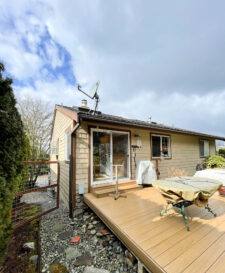
What Everett's Climate Does to Windows Over Time
Three things drive most of the window problems we see in this area:
Salt Air
Even a few miles inland, prevailing winds off Puget Sound carry fine salt particulate. Over years, it accelerates corrosion on aluminum hardware, pits lesser-quality vinyl cladding, and breaks down cheap weatherstripping faster than manufacturers' ratings assume. It's slow damage — the kind you don't notice until a window won't latch smoothly or a frame looks chalky.
Driving Rain
Snohomish County doesn't just get a lot of rain — a good share of it comes in sideways during fall and winter storms, driven by wind. That matters more for windows than steady vertical rain does, because driving rain tests the flashing and sealant details around a window far harder than a calm downpour ever would. Most window leaks we're called out to inspect trace back to installation shortcuts around flashing, not a defective window unit.
The Long Moss Season
Shaded, north-facing, or tree-covered walls in this area stay damp for months at a time, and moss and mildew take hold anywhere water sits or drains slowly. Around windows, that usually means sills, bottom corners, and trim — the same spots where poor drainage detailing turns a cosmetic issue into a rot problem.
Signs a Silver Lake Home Needs New Windows or a Reinstall
Homes in this neighborhood span a wide range of ages, and window condition doesn't always track with the age of the house — it tracks with how the windows were installed and maintained. Watch for:
- Fogging or a permanent haze between panes (a failed seal on double-pane glass)
- Soft or discolored wood trim or sill around the window frame
- Drafts you can feel near the frame even when the window is fully closed
- Visible gaps, cracked caulk, or daylight showing at the frame edges
- Windows that stick, won't latch, or have become hard to open and close
- Moss, black streaking, or persistent damp staining below the sill
- A noticeable jump in heating costs with no other explanation
Any one of these on its own might just need a repair or a resealing. Several together, especially rot or persistent water staining, usually mean it's time to talk about replacement.
What a Correct Window Installation Actually Involves
The window unit itself — vinyl, fiberglass, wood-clad — gets most of the attention when homeowners shop for windows, but in a climate like ours, the installation detailing matters just as much as the product. A correct job includes:
- Removing the old unit without damaging the surrounding wall structure, and checking what's behind it
- Inspecting the rough opening for hidden rot, soft sheathing, or prior water damage before anything new goes in
- Proper flashing integration — the window's flashing has to tie into the wall's water-resistive barrier correctly, lapped so water sheds outward and down, never trapped behind the siding
- Sill pan flashing at the bottom of the opening, so any water that does get past the window has somewhere to drain instead of soaking into the framing
- Correct shimming and squaring so the window operates smoothly and doesn't rack out of alignment over time
- Low-expansion foam and backer rod, not just caulk, to air-seal the gap between the frame and rough opening
- Exterior sealant at the right joints only — sealing every seam shut can trap moisture instead of letting it drain, which is a common and avoidable mistake
Skip the flashing and sill pan details, and the window itself barely matters — water finds the gaps eventually, and in a climate with this much driving rain, "eventually" tends to arrive sooner than homeowners expect.
Choosing Window Materials for This Climate
There's no single "best" window material — the right choice depends on your home's exposure, your maintenance appetite, and your budget. Here's how the common options actually perform in Everett's conditions:
| Material | Salt Air & Moisture Behavior | Maintenance | Typical Lifespan |
|---|---|---|---|
| Vinyl | Doesn't corrode or rot; good standard choice for most homes | Low — occasional cleaning | 20–30 years |
| Fiberglass | Excellent — dimensionally stable, resists moisture and salt exposure well | Low | 30+ years |
| Wood-clad | Good if cladding is intact, but any breach exposes wood to rot and moss | Higher — cladding and seals need periodic inspection | 20–30 years with upkeep |
| Aluminum | Prone to corrosion and pitting in salt-influenced air over time | Moderate | Varies widely |
We're upfront with Silver Lake homeowners about trade-offs rather than pushing one product line. Wood-clad windows can look great and perform well, but they ask more of the homeowner in upkeep than vinyl or fiberglass does — that's a maintenance decision, not a quality judgment, and it's worth making with full information before you commit to a material for the next two or three decades.
Our Installation Process
- On-site assessment — we look at the existing windows, the wall condition around them, and any signs of past water intrusion before quoting anything
- Honest scope — we tell you plainly if it's a repair situation, a full replacement, or somewhere in between
- Removal and inspection — old units come out carefully, and we check the rough opening and sheathing before installing anything new
- Flashing and sill pan installation — the water management details that actually determine how the window performs in our climate
- Window setting, shimming, and sealing — squared, insulated, and sealed at the correct joints
- Interior and exterior trim finish — matched to your home so the new windows look intentional, not patched in
- Final walkthrough — every window opens, closes, and locks the way it should before we call the job done
What Affects the Cost
| Factor | Why It Matters |
|---|---|
| Number of windows | Per-window pricing typically drops on larger multi-window jobs |
| Window material | Vinyl is generally the most economical; fiberglass and wood-clad cost more upfront |
| Size and style | Standard double-hung windows cost less than large picture windows or custom shapes |
| Condition of the opening | Hidden rot or sheathing repair adds labor and material beyond the window itself |
| Trim and finish work | Matching existing interior/exterior trim adds time compared to a bare install |
We give straightforward, itemized quotes so you can see exactly what you're paying for — no vague "starting at" figures that don't hold up once the crew is on-site.
Why a Crew That Already Works Silver Lake Matters
Window installation isn't the same job everywhere. A crew used to dry-climate installs can do a technically fine job that still fails here within a few years, simply because they didn't detail the flashing and drainage for a place that gets this much wind-driven rain. Working regularly in Silver Lake and the surrounding Everett neighborhoods means we already know:
- How local wall assemblies and siding types typically interact with window flashing
- Which orientations and exposures in this neighborhood tend to take the hardest weather
- What rot and moisture damage looks like at this stage versus further along
- How to sequence work around Snohomish County's wetter months without compromising the seal
That local pattern recognition is what keeps a window installation from becoming a callback two winters later.
A Simple Checklist Before You Book Anyone
- Ask whether sill pan flashing is included, not just caulk around the frame
- Ask how they'll handle any rot or damage found once the old window is out
- Get the quote in writing, itemized by window, not a single lump sum
- Ask about warranty coverage on both the window product and the installation labor
- Confirm they've worked on homes in your specific neighborhood or exposure type before
If a contractor can't answer the flashing question clearly, that's worth noticing before you sign anything.
If your Silver Lake home has drafty, foggy, or aging windows — or you're just planning ahead before the wetter months set in — we're happy to take a look and walk you through your options. Use the form below to request a free, no-pressure estimate.