 Everett
 Building Decks for the Snohomish Area's Real Weather
A deck in the Snohomish area lives a different life than a deck in a dry climate. Between the marine air pushing in off Puget Sound, the long stretch of driving rain that runs from fall through spring, and the shaded, moisture-holding conditions that grow moss on almost any horizontal wood surface, this region asks more of a deck than most. We build decks for homes across Everett and the greater Snohomish County area, and the decks that hold up here are the ones designed from the start around this climate rather than a generic build dropped into a wet region and hoped for the best.
That doesn't mean a Snohomish-area deck needs to look industrial or over-engineered. It means the fasteners, flashing, ventilation, and material choices are picked with moisture cycling and salt-tinged air in mind, not just for the day it's installed but for the fifteenth wet winter it sits through.
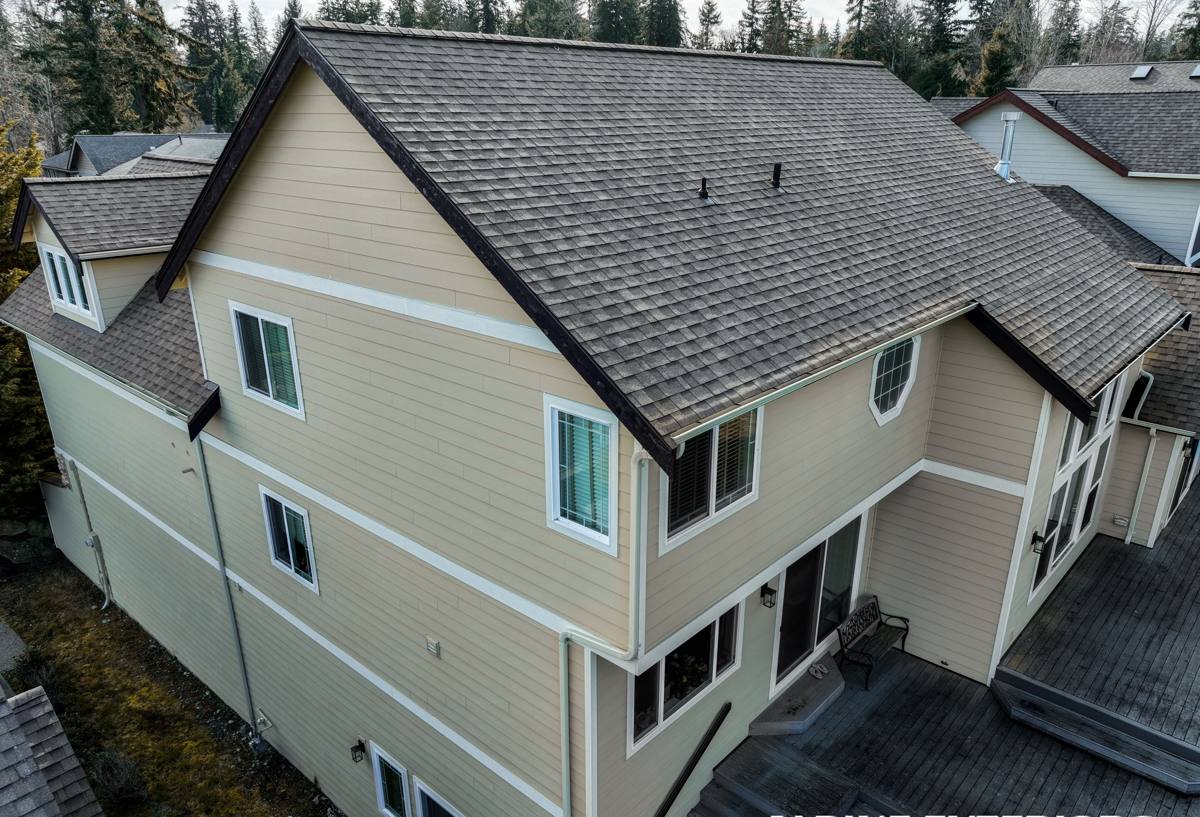
What Local Conditions Actually Do to a Deck
Salt Air and Metal Fatigue
Homes closer to the water deal with airborne salt that accelerates corrosion on anything ungalvanized or poorly coated — screws, joist hangers, bolts, and railing hardware. Cheap fasteners rust from the inside of the wood out, and by the time you see a rust bleed stain on the decking, the fastener underneath may already be compromised. We spec stainless or heavy-coated, corrosion-rated hardware as a baseline for this region, not an upcharge.
Driving Rain and Standing Water
Rain here doesn't just fall straight down — wind-driven rain gets under railings, into end grain, and behind ledger boards if flashing wasn't done correctly. The failures we see most often on older decks aren't from the decking boards themselves; they're from water finding its way into a ledger connection or a post base that was never properly flashed or drained.
Moss, Algae, and Shade
Snohomish-area yards tend to have mature trees and a lot of shade, which is great for the house and miserable for a deck surface. Moss and algae need moisture and low light to take hold, and once established they hold water against the decking, making boards slicker and, over time, encouraging rot in wood products. A deck built without airflow underneath or without a surface texture suited to wet climates will grow moss faster, no matter what material it's made from.
What a Correctly Built Deck Involves Here
Framing and Structural Connections
Everything starts with the frame. Joists, beams, and posts need to be sized for the actual load — furniture, hot tubs, snow load in a cold snap, and people — not just code minimums stretched thin. Ledger attachment to the house needs proper flashing so water is directed away from the band joist and siding, not funneled behind it. Post bases should sit above grade on proper footings, never buried in soil where they'll wick moisture.
Fasteners and Hardware
All structural hardware — hangers, hurricane ties, lag bolts, structural screws — should be rated for exterior, corrosive-prone environments. This is a small percentage of total project cost and one of the biggest factors in whether a deck is still solid at year twenty or needs structural repair at year eight.
Drainage and Airflow Underneath
A deck built tight to the ground with no ventilation traps moisture underneath, which speeds up rot in framing and gives moss and mildew a place to thrive. Proper grading beneath the deck, a gap for airflow, and in some cases a drainage system under an elevated deck all matter more here than in a dry climate.
Decking Material Comparison for This Climate
| Material | How It Handles Local Moisture | Maintenance | Typical Lifespan Here |
|---|---|---|---|
| Pressure-treated wood | Absorbs and releases moisture; needs a working finish to shed water and resist moss | Cleaning and re-sealing every 1-2 years | 10-15 years with upkeep |
| Cedar | Naturally rot-resistant but still needs finish to prevent graying and moisture uptake | Cleaning and refinishing regularly | 15-20 years with upkeep |
| Composite decking | Doesn't absorb water like wood, but surface texture and drainage under boards still matter for moss control | Periodic washing, no staining or sealing | 25-30+ years, manufacturer-dependent |
| PVC/capped polymer | Fully moisture-resistant surface; least prone to rot, but still needs airflow underneath | Occasional washing | 25-30+ years, manufacturer-dependent |
None of these materials are wrong choices — each is a legitimate trade-off between upfront cost, maintenance time, and long-term appearance. Our job is to walk through that trade-off honestly based on how much upkeep you actually want to do, not to push whatever has the best margin.
Custom Design Options That Make Sense for Snohomish-Area Properties
"Custom" doesn't have to mean complicated. It means the deck is designed around your actual lot, your house, and how you'll use it — not a stock rectangle. Common requests we see in this area include:
- Covered or partially covered decks, since a roof over even part of the deck dramatically extends how many months a year it actually gets used in this rain pattern
- Multi-level decks on sloped lots, common in the hillier parts of Snohomish County
- Built-in bench seating and railing designs that reduce the number of horizontal surfaces where moss and standing water collect
- Layouts that route water runoff away from the house foundation and away from ground-level entry points
- Skirting with venting built in, rather than solid skirting that traps moisture underneath
Our Process, Start to Finish
- On-site assessment. We look at grade, drainage, sun/shade exposure, existing structure if it's a replacement, and how the space will actually be used.
- Design and material walkthrough. We go over layout, decking material trade-offs, railing style, and any covered or multi-level elements, with a clear, honest look at cost versus maintenance for each option.
- Permitting. We handle the permit application and inspections required for the jurisdiction the property falls under, so the deck is built to code and documented for resale down the line.
- Framing and structural work. This is where corrosion-rated hardware, proper ledger flashing, and correctly sized framing all get set — the part of the job that's invisible once it's done but determines everything about how long the deck lasts.
- Decking, railing, and finish work. Surface material goes down, railings are installed, and any built-ins or covered elements are finished out.
- Final walkthrough. We go over the finished deck with you, confirm everything meets the agreed spec, and cover any maintenance basics specific to the material you chose.
Permitting and Code Considerations
Most deck projects above a certain height or attached to the house require a permit in Snohomish County jurisdictions, and inspections typically check footing depth, ledger attachment, and railing height/spacing. Skipping this step is a common shortcut with unpermitted decks, and it becomes a real problem at resale when a buyer's inspector or the county flags unpermitted structural work. We pull permits as a standard part of the job, not an optional add-on.
Cost Factors for a Snohomish-Area Deck
| Factor | Why It Moves the Price |
|---|---|
| Size and footprint | More square footage means more framing, decking, and labor |
| Height off grade | Taller decks need more substantial footings, posts, and often stairs and additional railing |
| Decking material | Composite and PVC cost more upfront than wood but reduce long-term maintenance spending |
| Coverage (roof/pergola) | Adding a roof structure adds framing, materials, and often its own permit review |
| Site access and grade | Sloped or hard-to-access lots take longer to excavate and build footings on |
| Railing and custom features | Built-in seating, custom rail infill, and lighting all add labor and material |
We don't quote a job off a square-footage rule of thumb pulled from a national average — every one of these factors gets looked at on your specific property before you get a number.
Maintenance Reality for This Climate
Whatever material you choose, a Snohomish-area deck needs some seasonal attention to actually reach its expected lifespan. A simple annual routine handles most of it:
- Sweep debris and standing leaves off the deck surface before fall rains set in — trapped leaves hold moisture against boards and speed up moss growth
- Wash the surface at least once a year with a deck-safe cleaner to remove algae and moss buildup before it gets established
- Check and clear any drainage paths or gaps under skirting so water isn't pooling underneath
- Inspect railings and stair connections annually for any looseness, since freeze-thaw cycles and moisture can work fasteners loose over time
- For wood decking, re-seal on the schedule the finish product actually calls for — skipping a cycle in this climate shows up fast
Why a Crew That Already Works This Area Matters
A contractor who builds decks across Everett and the Snohomish area day in and day out has already seen what fails here and why. That's not a marketing line — it shows up in concrete decisions: which hardware grade to default to, how much slope to build into a covered deck's roofline for this rain volume, and where moss tends to establish first on a given lot orientation. A crew unfamiliar with the region can build a technically sound deck by a generic standard and still hand you a deck that struggles here in five years because it wasn't built with this specific climate in mind.
We're also on hand locally if a warranty issue or a maintenance question comes up after the build — not a phone number connected to a crew three counties away.
If you're planning a new deck or replacing one that's showing its age, we're happy to come take a look at your property and put together a straightforward, no-pressure estimate. Use the form below to get started.