 Everett
 Roofing in Snohomish: A Climate That Doesn't Forgive Shortcuts
Snohomish sits close enough to Puget Sound and the Snohomish River basin that homes here deal with a specific combination of weather stress: salt-tinged marine air moving in off the water, long stretches of driving rain in the fall and winter, and a moss season that can run eight months or more under the tree cover common in this part of Snohomish County. None of these factors alone is unusual for Western Washington. Together, on a roof that wasn't built or maintained for them, they add up to premature granule loss, soaked underlayment, and moss roots working their way under shingle tabs long before the roof's rated lifespan is up.
A roof replacement done right in Snohomish isn't just "same roof, new shingles." It's an opportunity to correct ventilation problems, upgrade the underlayment system for the amount of rain this area actually sees, and choose materials that tolerate moss exposure instead of feeding it. This page covers what that looks like in practice.
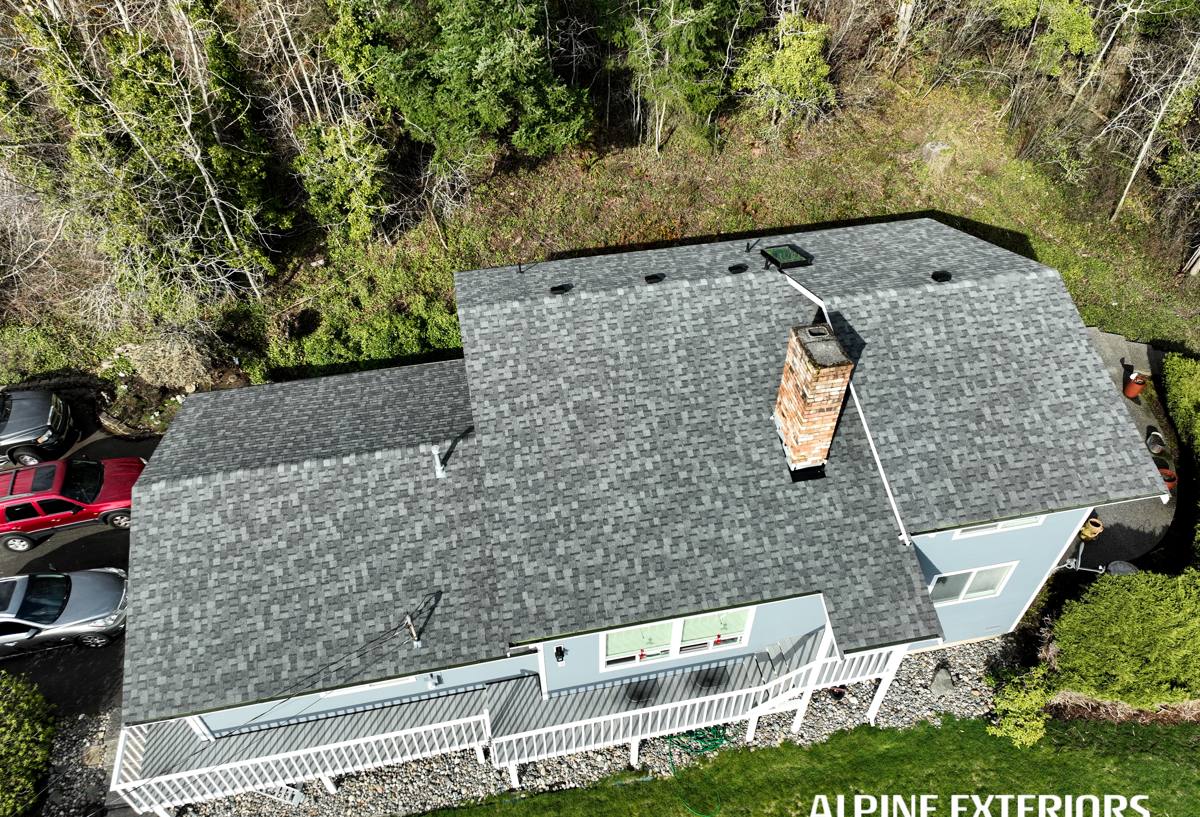
What Snohomish's Climate Actually Does to a Roof
Salt Air and Metal Fatigue
Homes closer to the water and lower-lying parts of Snohomish County are exposed to airborne salt that accelerates corrosion on exposed metal — flashing, fasteners, and vent caps in particular. Standard electro-galvanized fasteners and thin flashing stock corrode faster in this environment than they would inland. Over ten to fifteen years, that corrosion can compromise the very details that are supposed to keep water out at valleys, chimneys, and roof-to-wall transitions.
Driving Rain and Wind-Driven Moisture
Snohomish gets more than just steady drizzle — storms off the Sound can push rain sideways for hours at a time. That kind of wind-driven rain finds every gap in flashing, every under-lapped shingle course, and every place where nail penetrations weren't properly sealed. A roof system built for a drier climate, or installed with minimum-code shortcuts, tends to show leaks first at these edge conditions rather than in the open field of the roof.
Moss Season
Between the moisture and the shade from mature trees common on many Snohomish lots, moss finds ideal growing conditions for most of the year. Moss isn't just cosmetic — it holds moisture against the roof surface, lifts shingle edges as it grows, and its root structure can work into the granule layer and shorten shingle life significantly if left unmanaged.
Signs a Snohomish Roof Needs Replacement, Not Another Repair
- Granules collecting heavily in gutters or downspouts, or shingles that look bald in patches
- Moss growth returning within a season or two of cleaning, especially on north-facing slopes
- Soft or spongy decking felt underfoot in the attic, or daylight visible through the roof deck
- Repeated leaks at the same valley, chimney, or skylight despite prior patch repairs
- Shingles curling, cracking, or losing their seal — common once a roof passes 18-20 years in this climate
- Visible rust streaking from fasteners or flashing, particularly on homes closer to the water
- An insurance inspection or home sale inspection flagging the roof's remaining life
Any one of these can sometimes be handled with a targeted repair. When several show up together, or when the roof is already past the point where the underlying materials are still sound, replacement is usually the more honest recommendation — patching a roof that's failing systemically just delays a bigger repair bill.
What a Correct Roof Replacement Involves
Tear-Off and Deck Inspection
We remove the old roofing down to the deck rather than layering over it. This is the only way to actually see what's underneath — soft or delaminated plywood, rot around penetrations, or hidden moisture damage that's invisible from the surface. Any damaged decking gets replaced before anything new goes down; nailing new shingles over compromised sheathing just hides a structural problem under a fresh surface.
Underlayment Built for Rain, Not Just Code Minimum
Given how much driving rain Snohomish sees, we treat underlayment as a real second line of defense, not a formality. That typically means synthetic underlayment across the field for tear resistance and water shedding, with self-adhered ice-and-water membrane at the vulnerable spots — eaves, valleys, around chimneys and skylights, and roof-to-wall intersections — where wind-driven rain is most likely to find a way in.
Flashing and Fasteners That Hold Up to Salt Exposure
Because airborne salt corrodes standard fasteners and thin flashing faster here, we spec corrosion-resistant flashing and fastener materials appropriate to the home's exposure, especially for properties closer to the water. This is a small cost difference at installation and a meaningful difference in how the roof performs at year twelve or fifteen.
Ventilation
Proper intake and exhaust ventilation keeps the attic space at a stable temperature and moisture level, which matters twice over in this climate: it prevents condensation buildup during long wet stretches, and it helps prevent the ice-dam-adjacent moisture problems that show up even in our relatively mild winters. A lot of older Snohomish roofs are under-ventilated by current standards, and replacement is the practical time to fix that.
Moss-Resistant Material Choices
Where it fits the home and budget, we discuss algae- and moss-resistant shingle products, which use copper or zinc granules to inhibit growth. It isn't a permanent fix — nothing in this climate is maintenance-free — but it meaningfully extends the interval between moss treatments and cleanings compared to standard shingles on a shaded, moisture-prone roof.
Comparing Roofing Materials for Snohomish Conditions
| Material | Typical Lifespan Here | Moss/Moisture Behavior | Trade-offs |
|---|---|---|---|
| Standard asphalt composition shingle | 18-25 years | Moderate moss risk without regular cleaning | Lower upfront cost; widest color/style range |
| Algae-resistant (copper/zinc granule) shingle | 20-30 years | Better moss/algae resistance, still needs periodic cleaning | Modest cost premium over standard shingle |
| Metal panel roofing | 40-60 years | Sheds moisture fast, minimal moss growth on smooth surfaces | Higher upfront cost; requires experienced installer for proper fastening in salt-air zones |
| Synthetic/composite shingle | 30-50 years | Good moisture resistance, low moss susceptibility | Higher material cost; product availability and warranty terms vary by manufacturer |
We don't push one product for every home. The right choice depends on the roof's pitch and shading, how long the homeowner plans to stay in the house, and budget. What we won't do is install a system that ignores this area's rain and moss realities just because it's the cheapest option on paper — that trade-off tends to show up as callbacks within a few years, which serves nobody.
Our Roof Replacement Process
- On-site inspection and estimate. We walk the roof (or use appropriate access for steep or fragile roofs), check the attic for ventilation and moisture signs, and give a written estimate with material options explained honestly.
- Material selection. We go over shingle or metal options, color, and warranty terms so the decision fits the home and the budget, not just a default package.
- Scheduling around Snohomish weather. Roofing work needs a dry window. We plan installation dates with realistic regional weather patterns in mind and communicate clearly if a forecast shift requires a reschedule.
- Tear-off, deck repair, and underlayment. Old roofing comes off, the deck gets inspected and repaired as needed, and the underlayment system goes down before any weather exposure risk.
- Installation. New roofing, flashing, and ventilation components are installed to manufacturer specification, not just to minimum code.
- Cleanup and final walkthrough. Site is cleared of debris and old materials, and we walk the finished roof with the homeowner.
Cost Factors for a Snohomish Roof Replacement
Roofing costs vary by roof size, pitch, complexity (number of valleys, chimneys, skylights), material choice, and how much of the decking needs repair. Rather than quote a number that doesn't apply to a specific roof, here's what actually moves the price:
- Total roof square footage and number of layers being removed
- Roof pitch and accessibility — steep or multi-story roofs take longer and require more safety setup
- Amount of decking replacement needed once the old roofing comes off
- Material choice, from standard shingle up to metal or synthetic composite
- Complexity of flashing details — valleys, chimneys, skylights, dormers
- Whether ventilation upgrades are needed to meet current standards
An accurate number only comes from seeing the actual roof, which is why we start with an on-site look rather than a phone estimate.
Maintenance After Replacement
A new roof still needs periodic attention in this climate. Gutter cleaning before the fall rains, keeping overhanging branches trimmed back to reduce shade and debris buildup, and a moss treatment or gentle cleaning every year or two on shaded slopes will all extend the roof's service life well past the point a neglected roof would fail. We're happy to walk homeowners through a simple maintenance schedule at the end of the job.
Why Local Experience in Snohomish Matters
A crew that already works Snohomish and the surrounding Everett area knows which details actually matter here — where wind-driven rain tends to find weak flashing, which slopes in this part of Snohomish County hold moss the longest, and how to schedule tear-off around a genuinely unpredictable rain pattern instead of guessing. That local pattern recognition is worth more than a generic install; it's the difference between a roof that's built for this specific climate and one that's just built to code minimums somewhere else and installed here anyway.
If you're weighing repair versus replacement, or just want an honest read on where your roof stands, we're glad to come take a look. Reach out for a free, no-pressure estimate using the form below.