 Everett
 Storm Damage Roof Repair for Delta Homes
The Delta neighborhood sits close enough to Puget Sound that its roofs take a different kind of beating than homes further inland in Snohomish County. Wind off the water drives rain sideways into ridge lines and flashing details that were never designed to handle horizontal water. Salt-laden air accelerates corrosion on fasteners, flashing, and vent caps. And the long, damp shoulder seasons that bracket our short summers give moss and moisture months to work into anything that isn't sealed properly. When a windstorm or heavy rain event hits, it rarely creates damage out of nothing — it usually finds and exploits a weak point that's already been building for a season or two.
That's the context we bring to every storm damage call in Delta. This page covers what local homes actually need after a storm, what a correct repair looks like, and how our process works from the first phone call to the final walkthrough.
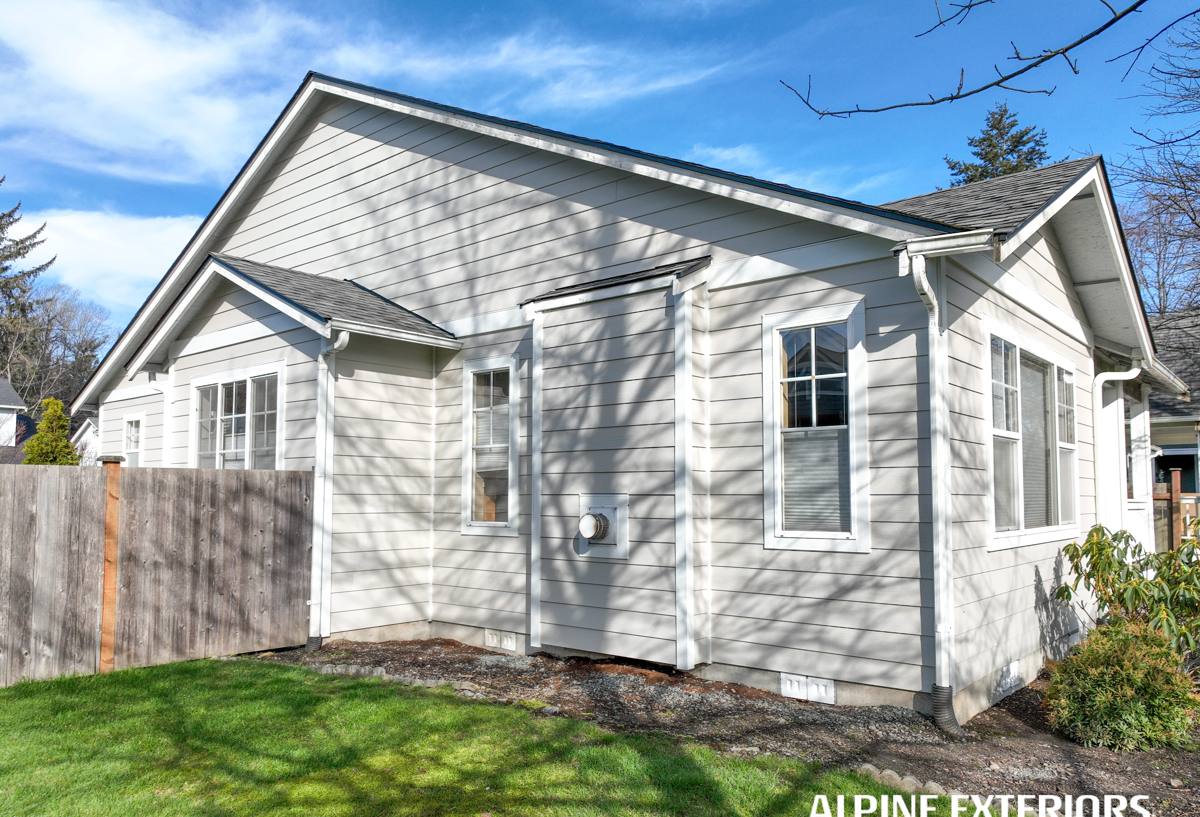
What Everett Storms Actually Do to a Roof
Most storm damage in this area falls into a few predictable categories, and knowing which one you're dealing with matters for both the repair and any insurance conversation.
Wind-Driven Damage
Gusts off the Sound don't just lift shingles or panels — they drive rain underneath them at the same time. A shingle that's cracked or partially torn loose can still look mostly intact from the ground while water is already tracking under it. Ridge caps, hip lines, and roof edges take the brunt of this because wind uplift is strongest where the roof plane changes direction.
Impact Damage
Fir and cedar are common in and around Delta's older residential streets, and limb drop during wind events is one of the more frequent causes of storm calls. A branch strike can crack shingles, dent metal roofing or flashing, or in worse cases punch through sheathing.
Water Intrusion Without Visible Damage
This is the one homeowners miss most often. Flashing around chimneys, skylights, and vent penetrations can be pushed loose or bent by wind without a single shingle out of place. The first sign is often a stain on an interior ceiling weeks later, by which point water has already been getting into the attic or wall cavity.
Signs Your Delta Home May Have Storm Damage
After any significant wind or rain event, a quick check — from the ground, not on a ladder — can tell you whether it's worth calling for an inspection.
- Shingles or shakes that look lifted, curled, or out of alignment compared to the surrounding field
- Granules collecting in gutters or at the base of downspouts
- Visible gaps or bent metal at chimney flashing, skylight edges, or roof-to-wall transitions
- New or growing moss patches, especially on north-facing slopes that stay shaded and damp longest
- Water stains on interior ceilings or upper walls, even faint ones
- Sagging or soft spots along the roofline when viewed from across the street
- Debris, broken limbs, or granule buildup on the roof surface itself
None of these guarantee active damage on their own, but any one of them is a reasonable trigger for a proper inspection rather than a wait-and-see approach.
What a Correct Storm Damage Repair Involves
A storm repair that's done right isn't just about patching the spot that's visibly broken. It has to account for how water actually moves once it gets past the roof surface.
Full-Roof Inspection, Not Just the Damaged Area
If a storm was strong enough to cause damage in one spot, it was strong enough to stress the rest of the roof too. We check the full roof plane, all flashing details, and the attic from the inside when it's accessible, not just the area the homeowner points to.
Matching Materials and Fastening Method
Replacement shingles, shakes, or panels need to match the existing roof's material, profile, and fastening pattern closely enough that the repair doesn't become its own future weak point. Mismatched or improperly nailed replacement material is one of the most common causes of repeat storm damage in the same spot.
Flashing Gets Rebuilt, Not Just Resealed
Caulk over damaged flashing is a temporary fix at best. Correct repair means removing and re-forming or replacing the flashing itself at chimneys, skylights, and roof-to-wall intersections, then integrating it properly with the surrounding roofing material — not just sealing the surface.
Underlayment Check Where Water Got Through
If water tracked under the roof covering, the underlayment beneath it is usually compromised in that area too. Reusing wet or torn underlayment under new shingles just hides the problem instead of solving it.
Our Process for Delta Storm Repairs
- Initial contact and photo review. A quick phone or in-person conversation to understand what happened and when, so we know what to look for.
- On-site inspection. We walk the roof, check flashing details, and inspect the attic interior when accessible to see whether water has already tracked further than the visible surface shows.
- Written scope and estimate. A clear explanation of what's damaged, what needs to be replaced versus repaired, and an honest cost range before any work starts.
- Repair work. Matched materials, rebuilt flashing where needed, and underlayment addressed anywhere water has intruded.
- Final walkthrough. We review the completed repair with the homeowner and point out anything worth keeping an eye on going forward, particularly moss-prone areas.
Repair or Replace: What Actually Drives the Decision
Not every storm-damaged roof needs a full replacement, and not every "small" repair should stay small. The honest answer depends on a few factors we walk through with every homeowner.
| Factor | Favors Repair | Favors Replacement |
|---|---|---|
| Roof age relative to material lifespan | Roof is in the first half of its expected service life | Roof is near or past its expected lifespan and storm damage is the tipping point |
| Extent of damage | Isolated to one section or a handful of shingles/panels | Damage is spread across multiple roof planes |
| Underlying decking condition | Sheathing is dry and sound where exposed | Sheathing shows rot, soft spots, or repeated past water damage |
| Moss and moisture history | Moss is surface-level and manageable | Moss has been established long enough to hold moisture against the roof covering |
| Matching materials availability | Existing shingle/shake profile is still available | Material is discontinued or too weathered to blend a patch invisibly |
Broad repair costs for isolated storm damage — flashing, a section of shingles, minor decking — typically run in the low thousands of dollars. Widespread damage that pushes into partial or full replacement territory moves into a much wider range depending on roof size, pitch, and material. We give an honest number after inspection, not before.
Moss, Salt Air, and the Long Game
Even a perfect storm repair won't hold up if the conditions that caused the original damage aren't addressed. In Delta and across greater Everett, that means two ongoing issues in particular.
Moss
Snohomish County's long wet season gives moss months to establish itself, especially on shaded, north-facing roof slopes. Moss holds moisture against the roof surface, lifts shingle edges as it grows, and can work its way under flashing over time. Any storm repair on a roof with existing moss growth should include a conversation about moss management, not just the immediate fix.
Salt Air Corrosion
Proximity to Puget Sound means fasteners, flashing, and metal roof components corrode faster here than they would further inland. Corroded fasteners lose their grip on shingles and panels, which is exactly the kind of weak point wind gets underneath. Where corrosion is present, we replace fasteners and flashing with the repair rather than reusing compromised metal.
Insurance and Storm Damage Claims
Many storm repairs in this area go through homeowners insurance, and a clear, well-documented scope of damage makes that process go smoother. We provide a written assessment that describes what happened and what's needed to fix it, which homeowners can use in their claim. We're not a public adjuster and don't negotiate directly with insurance carriers, but a straightforward, honest inspection report is one of the most useful things a homeowner can bring to that conversation.
Why It Matters to Hire a Crew That Already Works in Delta
Roofing crews who work regularly in this part of Everett already know which flashing details tend to fail first in wind off the Sound, which roof orientations hold moss longest, and how fast corrosion moves on fasteners this close to salt water. That familiarity shows up in the quality of the inspection — knowing where to look, not just what's visibly broken — and in a repair that's built to hold up through the next storm season, not just patched to pass a quick look.
If your Delta home has visible or suspected storm damage, we're glad to take a look and give you a straightforward, no-pressure estimate — just fill out the form below to get started.