 Everett
 West Everett's Siding Has a Tougher Job Than Most
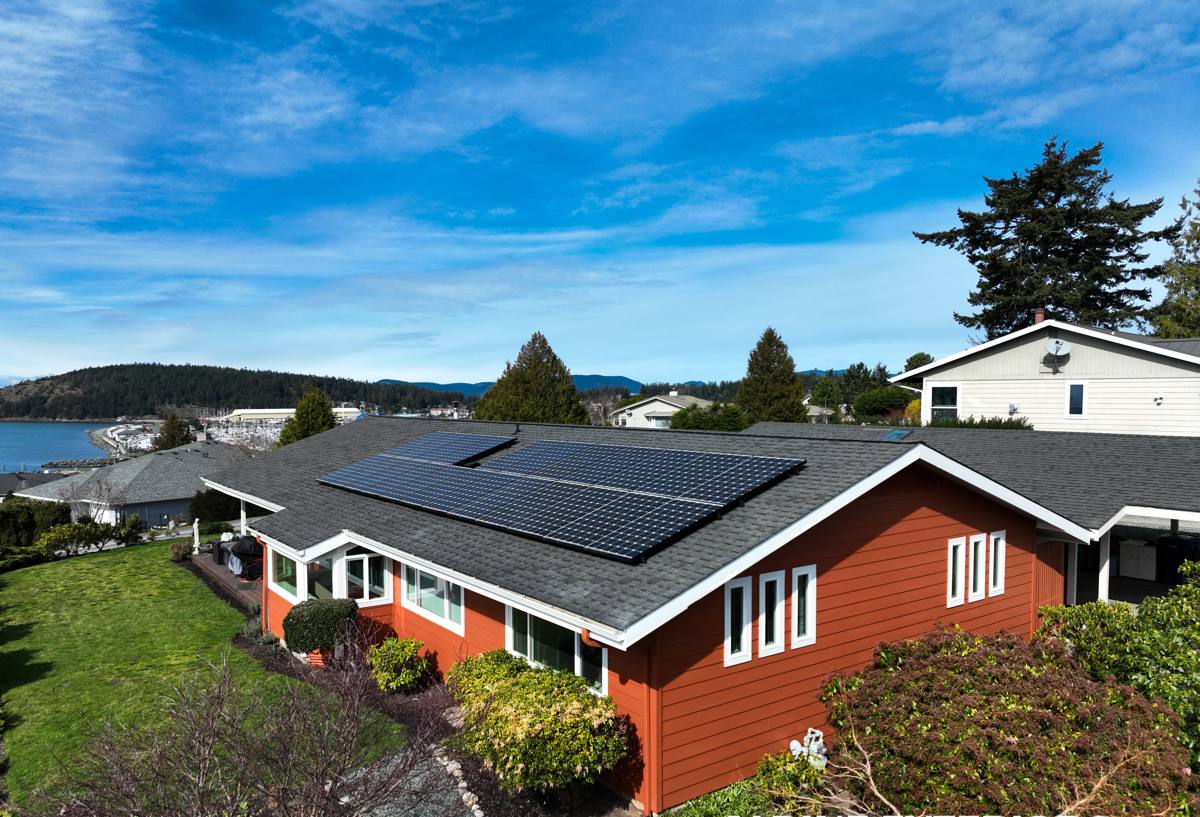
West Everett sits close enough to Puget Sound and the Snohomish River delta that homes here deal with a specific combination of stresses: salt-laden air moving in off the water, wind-driven rain that hits siding at an angle instead of straight down, and long stretches of gray, damp weather that keep exterior surfaces wet for days at a time. Add in the moss and algae growth that thrives in Western Washington's shade and moisture, and you've got a climate that punishes any siding product with a weak point at the seams, the finish, or the substrate itself.
This isn't a generic Everett problem — it's sharper in West Everett specifically because of the proximity to open water and the marine exposure that comes with it. Siding that performs fine in a drier inland neighborhood can fail faster here if it wasn't chosen or installed with that exposure in mind.
Why Fiber Cement Is the Right Material for This Exposure
We install James Hardie fiber cement siding exclusively, and West Everett is exactly the kind of neighborhood that shows why. Fiber cement is a composite of Portland cement, sand, and cellulose fibers, engineered to be dimensionally stable and non-combustible. Unlike wood-based or wood-adjacent products, it doesn't swell, cup, or rot when it stays wet, and it isn't a food source for the moss, algae, and mildew that colonize shaded, damp siding around here.
What Salt Air Does to Siding Over Time
Salt-laden moisture accelerates corrosion of fasteners and metal flashing, and it degrades cheap or thin paint finishes faster than inland conditions would. James Hardie's ColorPlus factory-applied finish is baked on under controlled conditions and formulated to resist fading and moisture intrusion better than field-applied paint, which matters when the air itself is working against the coating.
What Driving Rain Does to Seams and Laps
Wind-driven rain finds every gap in a siding system — at butt joints, around penetrations, behind trim. Fiber cement's rigidity holds tight, consistent reveals over time, which keeps water-shedding laps doing their job instead of gapping open the way lighter or more flexible materials can after a few seasons of expansion and contraction.
What a Long Moss Season Does to a Wall
Prolonged moisture plus shade equals moss and algae. Fiber cement itself doesn't feed organic growth, but growth can still take hold on any siding surface exposed to enough shade and moisture — the real defense is a combination of the right material, proper drainage detailing, and periodic cleaning, which we'll cover below.
Why We Don't Install Alternatives Here
We're often asked about vinyl, LP SmartSide, or unfinished wood species like cedar, so it's worth being direct about why we standardized on James Hardie fiber cement for homes in this climate.
- Vinyl can warp or distort in temperature swings and doesn't offer the impact resistance or fire rating fiber cement does; its seams also rely heavily on proper installation to shed wind-driven rain.
- Engineered wood products (like LP SmartSide) use wood strand substrates that, while treated, are still wood-based — meaning sustained moisture exposure at cut edges, laps, or failed caulk joints carries more long-term risk in a wet marine climate than a cement-based product.
- Raw or primed wood siding (cedar, spruce) looks great new but demands a maintenance schedule most homeowners underestimate — repainting, sealing cut ends, and staying ahead of rot — especially tough to keep up with in a climate that rarely gives siding a chance to fully dry out.
None of these are "bad" products in every context. But for the specific combination of salt air, driving rain, and moss pressure found in West Everett, we've concluded fiber cement gives homeowners the best long-term balance of durability, fire resistance, and low maintenance — and it's the only system we put our name behind.
What a Correct Fiber Cement Install Actually Involves
Fiber cement siding is only as good as the installation behind it. A rushed or improperly detailed job can undercut even the best material, especially in a climate that doesn't forgive shortcuts at the water-management layer.
Weather-Resistive Barrier and Drainage Plane
Before the first board goes up, the wall needs a continuous weather-resistive barrier with properly lapped and taped seams, and ideally a drainage gap behind the siding so any moisture that does get past the cladding can drain and dry rather than sitting against the sheathing.
Flashing at Every Penetration
Windows, doors, hose bibs, vents, and any other wall penetration need correctly integrated flashing — installed so water is directed out and down, never trapped behind the siding. This is where a large share of real-world siding failures actually originate, regardless of the cladding material chosen.
Fastening and Clearances to Spec
James Hardie publishes specific fastener types, spacing, and clearance requirements (from grade, roof lines, and decks) for its products. Following those specs — not shortcuts — is what keeps the installation eligible for the manufacturer's warranty and performing as designed.
Caulking and Joint Treatment
Butt joints and trim transitions need the right sealant, applied correctly, to stay flexible and watertight through the wide humidity swings typical of a Puget Sound winter.
Choosing the Right Hardie Product Line and Finish for This Neighborhood
James Hardie offers several product lines engineered for different climate zones, and for Western Washington's marine exposure we look at HZ5 or HZ10 formulations depending on the home's specific exposure. Color and texture choices also matter locally — darker ColorPlus finishes can help mask early-stage moss shadowing between cleanings, while lighter finishes may show organic growth sooner but are easier to keep looking clean with regular rinsing.
| Factor | Consideration for West Everett Homes |
|---|---|
| Panel/plank profile | Lap siding, shingle-style panels, or vertical panels — chosen based on architectural style and how each sheds water at laps |
| Finish color | Darker tones can mask early moss shadowing; lighter tones show growth sooner but read as "clean" longer after a rinse |
| Exposure zone | Homes with more direct water/wind exposure may warrant heavier-duty HZ formulations and tighter fastening spec |
| Trim and accessories | Matched Hardie trim boards keep expansion behavior consistent across the whole wall assembly |
Our Process for West Everett Projects
Because we already work in this part of Everett, we bring existing familiarity with the moisture and exposure patterns specific to the area into every estimate and installation.
- On-site assessment — we look at existing siding condition, moisture damage, drainage patterns, and shade exposure specific to the property.
- Product and color selection — matched to the home's exposure and the homeowner's aesthetic goals.
- Tear-off and sheathing inspection — checking for hidden moisture damage before new material goes up, since covering a problem doesn't solve it.
- Weather barrier and flashing installation — the layer that determines long-term performance more than the cladding itself.
- Fiber cement installation to manufacturer spec — correct fastening, clearances, and joint treatment throughout.
- Final walkthrough — reviewing the finished work and care recommendations with the homeowner.
Living With Fiber Cement Siding in This Climate
Fiber cement is low-maintenance, not no-maintenance. A simple annual or biannual rinse-down helps prevent moss and algae from getting a foothold, especially on shaded elevations. Keeping gutters clear and grading/splash-back areas draining away from the foundation also protects the bottom courses of siding, which take the brunt of splash-back moisture during heavy rain events.
Homeowner Maintenance Checklist
- Rinse siding annually (or twice a year on heavily shaded sides) to discourage moss and algae buildup
- Inspect and clear gutters before the fall rains so overflow doesn't run down the wall face
- Check caulked joints and trim transitions periodically for cracking or separation
- Keep landscaping and irrigation from spraying directly onto siding
- Address any paint chips or impact damage promptly to keep the moisture barrier intact
Why Hiring a Crew That Already Works West Everett Matters
Siding installation isn't one-size-fits-all across Snohomish County. A crew that regularly works West Everett already understands where moisture tends to collect on local homes, how prevailing wind and rain direction typically hits a given elevation, and which flashing and drainage details actually hold up here versus in a drier or more sheltered neighborhood. That local pattern recognition shows up in the details — the ones that don't fail for ten or twenty years, instead of the ones that look fine until the first hard winter exposes what was cut corners.
If you're weighing a siding replacement or repair in West Everett, we're happy to take a look at your home and walk you through what we'd recommend and why. Reach out for a free, no-pressure estimate — the form below gets you started.