 Everett
 Why West Everett Siding Wears Out Faster Than You'd Expect
West Everett sits close enough to Puget Sound that salt-laden air is a daily fact of life for the homes here, not an occasional nuisance. Add in Snohomish County's long, wet winters and the extended stretch of gray, damp months when moss and algae get a real foothold, and you have a climate that's genuinely hard on exterior siding. Wood-based products swell, rot at the edges, and lose paint adhesion. Vinyl chalks, warps, and lets moisture track behind seams. Even siding that looks fine from the street can be failing quietly at the fasteners, the corners, and the bottom courses where water lingers longest.
None of this means West Everett homes need constant babying — it means they need a siding system and an installation approach that were built for exactly this kind of weather. That's the whole focus of this page: what siding replacement should actually deliver for a West Everett home, and how we handle it.
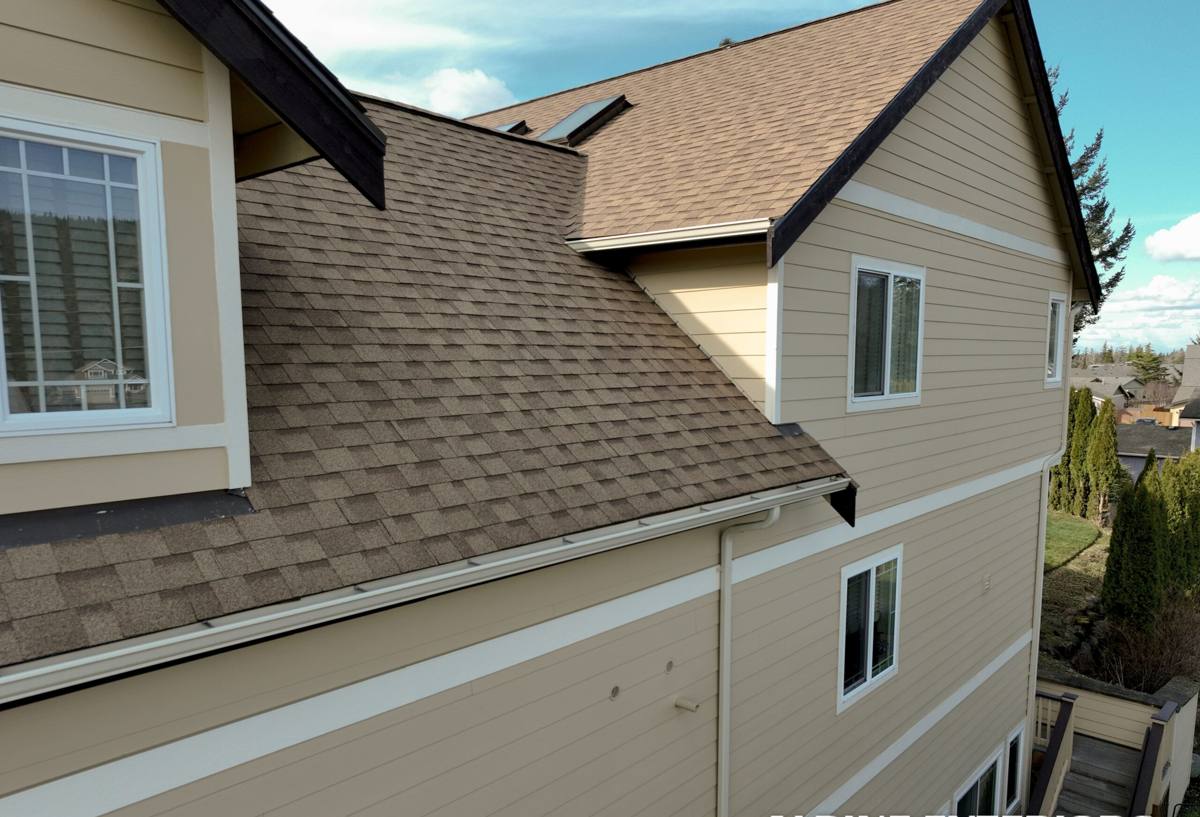
What Salt Air, Driving Rain, and Moss Season Actually Do to a Wall
Salt Air
Airborne salt is corrosive to exposed metal fasteners, trim flashing, and any hardware that isn't rated for coastal-adjacent exposure. Over years, it also accelerates the breakdown of lower-grade paint films, which is why siding on the west-facing and water-facing sides of a house often fades and chalks noticeably faster than the rest.
Driving Rain
Wind-driven rain doesn't fall straight down — it gets pushed sideways into laps, seams, and butt joints. If the siding, flashing, and water-resistive barrier underneath aren't installed with the right overlaps and gaps, water finds its way behind the cladding. Once that happens, the sheathing and framing behind the siding start absorbing moisture long before anything shows on the surface.
Moss Season
Everett's moss season stretches across most of the fall, winter, and spring. Moss and algae hold moisture against the siding surface for extended periods, which is exactly the condition that causes rot in wood-based products and finish failure in lower-quality composites. North-facing walls and areas shaded by mature trees are usually hit hardest.
Signs a West Everett Home Needs Replacement, Not Just Repair
- Soft or spongy spots when you press on the siding, especially near the bottom courses or under windows
- Paint that's peeling, bubbling, or chalking heavily rather than just fading evenly
- Visible gaps, warping, or cupping at panel edges and seams
- Persistent moss or dark staining that comes back within weeks of cleaning
- Rust streaking from fasteners, or nail heads that have backed out
- Rising utility bills or drafts that suggest the wall assembly is no longer sealing properly
- Multiple past patch repairs on the same wall section
One or two of these signs might mean a targeted repair is enough. Several at once, especially combined with soft sheathing underneath, usually means the wall assembly needs a full reset — which is a replacement job, not a patch.
What a Correct Siding Replacement Job Actually Involves
Replacing siding is not a cosmetic swap. Done right, it's a full inspection and rebuild of the wall's weather-resistive layer, not just the visible panels. For a West Everett home, that means:
- Full tear-off of the old siding down to the sheathing, so hidden rot, soft spots, or past water damage get caught before they're sealed behind new material.
- Sheathing repair where needed — any wood that's compromised gets replaced, not covered over.
- A correctly lapped water-resistive barrier, installed shingle-style so water sheds down and out rather than tracking behind the barrier at seams.
- Proper flashing at every window, door, and penetration — this is where driving rain does the most damage if it's skipped or rushed.
- Correct fastening to manufacturer spec — the right fastener type, spacing, and depth matter more in coastal-adjacent, high-moisture climates than almost anywhere else.
- Rain-screen or vented gap detailing where the wall assembly calls for it, so moisture that does get in can dry out instead of sitting against the sheathing.
- Trim, corners, and caulking finished to shed water rather than trap it.
Skip any one of these steps and the new siding can look great for a year or two while the wall behind it is already back on the clock toward the same failures as before.
Why We Install Only James Hardie Fiber Cement
We don't install vinyl, LP SmartSide, or primed wood siding, and that's a deliberate standard, not a limitation of what we're able to do. In a climate like Everett's — salt air, sustained wet seasons, and heavy moss pressure — the trade-offs of those products show up faster than they would in a drier region. Vinyl can warp and its seams are a long-term moisture path. Wood-based and OSB-core products depend heavily on flawless field sealing to resist rot, and any missed caulk joint becomes a slow leak. Primed wood needs a repaint cycle that most homeowners don't keep up with on schedule.
James Hardie fiber cement is non-combustible, dimensionally stable in wet-dry cycling, and comes with a factory-applied ColorPlus finish that's baked on rather than field-painted — which matters a lot in a region where field-applied paint takes a beating from salt air and UV. Hardie's HZ5 product line is specifically engineered for climates with sustained moisture exposure, which describes West Everett well. It also carries a strong transferable warranty, which is worth more here than in drier climates because the failure modes this warranty covers are exactly the ones this weather causes.
Our Process for West Everett Homes
- On-site assessment — we look at wall orientation, tree cover, drainage, and moss/moisture patterns specific to your lot, not just the siding surface.
- Honest scope — we tell you plainly if tear-off reveals sheathing damage, and what that means for cost and timeline before work continues.
- Weather-timed scheduling — siding replacement needs dry working conditions for the barrier and flashing steps; we plan around Everett's rain patterns rather than rushing through a wet window.
- Manufacturer-spec installation — fastening, clearances, and flashing detail done to James Hardie's published requirements, which is also what keeps the product warranty valid.
- Final walkthrough — we go over the finished job with you, including basic care specific to this climate.
What Drives Cost on a West Everett Siding Replacement
| Factor | Why It Matters Here |
|---|---|
| Extent of hidden sheathing damage | Wet climates hide rot behind intact-looking siding; more repair means more cost, but skipping it isn't an option |
| Wall orientation and exposure | Water- and wind-facing walls often need extra flashing and detailing attention |
| House size and complexity | Multiple stories, dormers, and trim detail add labor time |
| Siding profile and finish choice | Lap width, texture, and ColorPlus color selection affect material cost |
| Access and site conditions | Tree cover, tight lot lines, or sloped yards common in West Everett can affect setup and staging |
| Trim and accessory scope | Full trim replacement alongside siding is often more cost-effective than staggering it later |
We provide a specific, itemized quote after the on-site assessment rather than a rough phone estimate — moisture damage in this climate is too variable to price sight unseen.
Choosing a Contractor Who Actually Works This Neighborhood
A crew that regularly works West Everett already knows which wall orientations tend to hide moisture damage, how the local moss cycle behaves, and how to schedule around the area's rain patterns without rushing critical steps. That local familiarity shows up in fewer surprises during tear-off and a wall assembly that's actually built for the conditions it will face, not a generic install.
- Ask what happens if they find rotted sheathing during tear-off — get their answer before they start
- Ask which fiber cement line and profile they're proposing, and why for your specific exposure
- Ask how they handle flashing at windows and penetrations, not just the field panels
- Ask about their fastening schedule and whether it matches manufacturer spec
- Confirm licensing, insurance, and whether the manufacturer's warranty is honored based on their installation
Keeping New Siding Performing in This Climate
Once new fiber cement siding is installed correctly, upkeep in West Everett is fairly light: an annual rinse to knock down moss and pollen buildup, a periodic visual check of caulk lines at trim and penetrations, and prompt attention if a tree limb or impact ever chips the surface. ColorPlus finish means you're not on a repaint cycle the way you would be with field-painted wood, which is one less maintenance burden in a climate that already asks a lot of a home's exterior.
If your siding is showing wear, or you just want a straight answer on whether repair or replacement makes sense for your home, we're happy to take a look. Reach out for a free, no-pressure estimate using the form below.