 Everett
 Windows in Riverside Take a Different Kind of Beating
Riverside sits close enough to the water and the river corridor that its homes deal with a specific combination of weather most inland Everett neighborhoods don't see as intensely: salt-tinged air, wind-driven rain that hits windows at an angle instead of straight down, and a long, damp shoulder season where moss and algae get a foothold on anything that stays wet. None of that is dramatic on its own. What it does over ten or fifteen years is quietly wear down seals, frames, and flashing details that were never built for constant moisture exposure in the first place.
We're not describing a hypothetical. It's the pattern we see on service calls in this part of Everett — window units that look fine from the curb but have soft framing underneath, or vinyl that's gone brittle and yellowed faster than it should have because of years of damp air sitting against it. A window installation done right in Riverside has to account for that from day one, not treat it like a generic replacement job.
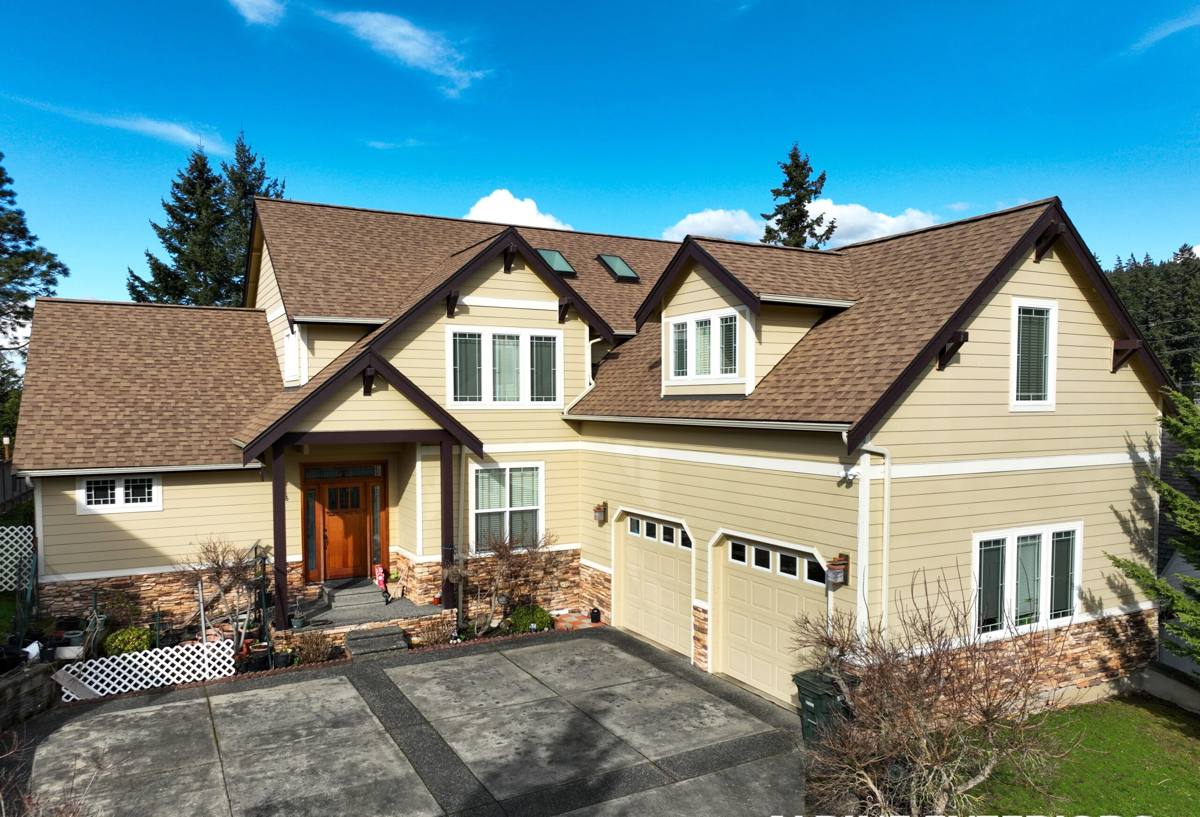
What Salt Air, Driving Rain, and Moss Season Actually Do
Salt Air
Even a few miles from saltwater, airborne salt accelerates corrosion on metal window hardware — hinges, locks, balance mechanisms, and screws. Cheaper fasteners and hardware finishes give out years before the glass or frame does, which is why hardware quality matters as much as the window brand.
Driving Rain
Snohomish County storms don't always come straight down. Wind pushes rain sideways into window openings, which means the flashing and sealant details around a window matter more here than they would in a drier, calmer climate. A window that's caulked in but not properly flashed can look watertight for years and still be letting moisture into the wall cavity the whole time.
Moss and Algae Season
Long stretches of overcast, damp weather let moss, algae, and mildew grow on anything that doesn't dry out — sills, trim, and the wood or composite material around older window frames. That growth holds moisture against the surface, which is exactly the condition that causes rot in wood-adjacent trim and premature failure in lower-grade frame materials.
Signs a Riverside Home's Windows Need Attention
- Fogging or a hazy film between the panes of a double-pane window — the seal has failed and the gas fill is gone
- Soft or spongy trim or sill material when pressed with a thumb
- Windows that are noticeably harder to open, close, or lock than they used to be
- Visible moss, algae, or dark staining on the sill or lower frame that comes back soon after cleaning
- A draft you can feel near the frame edge on a windy day, even with the window latched
- Paint or finish that's peeling specifically around the window opening, not the rest of the wall
- Noticeably higher heating bills in a home that hasn't otherwise changed
Any one of these can be a minor fix. Several together usually mean the window and its surrounding assembly are past the point where patching makes sense.
What a Correct Window Installation Actually Involves
A window installation is not just removing an old unit and setting a new one in the same hole. In a climate like Everett's, the details around the window matter more than the window itself. Here's what we treat as non-negotiable on every job.
Flashing and Water Management
Proper flashing directs any water that gets past the window's exterior seal back out and away from the wall cavity, instead of letting it soak into framing. This means flashing tape or membrane at the sill and jambs, integrated correctly with the home's existing weather-resistive barrier — not just a bead of caulk around the trim. Given how often wind drives rain sideways into this area, this step is where a lot of installations either hold up for decades or start failing within a few years.
Sill Pans and Sloped Sills
The sill under a window should be sloped and, ideally, fitted with a proper pan flashing so that any water reaching that point drains outward instead of pooling. A flat or improperly sloped sill is one of the most common causes of hidden rot we find when we open up an old window opening.
Air Sealing and Insulation
The gap between the window frame and the rough opening needs to be sealed and insulated correctly — not stuffed with excess spray foam, which can bow the frame and cause the window to operate poorly, and not left with gaps that let air and moisture track through. Low-expansion foam or backer rod plus sealant, applied evenly, does the job without distorting the frame.
Level, Plumb, and Square
A window that's out of square by even a small margin will bind, won't seal evenly, and will wear out its hardware faster. We shim and check this at multiple points before final fastening, not just eyeball it once.
Choosing the Right Window for a Riverside Property
There's no single "best" window material — it depends on budget, maintenance appetite, and how exposed the home is to wind and moisture. Here's how the common options actually compare for a home in this climate.
| Frame Material | Moisture Resistance | Maintenance | Typical Lifespan |
|---|---|---|---|
| Vinyl | Good — won't rot, but seals and hardware need to be quality-grade for salt air exposure | Low — occasional cleaning | 20-30 years |
| Fiberglass | Very good — stable in temperature swings, holds up well to damp conditions | Low | 30-40+ years |
| Wood (clad exterior) | Depends heavily on the cladding and installation quality; bare wood exposure is a liability here | Higher — finish and joints need periodic attention | Varies widely with maintenance |
| Aluminum | Fair — prone to condensation and corrosion in salt-air conditions without thermal breaks | Moderate | 20-30 years |
For most Riverside homes, we steer clients toward vinyl or fiberglass with quality hardware, specifically because they hold up to sustained damp air and salt exposure with the least ongoing maintenance. Wood-look clad options can work, but we're upfront that they demand more attention over the years in this environment, and we won't sell a client a low-maintenance promise that doesn't hold up to Everett's weather.
Our Process, Start to Finish
- Free on-site assessment — we look at the existing windows, check for hidden moisture or rot around the openings, and talk through what's actually needed versus what can wait.
- Honest scope and estimate — a clear breakdown of window units, labor, and any additional work needed if we find compromised framing or sheathing.
- Old window removal — done carefully to expose the rough opening without damaging surrounding siding or trim more than necessary.
- Opening inspection and repair — if we find soft framing, failed flashing, or moisture damage, we address it before the new window goes in. Installing a new window over a compromised opening just hides the problem.
- Flashing and sill pan installation — per the details above, matched to the specific opening and siding type.
- Window setting, shimming, and fastening — checked for level, plumb, and square at multiple points.
- Insulation, air sealing, and interior/exterior trim — finished to match the home.
- Final walkthrough — we operate every window with the homeowner present and confirm everything latches, seals, and closes correctly.
Mistakes We See From Past Installations in This Area
Because we work regularly in Riverside and nearby Everett neighborhoods, we get called to look at other contractors' past work more often than you'd think. The same handful of shortcuts show up repeatedly:
- Caulk used as the only water barrier, with no proper flashing behind it
- Flat or unsloped sills that let water pool instead of drain
- Spray foam packed too tightly around the frame, bowing it out of square
- Mismatched or undersized units trimmed out to "fit," leaving uneven gaps
- Hardware and fasteners that corroded within a few years due to salt air exposure
- No inspection of the rough opening before the new window went in, hiding rot instead of fixing it
Every one of these is avoidable with a slower, more careful install. It usually doesn't cost dramatically more to do it right — it just takes attention to the parts of the job that aren't visible once the trim goes back on.
Why a Crew That Already Works Riverside Matters
A window installer who mostly works inland or in a drier region can do a technically fine job and still miss the details that matter here — under-flashing an opening that will take driving rain from a specific direction, or specifying a frame material that looks fine on paper but doesn't hold up to sustained salt air. Working this neighborhood regularly means we already know which siding types are common, what the older housing stock's rough openings tend to look like, and where moisture problems typically start on homes exposed to this stretch of Snohomish County weather. That's not a marketing point — it's the difference between an install that needs attention again in five years and one that doesn't.
Maintenance After Installation
A correctly installed window in this climate still benefits from some basic upkeep:
- Rinse sills and frames periodically during moss season to keep organic growth from taking hold
- Check exterior caulk lines annually for cracking or separation, especially after a hard winter
- Keep gutters and downspouts clear so runoff isn't sheeting directly across window openings
- Operate locks and hardware a few times a year, even on windows you rarely open, to keep mechanisms from seizing
- Wipe down hardware periodically if the home is closer to open water, since salt residue accelerates corrosion
None of this is heavy maintenance — it's the kind of five-minute seasonal check that adds years to a window's service life in a climate that doesn't give windows an easy ride.
Get a Straight Answer Before You Commit to Anything
If you're not sure whether your Riverside home needs a full window replacement or just some repair around the existing units, we're happy to take a look and tell you honestly which it is. Reach out for a free, no-pressure estimate using the form below — no obligation, just a clear read on what your windows actually need.