 Everett
 Why Window Replacement Looks Different in Lynnwood
Lynnwood sits in the thick of Snohomish County's marine climate — the same weather system that brings salt-laden air off Puget Sound, long stretches of driving rain, and a moss season that can run from October well into spring. Windows here don't just have to look good and keep heat in. They have to shed water correctly, resist the slow creep of moisture into wall framing, and hold up to wood and vinyl components that stay damp far more of the year than they get to dry out. A window that's a fine choice in a drier climate can be the wrong choice in Lynnwood if it isn't installed with that reality in mind.
Most of the window failures we get called out to inspect in this area aren't failures of the glass itself. They're failures of flashing, sealant, or trim detail that let water get behind the window unit and sit there. That's the part of window replacement that matters most locally, and it's the part that's easiest for an out-of-area or low-bid crew to rush.
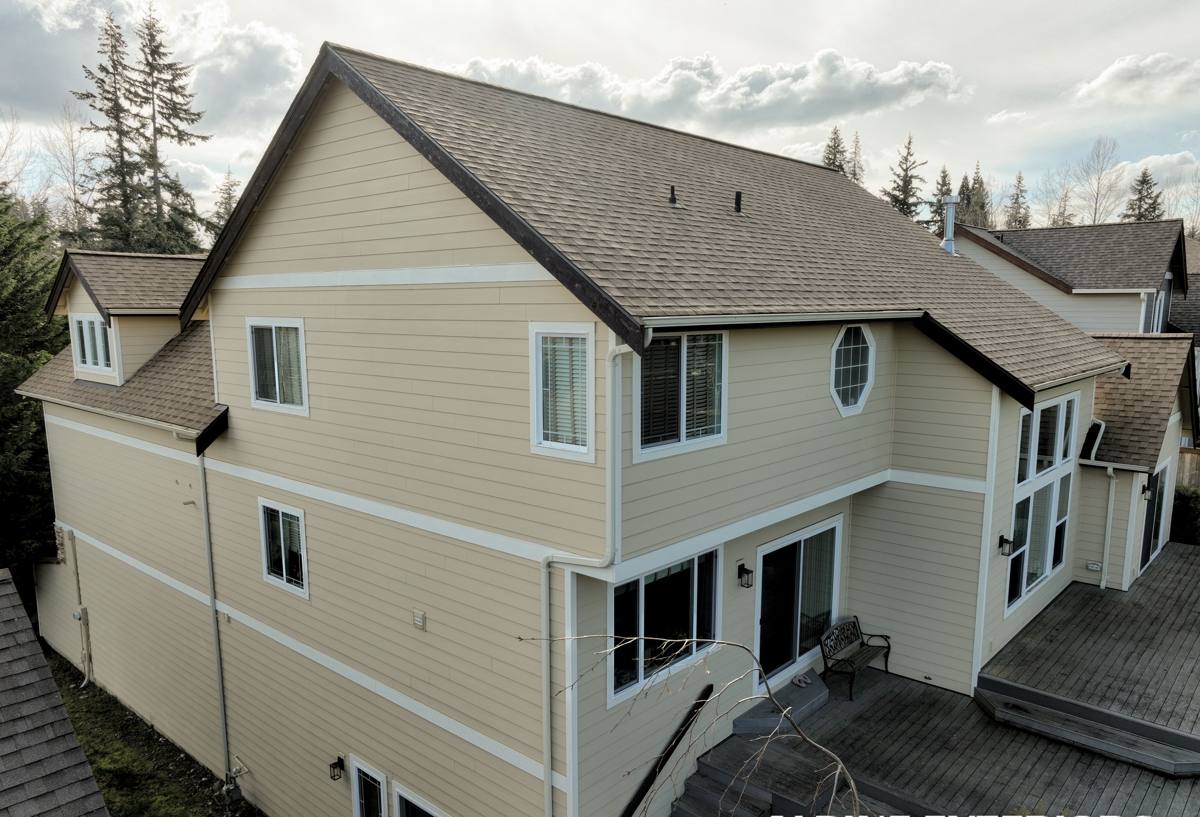
Signs a Lynnwood Home Needs New Windows
Windows rarely fail all at once. Watch for these signs, especially on walls that face prevailing weather:
- Fogging or a permanent haze between panes — the seal on the insulated glass unit has failed and moisture is trapped inside
- Soft, discolored, or moss-flecked trim and sills around the window frame
- Windows that are noticeably harder to open, close, or lock than they used to be
- A draft you can feel with your hand near the frame on a windy day
- Visible daylight or gaps at the corners of the frame from outside
- Paint or caulk that's cracked and pulling away from the window edge
- Interior sills or drywall below a window that stay damp or show staining after heavy rain
Any one of these can be a minor fix. Several at once, or moisture damage that's reached the wall framing, usually means it's time to replace rather than patch.
Why Moss Season Makes This Worse
Snohomish County's long wet season means moss and algae get a head start on any surface that stays shaded and damp — including window sills, exterior trim, and the corners of frames where water naturally collects. Left alone, that growth holds moisture against wood and caulk joints for months at a time, which accelerates rot and seal failure well beyond what the same window would experience in a drier region.
What a Correct Window Replacement Actually Involves
Swapping the glass unit is the easy part. The work that determines whether a window lasts happens around it:
Removal and Inspection
We pull the old window carefully and inspect the rough opening — the framing, sheathing, and sill — before anything new goes in. This is the point where hidden water damage from a poorly flashed original install shows up. If we find soft or rotted framing, it gets addressed before the new window is set, not covered over.
Flashing and Weather Barrier
Proper window flashing directs water down and out, away from the framing, using a layered approach — sill pan, side flashing, and head flashing integrated with the home's existing weather-resistive barrier. In a climate with as much driving rain as this one, this layering is the single biggest factor in whether a window stays dry for the next twenty years or starts leaking in five.
Setting, Shimming, and Sealing
The window has to be set level, plumb, and square, shimmed correctly so it isn't under stress that can warp the frame or bind the hardware, then sealed with the right sealant at the right joints — not everywhere, which can trap moisture instead of releasing it.
Trim and Finish
Exterior trim gets reinstalled or replaced with attention to the same drainage principles, with paintable or pre-finished materials chosen to handle continuous damp exposure rather than just look right on install day.
Comparing Window Frame Materials for This Climate
All of the major frame materials are used successfully in Snohomish County homes. The right choice depends on your home's age, style, and how much upkeep you want to take on.
| Material | Moisture Behavior | Maintenance | Typical Fit |
|---|---|---|---|
| Vinyl | Does not rot or absorb water; performs well in constant damp conditions | Low — occasional cleaning, no painting | Most Lynnwood homes; best value for straightforward replacements |
| Fiberglass | Very stable in moisture and temperature swings; minimal expansion/contraction | Low — durable finish, rarely needs attention | Larger openings or homes wanting a longer-term, lower-movement frame |
| Wood (clad exterior) | Good if the exterior cladding and flashing details are correct; vulnerable if seals fail | Higher — interior wood finish and exterior seal checks over time | Older or higher-end homes prioritizing a traditional interior look |
| Aluminum | Conducts cold and can condense moisture at the frame in our climate | Moderate | Less common for residential; mostly legacy installs we replace |
We'll walk through the honest trade-offs for your specific home rather than pushing one material across the board — a lot depends on your existing siding, trim style, and budget.
Glass Packages: What's Worth Paying For
Beyond frame material, the glass package affects comfort and energy performance more than most homeowners expect:
- Double-pane, low-E glass — the standard baseline for this region; a meaningful upgrade from older single-pane or early double-pane units
- Argon gas fill — a low-cost upgrade that improves insulation value between the panes
- Triple-pane — worth considering for north-facing rooms, homes near busier roads, or anyone prioritizing sound dampening and peak winter comfort, though it adds cost and weight
- Low-E coating tuned for the Pacific Northwest — helps manage heat loss during our long heating season without over-darkening rooms that already get limited winter daylight
We'll size the glass package to your budget and how the room is actually used, rather than defaulting to the most expensive option.
How Our Process Works
- Walkthrough and estimate. We look at each window you're considering, check the condition of the surrounding trim and framing, and give you straight numbers — no pressure, no inflated "today only" pricing.
- Material selection. We go over frame material and glass options based on your home, your budget, and what you want out of the rooms affected.
- Scheduling around the weather. Given how much of the year sees rain here, we plan install days to minimize how long any opening is exposed, and we work efficiently to keep your home weathertight throughout.
- Installation. Removal, framing inspection, flashing, setting, and finish work, done to the standard described above — not shortcuts to speed up the job.
- Final walkthrough. We check operation, sealing, and finish work with you before we consider the job done, and clean up the site fully.
Why a Crew That Already Works Lynnwood Matters
Window flashing details, moisture behavior, and code expectations aren't identical everywhere — what's standard practice in a dry climate can be undersized or wrong here. A crew that regularly works Snohomish County homes already knows how local siding types, trim profiles, and wall assemblies typically go together, which means fewer surprises once the old window comes out and fewer callbacks down the road. It also means we're a known, reachable local business if a question comes up after the job is finished — not a crew that worked the region for a week and moved on.
A Few Questions Worth Asking Any Contractor Before You Hire
- Will you inspect the rough opening for water damage before installing, and what happens if you find some?
- What flashing method do you use, and how does it integrate with my home's existing weather barrier?
- Is a permit required for this scope of work, and who pulls it?
- What's covered under warranty — the product, the labor, or both — and for how long?
- Can I see examples of similar window replacement work in this area?
Permits and Local Requirements
Window replacement in Lynnwood and the surrounding Snohomish County area commonly requires a permit, particularly when the new window changes the rough opening size, affects egress requirements in a bedroom, or is part of a larger exterior project. Requirements can vary by jurisdiction and by the scope of the specific job, so it's worth confirming with the local building department or asking your contractor to handle that step as part of the project. We build permit needs into the estimate up front so there are no surprises mid-project.
If your windows are fogging, drafting, sticking, or just showing their age, we're happy to take a look and give you a straightforward assessment — no pressure, no obligation. Reach out for a free estimate using the form below, and we'll walk you through exactly what your Lynnwood home needs.