 Everett
 Windows Built for How Silver Lake Actually Weathers
Silver Lake sits in south Everett, close enough to Puget Sound to catch salt-laden air on windy days and far enough inland that the marine layer settles in and lingers. Add Snohomish County's long, wet fall-through-spring stretch — driving rain that comes in sideways more often than straight down — and windows here work harder than the sales brochure ever accounts for. A window that's fine in a dry Eastern Washington town can fail early in Silver Lake if it wasn't installed with this specific climate in mind.
We've replaced windows on homes throughout this neighborhood, from older single-pane originals to worn-out builder-grade vinyl from the 90s and 2000s. The failure patterns repeat: fogged glass from broken seals, frames that have gone soft or chalky, and — almost universally — a dark green-black film of moss and algae building up in the corners and along the sill where water sits and never fully dries. None of that is cosmetic-only. It's a sign moisture is getting past the surface and into places it shouldn't be.
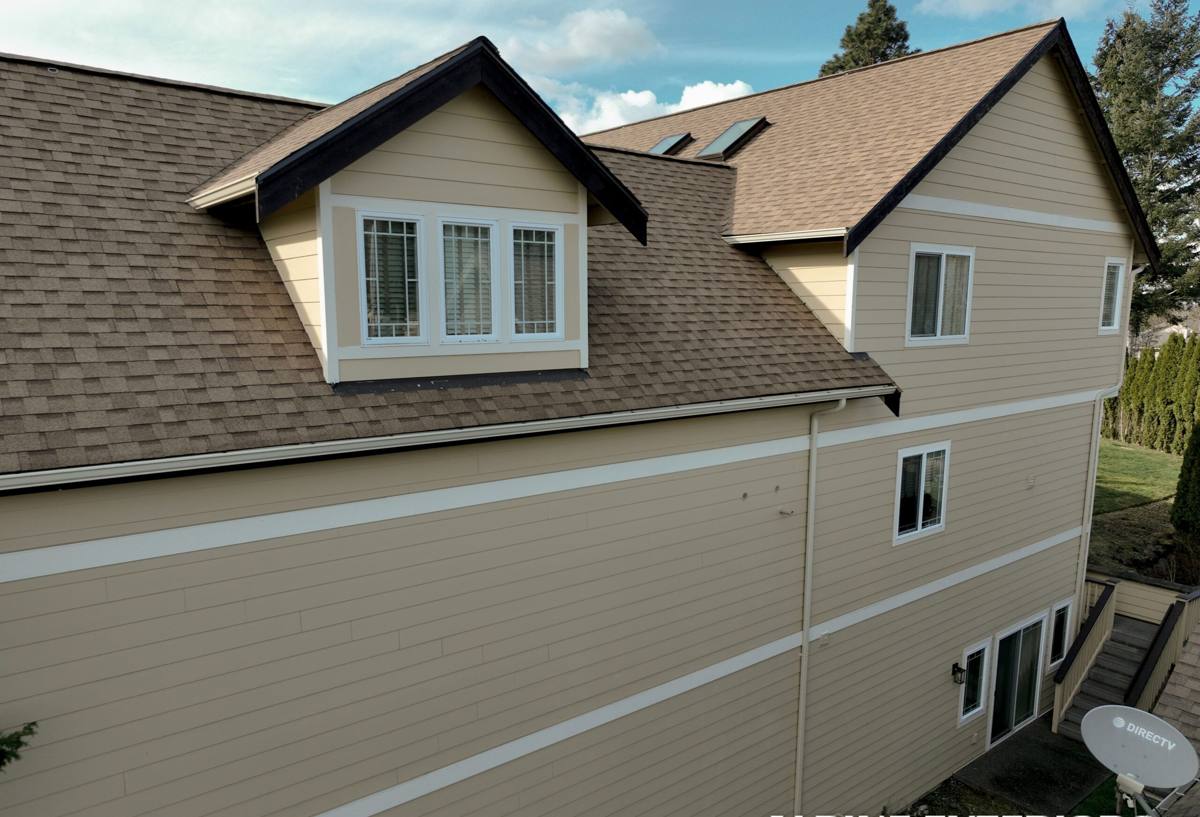
Signs a Silver Lake Home Needs Window Replacement
Not every drafty window needs full replacement, but in this climate, waiting too long usually costs more than acting early. Watch for:
- Fogging or a hazy film between the panes — the seal has failed and the argon gas or dry air fill is gone
- Moss, algae, or black staining collecting in the frame corners and on the sill, even after cleaning
- Wood trim or sill that feels soft, spongy, or is visibly rotting near the window opening
- Noticeable draft or cold air movement around the frame during a windstorm
- Windows that are difficult to open, close, or lock — a sign the frame has warped or shifted
- Condensation forming on the inside of the glass regularly through fall and winter
- Visible daylight or gaps around the frame from outside
Any one of these on its own might just need a repair. Several together, especially on a window over ten to fifteen years old, usually means the unit and its seal are done.
What a Correct Installation Actually Involves
It's Not Just the Window Unit
The window itself is maybe half the job. The other half is how it's flashed, sealed, and integrated with the wall around it — and that's the part that determines whether a window lasts five years or twenty-five in a wet climate like ours. A window can be top-shelf glass and still leak within a season if the flashing details around it are wrong.
What We Check and Do on Every Job
- Inspect the existing framing and sill for rot or water damage before anything goes in — this gets addressed, not covered over
- Install proper flashing and a sloped sill pan so any water that does reach the opening drains outward, not into the wall cavity
- Use the right sealants and backer rod, applied in the correct sequence, so the seal actually sheds wind-driven rain instead of just looking sealed
- Confirm the unit is level, plumb, and square before final fastening — a slightly racked window won't operate right and won't seal evenly
- Insulate the gap between the frame and the rough opening properly, without over-packing it, which can bow the frame
- Finish the interior and exterior trim so the whole assembly sheds water and looks right, not just functions right
This is the difference between a window replacement that holds up through another decade of Everett winters and one that starts showing problems again in three or four years.
Choosing the Right Window for This Neighborhood
There's no single "best" window — the right choice depends on the home's exposure, budget, and how long you plan to stay in it. In Silver Lake, we lean toward frame materials and glass packages that handle sustained damp and occasional salt air well, since that's the environment the window has to survive in, not just look good in on install day.
| Frame Material | How It Handles Our Climate | Maintenance |
|---|---|---|
| Vinyl | Good moisture resistance, won't rot; performance varies a lot by manufacturer quality | Low — occasional cleaning |
| Fiberglass | Excellent stability in temperature and moisture swings, holds paint well | Low — very stable, minimal upkeep |
| Aluminum | Durable but conducts cold and can condensate more without a thermal break | Low, but check thermal break quality |
| Wood | Best look for period-appropriate homes; needs protection from our wet season | Higher — periodic sealing/painting |
| Wood-clad | Wood interior with a weather-resistant exterior shell | Moderate — exterior is low-maintenance, interior needs occasional care |
Most homes we work on in this area do well with vinyl or fiberglass, dual- or triple-pane, with a Low-E coating and argon or krypton gas fill. Triple-pane earns its keep more on noise reduction and comfort near large window walls than on dramatic energy savings alone — worth discussing based on where the window sits on the house.
Glass Packages Worth Understanding
Low-E (low-emissivity) coatings reflect heat while still letting daylight in, which helps in both directions — keeping summer heat gain down and winter heat loss down. Gas fills between panes slow heat transfer further. In a home exposed to wind off the lake or open yard, a properly rated glass package also cuts down on the whistle and rattle you get from an older, worn seal during a real windstorm.
Our Process, Start to Finish
- On-site assessment — we look at each window opening, check for existing moisture or rot damage, and measure precisely (nothing ordered from a generic template)
- Straightforward quote — options laid out with real trade-offs, not upsell pressure, so you can pick what fits the budget and the house
- Ordering and scheduling — lead times vary by manufacturer and window size; we give you a realistic timeline up front
- Install day — old units removed, framing inspected and repaired as needed, new units set, flashed, sealed, and insulated correctly
- Trim and finish — interior and exterior trim completed so the job looks finished, not patched
- Walkthrough — every window opened, closed, and locked with you before we call it done, and the site cleaned up
Most single-family homes with a handful of windows are completed in a day or two, weather permitting. Full-house replacements take longer and we'll give you a specific window (no pun intended) once we've seen the scope.
Why Local Experience in Silver Lake Matters
A crew that already works this neighborhood knows what to expect before they show up: how homes here were framed depending on the build era, where moisture tends to collect given the lot's exposure, and what Snohomish County and City of Everett permitting requires for window work when it applies. That's not something you get from a crew that mostly works dry-side jobs or a different part of the county — the fixes that work in a drier climate aren't always the fixes that hold up here.
We've also seen enough moss-choked sills and soft trim boards in this specific area to know it's not a one-off problem — it's a pattern tied to how water sits and how sun exposure (or lack of it) affects drying time on different sides of a house. That local pattern recognition is part of what you're paying for when you hire a crew that already knows the neighborhood, not just the trade.
What Drives the Cost
Every home is different, but a few factors consistently move the price up or down. We'll walk through all of these specific to your home during the estimate — this is just what to expect going in.
| Factor | Why It Matters |
|---|---|
| Number and size of windows | More or larger openings mean more material and labor |
| Frame material chosen | Vinyl, fiberglass, and wood-clad price differently, with performance trade-offs to match |
| Existing rot or framing damage | Repairs to the rough opening add time and material before the new window can go in |
| Retrofit vs. full-frame replacement | Full-frame takes longer and costs more but is often necessary when the old frame is compromised |
| Glass package | Dual-pane, triple-pane, and specialty coatings scale in price with performance |
| Access and height | Second-story or hard-to-reach windows add labor time and equipment needs |
A Simple Checklist Before You Call Anyone
- Note which windows are foggy, drafty, hard to operate, or showing moss/staining
- Check for soft or discolored trim or sill wood around any window
- Decide roughly which rooms matter most if you're phasing the project instead of doing the whole house at once
- Ask any contractor you're considering about their flashing and sealing process, not just the window brand they sell
- Confirm licensing, bonding, and insurance before signing anything
- Get the warranty terms in writing — both the manufacturer's and the installer's labor warranty
If your windows in Silver Lake are fogging, drafting, or showing that familiar green film in the corners, it's worth having someone look before another wet Everett season adds to the damage. We offer free, no-pressure estimates — walk us through what you're seeing and we'll give you a straight answer on what it needs, using the form below.