 Everett
 Building Decks for Bayside's Marine Climate
Bayside sits close enough to the water that homes here deal with a different set of conditions than decks built ten miles inland. Salt-laden air moves through the neighborhood on a regular basis, driving rain comes in sideways more often than straight down, and the long stretch of gray, damp months between fall and spring gives moss and algae plenty of time to take hold on any horizontal surface that doesn't drain or dry out quickly. A deck that looks fine on installation day can start showing problems within a year or two if it wasn't built with those specific conditions in mind.
We've worked on enough decks in this part of Everett to know which details matter most here: fastener selection, drainage planning, ledger flashing, and picking a decking material that actually holds up to salt exposure rather than just looking good in a showroom. This page walks through what a correctly built Bayside deck involves, what we watch for, and how our process works from first estimate to finished project.
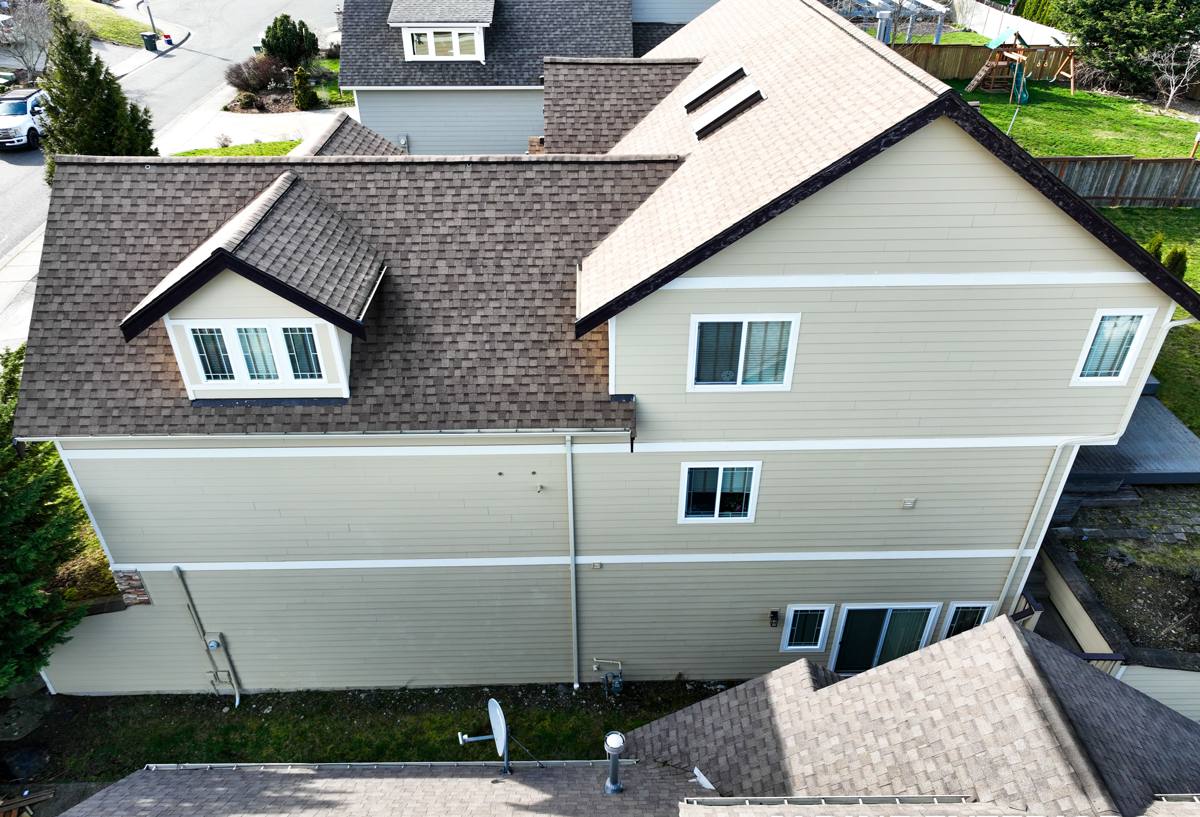
What Salt Air and Moss Actually Do to a Deck
It helps to understand the failure modes before talking about solutions, because the fixes only make sense in that context.
- Salt air accelerates corrosion. Standard galvanized fasteners and hardware break down faster near the water. Once a fastener starts rusting, it weakens and can stain the surrounding wood or composite decking.
- Moss and algae hold moisture against the surface. A deck board that stays damp under a layer of moss for weeks at a time is far more prone to rot, swelling, and slip hazards than one that dries between rain events.
- Driving rain gets pushed into places vertical rain never reaches. Ledger connections, stair stringers, and the undersides of rail posts take on water that a south-facing deck in a drier climate would rarely see.
- Freeze-thaw cycles, while mild here compared to inland Washington, still happen enough in winter to widen any crack or gap that trapped moisture has already started.
None of this means a deck can't hold up in Bayside for decades. It means the build has to account for these conditions from the framing up, not just at the surface.
Decking Material Options for This Environment
There's no single "correct" decking material for every homeout here — it depends on budget, maintenance tolerance, and how much salt and shade a particular yard gets. Here's how the common options compare for this specific climate.
| Material | Salt Air Resistance | Moss/Algae Behavior | Maintenance | Typical Lifespan Here |
|---|---|---|---|---|
| Pressure-treated wood | Good with stainless or coated fasteners | Needs regular cleaning and sealing to shed moisture | Annual cleaning, re-sealing every 2-3 years | 15-20 years with upkeep |
| Cedar | Naturally decent, but softens without upkeep | Prone to moss in shaded, damp areas | Sealing every 1-2 years in this climate | 15-20 years with upkeep |
| Composite decking | Very good — won't rust or corrode itself | Still needs periodic washing; textured surfaces trap moss spores | Low — occasional washing | 25-30+ years |
| PVC/capped polymer | Excellent, fully sealed surface | Sheds moss easier than wood, still needs washing | Low | 25-30+ years |
Composite and PVC decking have become popular in Bayside for a good reason: they don't absorb water the way wood does, so they're less hospitable to the kind of prolonged dampness that feeds moss and rot. That said, we don't treat any product as maintenance-free. Every decking material out here benefits from a rinse-down a few times a year, and we're upfront with homeowners about that rather than overselling a "zero maintenance" pitch.
Wood still has a place — it's less expensive up front, it's repairable board by board, and plenty of homeowners prefer the look and feel. Our job is to lay out the honest trade-offs so the decision fits the budget and the way the deck will actually be used, not to steer everyone toward the highest-margin product.
A Note on Fasteners and Hardware
Whatever decking material gets chosen, the fasteners and structural hardware matter just as much. In a marine-influenced environment like Bayside, we use stainless steel or coated fasteners rated for corrosive exposure rather than standard galvanized screws, and we match hardware to what the decking manufacturer specifies. Mixing incompatible metals — for example, the wrong fastener with certain composite boards — can cause galvanic corrosion or staining that shows up within a year or two.
Framing and Substructure: The Part You Don't See
A deck's surface gets all the attention, but the framing underneath is what determines whether it's still solid in fifteen years. For Bayside specifically, we pay close attention to:
- Ledger board attachment and flashing where the deck meets the house — this is the single most common source of hidden water damage on older decks.
- Joist spacing and sizing appropriate to the decking material and expected loads (hot tubs, large gatherings, built-in seating).
- Post bases set on proper footings, elevated off grade so wood posts aren't sitting in standing water after a heavy rain.
- Corrosion-resistant joist hangers and structural screws throughout, not just at the visible connections.
- Adequate airflow underneath the deck so the substructure can dry out between storms instead of staying damp.
This is also where cutting corners is easiest to hide and hardest to catch after the fact — a deck can look complete with a shortcut framing job, and the problems won't surface until a board starts feeling spongy or a post base starts to rust through.
Drainage and Ledger Flashing
Given how much rain this area sees, drainage planning isn't optional. We grade decking boards with proper gapping so water sheds through rather than pooling, and on any deck attached to the house, we install ledger flashing that directs water away from the wall assembly rather than letting it wick into the siding or framing behind it. Where a deck sits over a living space or patio below, we also talk through options for under-deck drainage systems that keep the area below dry.
Improper ledger flashing is one of the most common causes of hidden rot we find when we're asked to repair or rebuild an older deck in this area. It's not a visible detail once the deck is finished, which is exactly why it needs to be done right the first time.
Railings, Stairs, and Code Requirements
Any deck built to current standards in Snohomish County needs to meet applicable building code for railing height, baluster spacing, guard requirements, and stair geometry, along with a permit and inspection where the project requires one. We handle that process as part of the build rather than leaving it to the homeowner to sort out. Beyond the code minimums, railing material choice matters for the same climate reasons as decking — wood rail systems need the same fastener and sealing attention as wood decking, while metal or composite rail systems need corrosion-resistant hardware at every connection point.
Our Process, Start to Finish
The process is straightforward, but we don't skip steps just to move faster.
- On-site estimate. We walk the space, look at how the deck will be used, check the condition of the house at the ledger connection point, and talk through material options and rough budget ranges.
- Design and material selection. We finalize layout, size, decking and railing material, and any add-ons like built-in seating, lighting, or stairs.
- Permitting. We pull the required permits and schedule inspections so the finished deck is code-compliant, not just built to look right.
- Demolition and site prep (if replacing an old deck). Old material gets removed and hauled off, and we check the condition of anything hidden underneath before framing begins.
- Framing and substructure. This is where the corrosion-resistant hardware, proper footings, and ledger flashing all get installed correctly the first time.
- Decking, railings, and finish work. Boards get installed with proper gapping, railings go up to code, and any trim or finish details get completed.
- Final walkthrough. We go over care and maintenance specific to the material chosen, so the homeowner knows what upkeep actually looks like in this climate.
Maintenance Checklist for Bayside Homeowners
A well-built deck still needs some seasonal attention in this climate. Here's a practical checklist we give homeowners regardless of which contractor built the deck:
- Sweep debris and standing leaves off the deck surface regularly, especially in fall.
- Rinse or lightly scrub the surface a few times a year to prevent moss and algae buildup before it sets in.
- Check for any developing moss in shaded corners or under furniture and address it early rather than waiting.
- Inspect fasteners and hardware annually for early rust staining, which can signal a fastener issue before it becomes structural.
- Reseal or restain wood decking and railings on the schedule appropriate to the product — don't wait until the finish has visibly failed.
- Confirm gaps between boards stay clear of debris so water continues to drain properly.
- Have the substructure checked periodically, particularly on older decks, since that's where hidden moisture damage develops first.
Why a Crew That Already Works Bayside Matters
A deck built with a generic, one-size-fits-all approach can still pass a basic inspection and look good on day one. The difference shows up years later — in whether the ledger flashing actually kept water out, whether the fasteners chosen were rated for salt exposure, and whether the framing was set up to dry out between the region's frequent rain events. Crews that build regularly in Bayside and similar Everett neighborhoods make those material and detail decisions by default, because we've seen what happens when they're skipped.
That local familiarity also means a smoother permitting process with Snohomish County requirements, realistic timelines that account for our wet-season scheduling constraints, and material recommendations based on what actually performs in this specific environment rather than a generic climate assumption.
If you're planning a new deck or replacing one that's showing its age, we're happy to come take a look and put together a straightforward estimate — no pressure, no hard sell. Fill out the form below and we'll get in touch to schedule a time.