 Everett
 Why Bayside Decks Wear Out Faster Than You'd Expect
If you own a home in Bayside, you already know your deck takes more abuse than a deck fifteen miles inland. Proximity to Puget Sound means salt-laden air settles on every exposed surface, working into fastener heads, joist hangers, and the end grain of untreated lumber. Add Snohomish County's long wet season — months of driving rain followed by a mild, damp stretch where moss and algae get a real foothold — and you have a climate that's genuinely hard on outdoor structures. A deck built with inland assumptions, or built to code minimums without accounting for salt exposure, often shows real structural problems by year twelve to fifteen instead of lasting twenty-five or more.
Replacement isn't always the answer — plenty of decks just need targeted repair. But when the framing, ledger connection, or footings have been compromised by years of moisture cycling, patching the surface boards just delays a bigger problem. This page is about knowing the difference, and about what a deck replacement done right actually looks like for a Bayside property.
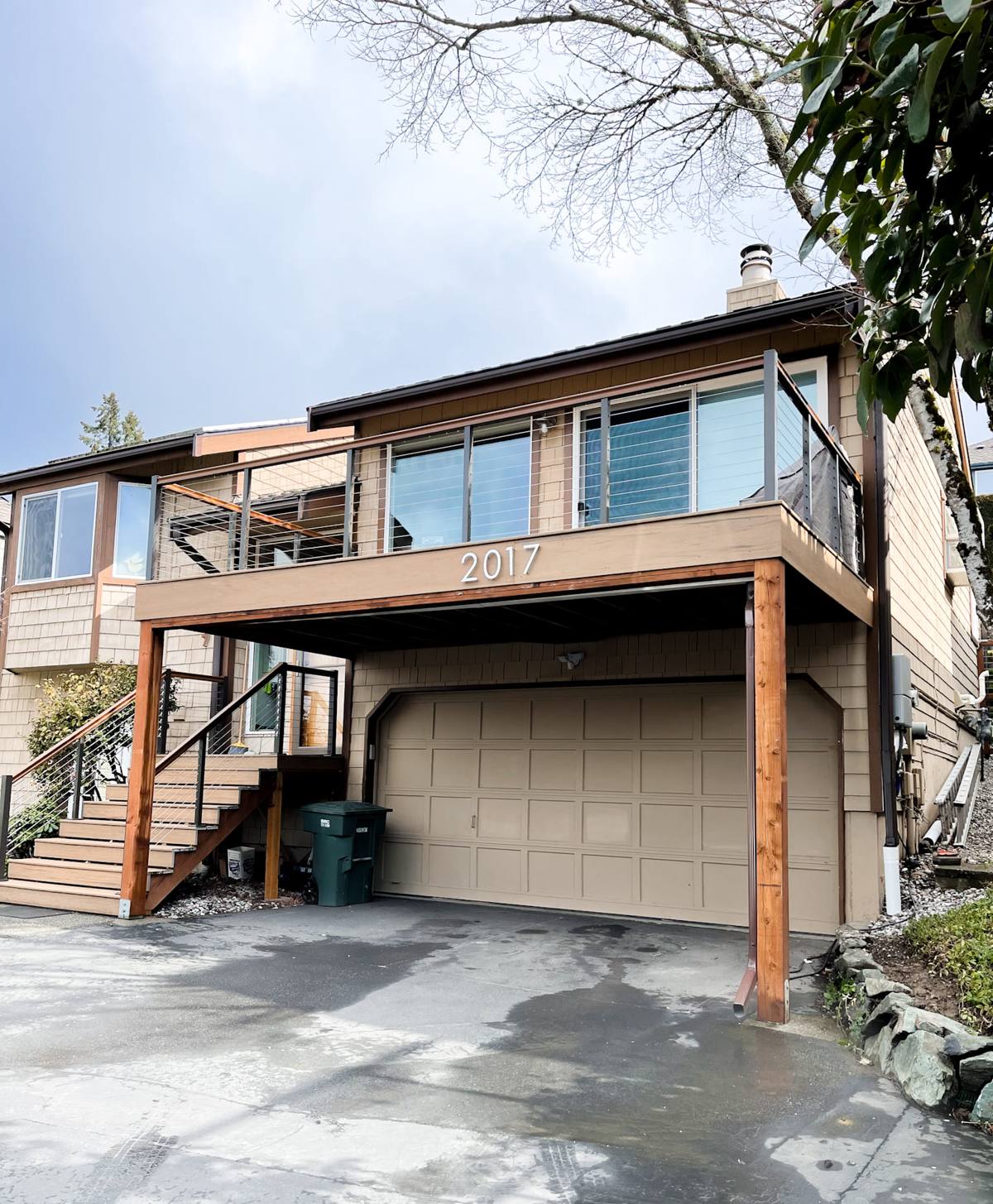
Signs a Bayside Deck Needs Replacement, Not Repair
Homeowners often call us about a soft board or two, expecting a quick fix, and find out the issue runs deeper. Here's what tends to separate a repair job from a full replacement:
- Soft, spongy, or spalling wood at the ledger board (where the deck attaches to the house) — this is often a sign of trapped moisture, not just surface wear.
- Rust streaking around joist hangers or fastener heads, especially on the underside of the deck where it's harder to see.
- Visible gaps, sagging, or bounce in the deck surface that wasn't there a few years ago.
- Persistent moss or black-green staining that returns within weeks of cleaning, which usually points to a drainage or airflow problem in the structure itself, not just the surface.
- Posts or footings that feel loose, or a railing that flexes more than it should.
One or two of these on their own might mean a repair. Several together, especially anything involving the ledger board or framing, usually means the deck has reached the point where replacement is the more honest recommendation.
What a Correct Deck Replacement Involves
The Ledger Connection
The ledger board — where the deck ties into the house — is the single most common failure point on decks in wet coastal climates. If it isn't flashed correctly, water works behind the board and rots both the ledger and the rim joist of the house itself. A proper replacement means removing the old ledger, inspecting the rim joist behind it for hidden damage, and installing new flashing that actually sheds water away from the house rather than trapping it against the wall.
Framing and Footings
Everything under the decking boards matters more than the boards themselves. That means checking post footings for movement or frost heave, confirming joist spacing is adequate for the decking material you're choosing, and replacing any framing lumber that shows signs of rot or insect damage rather than building over it.
Fasteners and Hardware
This is where a lot of decks near the water fail early. Standard galvanized hardware corrodes faster in salt air than most homeowners expect. A correct replacement uses stainless steel or heavy-duty coated fasteners and hangers rated for coastal exposure — it costs a bit more up front and saves you from rust streaks and hardware failure well before the wood itself is due for replacement.
Choosing Decking Material for This Climate
There's no single "best" decking material — there's a best material for your budget, your maintenance appetite, and how much sun versus shade your deck actually gets. Bayside's mix of moisture and tree cover makes shade-driven moss growth a real factor to plan around.
| Material | Moss/Moisture Behavior | Maintenance | Typical Lifespan |
|---|---|---|---|
| Pressure-treated wood | Absorbs moisture; needs sealing to resist moss and warping | Annual cleaning and re-sealing recommended | 10–15 years in this climate |
| Cedar | Naturally rot-resistant but still needs upkeep in shaded, damp spots | Periodic sealing; regular cleaning | 15–20 years with maintenance |
| Composite decking | Doesn't absorb water like wood, but can still grow surface algae/moss in shaded areas without cleaning | Occasional washing; no sealing needed | 25–30 years |
| PVC/capped polymer | Best moisture resistance of common options; least hospitable surface for moss | Low — occasional washing | 25+ years |
We'll walk you through the real trade-offs for your specific yard — how much direct sun the deck gets, how close it sits to trees or fencing that block airflow, and what your budget and maintenance preferences are. We won't push a product because it's easier to install; we'll tell you honestly what will hold up in your specific spot.
Railings and Fasteners Matter Too
It's easy to focus on decking boards and overlook railings, but railing posts and connections see the same salt exposure and moisture cycling as the deck frame. We match railing hardware to the same corrosion-resistant standard as the structural fasteners, so you're not replacing a rusted railing bracket five years after a full deck replacement.
Our Deck Replacement Process
- On-site assessment. We look at the existing structure, footings, ledger connection, and framing — not just the surface boards — to give you an honest read on whether replacement is actually needed.
- Material and design conversation. We talk through decking material, railing style, and layout based on your home, your budget, and how the deck is actually used.
- Permitting. Deck replacements of most sizes require a permit in Snohomish County jurisdictions; we handle that process so you don't have to navigate it yourself.
- Demolition and disposal. Full removal of the old deck, including any compromised framing, with proper disposal.
- Structural rebuild. New footings where needed, corrosion-resistant framing hardware, and a correctly flashed ledger connection.
- Decking and railing installation. Installed to manufacturer spec, with attention to drainage and airflow underneath to reduce future moss buildup.
- Final walkthrough. We go over the finished deck with you, including any maintenance recommendations specific to the material you chose.
What Affects the Cost of a Deck Replacement
| Factor | Why It Matters |
|---|---|
| Deck size and shape | Square footage and complexity (multiple levels, angles, built-in seating) directly drive labor and material cost |
| Decking material chosen | Pressure-treated wood costs less upfront; composite and PVC cost more but reduce long-term maintenance |
| Condition of existing framing/footings | If footings or framing need full replacement rather than reuse, that adds labor and material |
| Height and railing requirements | Elevated decks need more substantial railing systems and structural support |
| Permit and inspection requirements | Varies by jurisdiction within Snohomish County; factored into project timeline and cost |
We give straightforward, itemized estimates so you understand what you're paying for and why — no vague lump-sum numbers that hide where the money's going.
Living With Your New Deck: Maintenance in a Wet Climate
Even the best-built deck needs some seasonal attention in this climate. A little consistent care goes a lot further than an occasional deep clean.
- Sweep leaves and debris off the deck regularly, especially in fall — trapped organic matter holds moisture and feeds moss growth.
- Clean the deck surface at least once a year to remove algae and moss before it gets established, particularly in shaded corners.
- Check railings and stair connections annually for any looseness.
- If you chose wood decking, plan on resealing on the schedule recommended for that species — skipping a cycle in this climate shows up fast.
- Keep gutters and downspouts near the deck clear so runoff isn't draining directly onto or under the deck surface.
Why Hiring a Crew That Already Works in Bayside Matters
Deck construction fundamentals don't change from neighborhood to neighborhood, but the details that determine whether a deck lasts fifteen years or thirty do change with the site. A crew that regularly works Bayside properties already understands how much salt exposure a given orientation gets, how tree cover in this area affects drying time after a storm, and which fastener and flashing choices actually hold up here versus what's fine forty miles inland. That's not something you can fully substitute with a generic install — it comes from doing the work in this specific climate, repeatedly, and seeing what fails and what doesn't.
It also means we're not guessing on permitting requirements or typical soil and drainage conditions for the area — we've already worked through them on other Bayside projects.
Get an Honest Look at Your Deck
Whether your deck clearly needs to come down or you're just not sure if repair will hold, we're happy to take a look and give you a straight answer. Request a free, no-pressure estimate using the form below, and we'll walk the deck with you and explain exactly what we find.