 Everett
 Why Decks in Riverside Wear Out Faster Than People Expect
Riverside sits close enough to the water and tree cover that decks here take a different kind of beating than decks in drier, more open parts of Snohomish County. It's not one big storm that does the damage — it's the everyday combination of driving rain, shade, and humidity that never fully lets go, even in summer. Add in the faint but real salt air that rolls in off Puget Sound, and you've got a recipe for fasteners rusting from the inside, ledger boards trapping moisture against the house, and joists rotting in spots you can't see from the surface.
Most homeowners don't notice the slow decline until a board flexes underfoot or a railing post wiggles more than it should. By then, the problem usually isn't the decking boards — it's what's underneath them. That distinction matters a lot when you're deciding between a resurfacing job and a real replacement.
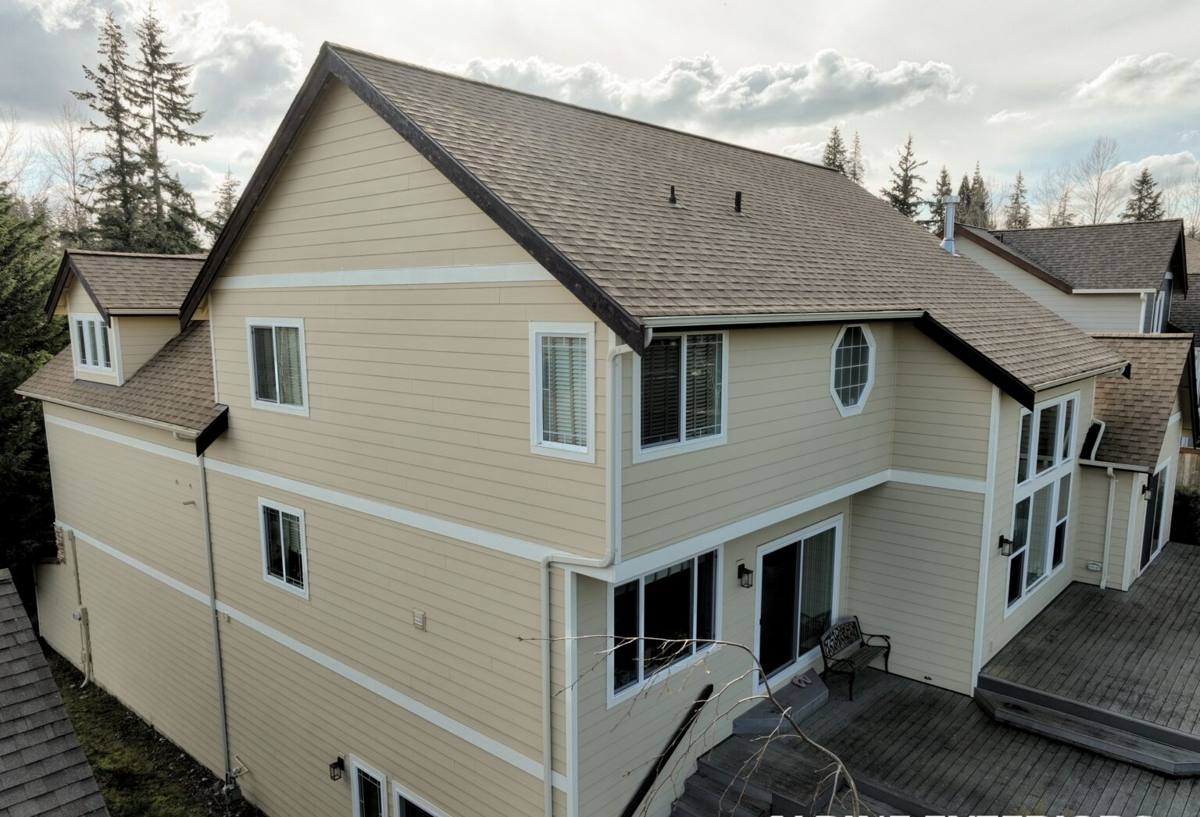
Resurfacing vs. Replacement: Know What You're Actually Buying
A lot of "deck refresh" jobs in this area are really just new boards screwed onto old, questionable framing. That can look great for a season or two, then fail for the same reasons the original deck failed — because the framing, flashing, and connections were never addressed. In a climate like ours, where moisture has months to work on wood every year, that's a short-term fix dressed up as a long-term one.
A true replacement means the structure gets evaluated and rebuilt where needed — not just the visible surface. For riverside-adjacent lots with more shade and ground moisture than average, we treat the substructure as the part of the job that actually determines how long the deck lasts.
Signs Your Deck Needs Real Replacement, Not a Patch
- Soft, spongy, or springy spots when you walk across the boards
- Rust streaks or corroded fastener heads, especially near the ledger
- Persistent moss or algae growth that comes back within weeks of cleaning
- Gaps or movement where the deck ledger meets the house
- Posts or railings that shift or wobble under normal weight
- Visible daylight or gaps between joists and the framing they sit on
What a Correct Deck Replacement Involves
Done right, a deck replacement in this area isn't just carpentry — it's water management. Every connection point is a place where rain can get trapped against wood that doesn't dry out quickly because of shade and humidity. We build with that reality in mind rather than treating our region like a dry climate.
The Structural Layer
This is the part that doesn't show up in a photo but decides whether your deck is a 10-year deck or a 25-year deck. It includes:
- Ledger board flashing that actually sheds water away from the house rim joist, not just a bead of caulk
- Joist tape or protective flashing on top of framing members to stop end-grain and top-of-joist rot
- Corrosion-resistant, code-rated fasteners and structural connectors sized for our wet-use conditions
- Proper footing depth and spacing for Snohomish County soil and frost conditions
- Airflow underneath the deck so moisture has somewhere to go instead of sitting still
The Surface Layer
This is what you see and touch every day — decking boards, railings, stairs, and fascia. It matters for looks and comfort, but it should never be the only thing that gets replaced when the framing underneath is compromised.
Choosing Decking Material for a Shaded, Wet Lot
Material choice matters more in a shaded, moisture-prone setting than it does on a sunny, open lot. Some products that perform fine in drier climates struggle here specifically because they don't get enough sun and airflow to dry out between rain events.
| Material | How It Handles Our Climate | Maintenance Reality |
|---|---|---|
| Pressure-treated wood | Affordable, structurally solid, but needs consistent sealing to resist moss and moisture intrusion in shaded spots | Annual cleaning and re-sealing recommended |
| Cedar | Naturally moisture-resistant and attractive, but softer and more prone to surface wear in constant damp shade | Periodic staining/sealing to maintain appearance and protection |
| Composite decking | Resists rot and moss buildup far better than wood; performance varies by brand and board design | Occasional washing; no sealing or staining required |
| PVC/capped composite | Best moisture and mold resistance of common options; holds up well in low-sun, high-shade areas | Lowest ongoing maintenance of the group |
We don't push one material on every homeowner. We'll walk your specific lot — how much direct sun it gets, how close it is to trees or the river corridor, and what you actually want to spend on upkeep — and give you an honest read on what will hold up versus what will look good for a year and then become a chore.
Moss, Algae, and Driving Rain: Designing for What Riverside Actually Gets
Moss isn't just a cosmetic nuisance here — it holds moisture against the surface it grows on, which accelerates wood decay and makes boards dangerously slippery on stairs and walking surfaces. A deck that's shaded for most of the day, which describes a lot of riverside lots, will grow moss again no matter how many times you power-wash it unless the design and material choice account for that from the start.
Driving rain is the other factor people underestimate. Wind-driven rain doesn't just fall straight down — it gets pushed sideways into ledger connections, under railing posts, and into any gap in flashing. That's why the flashing and fastening details matter as much as the decking material itself. A beautiful composite deck built on poorly flashed framing will still fail at the connection points, just more slowly than a deck with visible rot.
Our Deck Replacement Process
- On-site evaluation. We inspect the existing deck's framing, ledger connection, footings, and decking to determine what's structurally sound and what isn't — not just what's visible from the top.
- Honest scope and estimate. You get a clear picture of what needs full replacement versus what can be reused, with pricing broken out so you understand where the cost is going.
- Permitting. Deck replacement work in Everett and unincorporated Snohomish County often requires permits depending on size, height, and attachment to the house. We handle that process rather than leaving it to you.
- Demolition and disposal. Old decking, railings, and compromised framing are removed and hauled off.
- Structural rebuild. Footings, framing, ledger flashing, and joist protection are installed to current code and built for our moisture conditions, not a generic dry-climate standard.
- Surface installation. Decking, railings, and stairs go in with attention to drainage gaps and fastening patterns that account for our seasonal wet-dry cycles.
- Final walkthrough. We go over the finished deck with you, including what maintenance (if any) the material you chose will need going forward.
What Deck Replacement Typically Costs
Every deck is different, and the honest answer is that cost depends heavily on size, how much of the structure needs rebuilding, material choice, and whether stairs, railings, or multiple levels are involved. As a rough starting point for planning purposes, straightforward pressure-treated replacements tend to sit at the lower end of the range, while full composite or PVC rebuilds with new footings and railings run higher. We'll give you a firm, itemized number after we've actually looked at your deck — not a phone-quote guess.
What Moves the Price Most
- Square footage and number of levels
- Condition of existing footings and framing (reusable vs. needing replacement)
- Decking material selected
- Railing style and material
- Stairs, built-in seating, or other custom features
- Height above grade and any required guardrail code upgrades
Why a Crew That Already Works Riverside Makes a Difference
General contractors who work all over the region tend to build decks the same way regardless of where they are — because most of their jobs are in drier, sunnier neighborhoods where that approach holds up fine. A crew that regularly works Riverside and similar shaded, moisture-heavy pockets of Everett has already seen what happens when standard details aren't enough: which ledger flashing methods actually keep water out here, which materials fight moss and which invite it, and where the local permitting office tends to ask questions.
That familiarity isn't marketing — it shows up in fewer callbacks, fewer surprises during the county inspection, and a deck that's still solid a decade from now instead of one that needs attention again in three or four years.
Get a Straight Answer About Your Deck
If your deck is showing soft spots, persistent moss, rust at the fasteners, or just feels tired, it's worth having someone look at the framing before you decide between a resurface and a full replacement. We offer free, no-pressure estimates for Riverside homeowners — come take a look, tell us what's bothering you about your current deck, and we'll give you a straight read on what it actually needs. Use the form below to get started.