 Everett
 Building Decks for Delta's Everett Climate
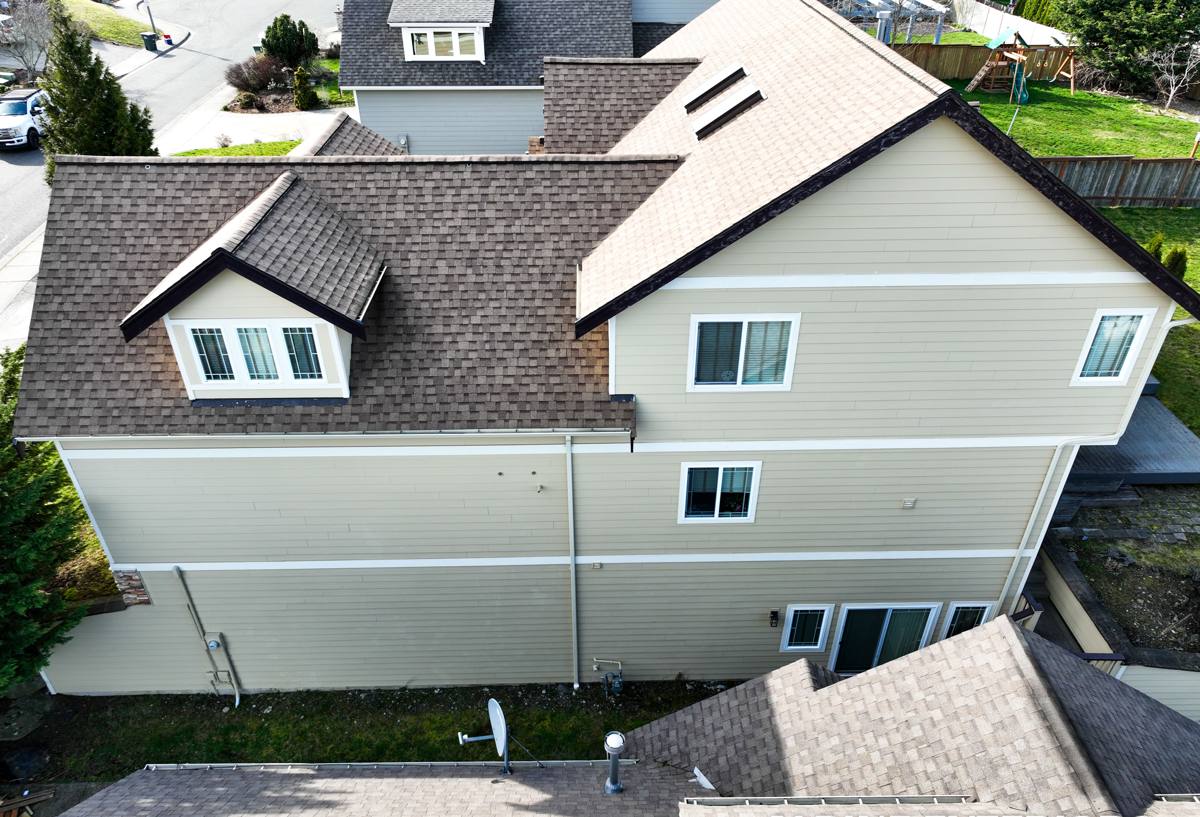
Delta is a working, close-knit part of Everett, and the homes here face the same weather challenges as the rest of Snohomish County — just compounded by the neighborhood's low-lying position near the water and industrial corridor. Salt-tinged air drifting off Puget Sound and the Snohomish River, long stretches of driving rain from fall through spring, and a moss season that can run eight months or more all put real stress on outdoor structures. A deck built without those specifics in mind will show its age fast: soft spots underfoot, black streaking, warped boards, and rusted fasteners within a handful of years instead of a couple of decades.
We build and repair decks specifically for this kind of exposure. That means picking materials and construction details that shed water instead of trapping it, resist the corrosive effect of salt air on metal hardware, and don't give moss and algae the damp, shaded footing they need to take hold.
What Delta's Weather Actually Does to a Deck
Salt Air and Metal Fatigue
Everett sits right on Puget Sound, and Delta's lower elevation means it catches more of that salt-laden air than neighborhoods farther up the hill. Salt air accelerates corrosion on anything metal — joist hangers, structural screws, railing brackets, even the coating on some fasteners rated for general outdoor use. Once a hanger or screw starts to rust, it loses holding strength long before it looks obviously bad, which is one of the more dangerous hidden failure points on an older deck.
Driving Rain and Standing Water
Snohomish County rain doesn't just fall straight down — wind-driven rain gets pushed sideways into ledger boards, under railing posts, and into any gap where flashing was skipped or done poorly. Combined with our long wet season, that means water has months at a time to find its way into wood fibers and connection points. Decks with poor drainage, flat spots, or missing flashing at the house connection are the ones we see rotting from the inside out.
Moss, Algae, and Shade
A moss season stretching most of the year is normal for this area, especially on decks that sit under tree cover or get limited direct sun — common in Delta's mature, tree-lined residential streets. Moss holds moisture against the deck surface, and on wood decking that moisture accelerates rot underneath a layer that looks merely dirty from a distance. On composite decking, moss and algae are mostly a surface and slip-hazard issue rather than a structural one, which is one reason composite has become the default recommendation for shaded lots.
What a Correctly Built Deck Looks Like Here
A deck built for Delta's conditions isn't a different design so much as it's built with different priorities in the details most homeowners never see:
- Stainless steel or heavy-duty coated structural hardware rated for coastal/salt-air exposure, not standard hot-dip galvanized
- Proper ledger board flashing where the deck meets the house, sealed to shed water away from the framing
- Joist tape or a moisture barrier on top of the framing to keep standing water off structural lumber
- Consistent slope away from the house so water doesn't pool on the decking surface
- Gapping between boards sized correctly for the material, so wet decking can actually dry out between rain events
- Footings set below frost depth and sized to local soil conditions, not just poured to a generic minimum
- Railing posts through-bolted rather than just screwed to rim joists, since that connection takes the most lateral stress
Skip any one of these and the deck can still look fine on install day — the problems just show up two, five, or ten years later, usually as a soft board, a wobbly rail, or a contractor telling you the whole thing needs to be rebuilt.
Choosing Decking Material for This Neighborhood
There's no single "best" decking material — it depends on how much sun the site gets, how much maintenance you want to do, and budget. Here's how the common options compare for a shaded, rain-exposed lot like a typical Delta yard:
| Material | Moss/algae resistance | Maintenance | Typical lifespan here |
|---|---|---|---|
| Pressure-treated wood | Low without regular cleaning | Annual cleaning, periodic staining/sealing | 10-15 years |
| Cedar | Moderate, needs sealing to hold up | Regular sealing to prevent graying and softening | 12-20 years |
| Composite decking | High, capped boards resist staining | Occasional wash, no sealing/staining | 25-30+ years |
| PVC decking | Highest, fully synthetic surface | Occasional wash | 30+ years |
On lots with heavy tree cover — common in Delta — we lean toward recommending composite or PVC decking simply because they don't feed moss and algae the way untreated or under-maintained wood does. That's a maintenance and moisture-behavior tradeoff we're happy to walk through in person, not a claim that wood decking is a bad choice; plenty of homeowners are fine keeping up with an annual cleaning and sealing routine in exchange for the lower material cost and the look of real wood.
Repair, Refresh, or Full Rebuild?
Not every deck problem means starting over. When we're called out to look at an aging deck in Delta, we're checking a specific set of things to figure out what's actually needed:
- Probe test on the ledger board, rim joists, and any spot near planters or low-drainage areas for soft or spongy wood
- Check every joist hanger and structural fastener for rust, especially anything original to a deck more than 10-15 years old
- Inspect railing post connections for looseness — a wobbly rail is often a sign of a bigger framing issue, not just a loose bolt
- Look at the ledger flashing where the deck meets the house siding, since that's the single most common source of hidden rot
- Assess whether the current footings meet code depth and size for the deck's actual load
If the framing is sound and it's really just surface wear — graying wood, worn stain, a few damaged boards — a decking-surface refresh can extend the deck's life for a fraction of a rebuild's cost. If the framing, ledger connection, or footings are compromised, patching the surface just hides the problem for a season or two. We'll tell you honestly which situation you're in before we quote anything.
Our Process for a Custom Deck Project
1. On-Site Assessment
We walk the property, check drainage patterns, sun/shade exposure, and if it's a rebuild, assess the existing structure. This is also where we talk through how you actually use the space — dining, grilling, a hot tub, sitting area — since that shapes the layout and structural design more than anything else.
2. Design and Material Selection
We work through decking material, railing style, and layout together, with the cost and maintenance tradeoffs laid out plainly. If your lot has heavy shade or sits low relative to drainage, we'll flag that early since it affects the material recommendation.
3. Permitting
Most new decks and significant rebuilds in Everett require a permit, and elevated decks typically need engineered footing and railing details. We handle the permit process as part of the project so you're not navigating city requirements on your own.
4. Construction
Framing first, with all the moisture-management details — flashing, joist tape, correct hardware — built in before decking ever goes down. We don't cut corners on the parts that get covered up, since those are the parts that determine whether the deck lasts 10 years or 30.
5. Final Walkthrough
We walk the finished deck with you, check railing stability, gapping, and drainage, and go over any maintenance the specific material you chose will need going forward.
Why Local Experience Matters for This Job
A deck built to a generic national spec will pass inspection and look good on day one anywhere in the country. A deck built by a crew that actually works Snohomish County knows to spec coastal-rated hardware without being asked, to size drainage for our rain totals rather than a drier climate's averages, and to recognize which parts of a Delta lot are going to stay shaded and damp most of the year. That local knowledge shows up in the decisions you never see — the flashing detail, the fastener grade, the slope calculation — which are exactly the decisions that determine whether you're calling a contractor back in three years or not calling anyone for the next two decades.
We also know the permitting process with the City of Everett, which keeps projects from stalling out waiting on paperwork or failing inspection over a missed engineering detail.
Maintaining Your Deck Once It's Built
Whatever material you choose, a little seasonal attention goes a long way in this climate:
- Sweep leaves and debris off the surface regularly in fall — trapped wet leaves are a major moss and stain contributor
- Clean the deck surface at least once a year with a deck-safe cleaner to break up early moss and algae growth before it embeds
- Check for standing water after heavy rain and confirm it's draining as designed, not pooling in one spot
- For wood decking, plan on resealing or restaining every 1-3 years depending on sun exposure and the product used
- Inspect railing connections annually for looseness, especially after freeze-thaw cycles
If you're planning a new deck, replacing an aging one, or just want an honest read on whether yours needs repair or replacement, we're glad to come take a look. Reach out for a free, no-pressure estimate using the form below.