 Everett
 Siding Repair Built for Delta's Weather, Not Just Any Siding
Homes in Delta take a specific kind of beating. This part of Everett sits close enough to Puget Sound and the Snohomish River basin that salt-tinged air, near-constant humidity, and driving, wind-pushed rain are part of daily life for a wall assembly. Add Snohomish County's long, gray moss season — often eight or nine months a year when conditions favor growth on north-facing and shaded walls — and you get siding that ages differently here than it would in a drier part of the state.
That combination is why siding repair in Delta isn't just "patch the bad board and move on." A repair that ignores moisture behavior, drainage, or what's happening behind the siding tends to fail again within a couple of seasons. A repair done right accounts for how water actually moves across this neighborhood's homes and stops the problem instead of just covering it up.
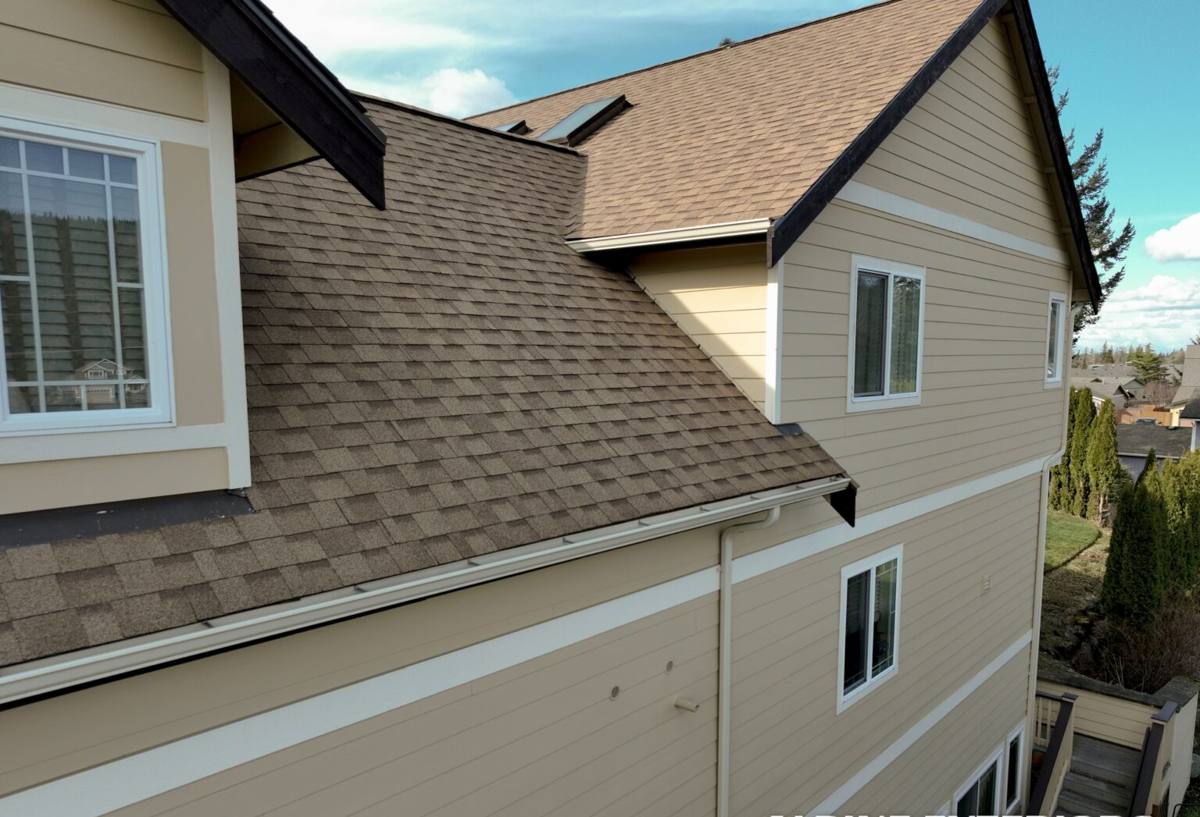
Signs a Delta Home Needs Siding Repair
Most siding problems don't announce themselves as an emergency. They show up as small, easy-to-ignore details first. On Everett homes exposed to salt air and heavy rain, we typically catch damage at one of these stages:
- Soft or spongy spots when you press on a wall, especially near the bottom courses or below windows
- Paint that's bubbling, peeling, or chalking faster than the rest of the house
- Visible cracks, splits, or buckling in individual boards or panels
- Persistent green or black staining that comes back within weeks of cleaning
- Gaps opening up at seams, corners, or trim where caulking has failed
- A musty smell near exterior walls, or interior drywall staining on the same wall line
- Nail heads popping through the surface or fasteners visibly rusting
Any one of these on its own might be minor. Several showing up in the same area of the house usually means moisture has been getting behind the siding for a while, which changes the repair from a cosmetic fix to a "open it up and see what's really going on" job.
Repair or Replace: How We Make That Call
Homeowners often assume repair is automatically the cheaper, better option. Sometimes it is. Sometimes patching a symptom costs more over five years than fixing the actual cause once. We walk through the same decision points on every Delta property:
| Situation | Usually repair | Usually replace (that section or wall) |
|---|---|---|
| Damage is isolated to one or two boards, sheathing underneath is dry and sound | Yes | No |
| Rot has spread along a seam or corner into adjoining boards | No | Yes |
| Siding is original vinyl or untreated wood, 20+ years old, brittle or warping | Rarely | Usually — matching old material gets harder every year |
| Moss and staining are surface-level with no soft spots underneath | Yes (clean, repair caulking, monitor) | No |
| Water intrusion has reached the sheathing or framing | No | Yes, and the source needs to be found first |
The honest answer is that we won't sell a full re-side to a homeowner who only needs a section repaired, and we won't recommend patching an area where the underlying wood is already compromised. The goal is telling you what's actually true about your walls, not what's easiest to quote.
What a Correct Siding Repair Actually Involves
A repair that lasts through another Everett winter has a few non-negotiable steps, regardless of what material is on the house:
1. Find the source, not just the symptom
Damaged siding is often a downstream effect — a failed flashing detail, a gutter overflowing onto a wall, a caulk joint that opened up years ago. Replacing the board without correcting the source means the same spot fails again.
2. Check what's behind the siding
Once a damaged section is opened up, we look at the water-resistive barrier, the flashing around any penetrations, and the sheathing itself. If moisture has been sitting there, that gets addressed before anything new goes back on.
3. Match the repair to the surrounding material honestly
If your home is sided in something we don't install — vinyl, cedar, LP SmartSide, or another engineered wood product — we'll tell you plainly whether a cosmetic match is realistic or whether the repair will always look like a repair. We won't pretend a patch will disappear invisibly if it won't.
4. Seal and finish to the same standard as new work
Fasteners, caulking, and paint or factory finish all matter as much on a repair as on a full installation. A repair that's structurally sound but poorly sealed just buys you a year or two before the same problem resurfaces.
The Materials We Find on Delta Homes
Everett's housing stock spans decades, and Delta has its share of older homes alongside newer construction. That means we see a mix of siding materials, each with its own repair reality:
Vinyl siding
Vinyl handles moisture reasonably well but becomes brittle with age and UV exposure, and it cracks in cold snaps. Matching an older color is often impossible since vinyl fades unevenly and manufacturers discontinue colors. Small repairs are possible; large-scale patching rarely looks seamless.
Cedar and other untreated wood siding
Wood siding in a climate like this needs consistent paint or stain maintenance to keep water out. Once maintenance lapses — which happens on rental properties and busy households alike — rot can move faster than homeowners expect, especially on north- and west-facing walls that stay damp longest.
LP SmartSide and other engineered wood products
These products perform acceptably when installed and maintained correctly, but they're wood-based at the core, which means edge swelling and moisture sensitivity are real long-term considerations, particularly at cut ends and seams that weren't properly sealed during the original install.
James Hardie fiber cement
This is the only siding product we install as a company, and it's also the material we recommend when a repair area needs to be replaced rather than patched. Fiber cement doesn't rot, doesn't feed moss the way wood fiber can, and holds its factory ColorPlus finish without the repaint cycle other materials demand.
Our Repair Process
Every Delta repair call follows the same sequence, whether it's a single damaged board or a multi-wall issue:
- On-site inspection — we look at the full wall, not just the spot you called about, since related damage often hides nearby
- Explain what we find — in plain terms, including photos of anything opened up so you can see it yourself
- Honest recommendation — repair, partial replacement, or full re-side, with the reasoning behind it
- Fix the cause — flashing, caulking, drainage, or ventilation issues get corrected as part of the job, not left for later
- Complete the repair — matched or replaced material installed to the same standard as new construction
- Final walkthrough — we point out what to watch for going forward, especially around moss-prone areas
Why We Standardize on James Hardie for Replacement Work
When a repair calls for replacing a section of siding rather than patching it, we use James Hardie fiber cement — not because it's the only product on the market, but because it's the one we're willing to put our name on for the long term. It's non-combustible, engineered for climates like ours through its HZ5 product line, and backed by a strong transferable warranty that matters if you sell the home down the road. For a repair section that needs to hold up next to older siding for another decade or two, that combination of moisture resistance and finish durability is worth the honest conversation about whether a full re-side eventually makes more sense than repeated patching.
Why Hire a Crew Already Working in Delta
Siding repair done by someone unfamiliar with this specific stretch of Everett often misses the details that matter most here — which wall orientations hold moss longest, how salt-influenced air affects fastener corrosion over time, and how much driving rain a given exposure actually takes in a typical winter. A crew that already works this neighborhood isn't guessing at those variables; they've seen how these homes age and what actually causes the repeat calls. That translates into fewer surprises once a wall gets opened up, and a repair plan built around how your specific home behaves rather than a generic checklist.
If you're seeing damage, staining, or soft spots on your Delta home's siding, we'll come take a look, tell you honestly what we find, and give you a no-pressure estimate for fixing it right. Use the form below to get started.