 Everett
 Metal Roofing Built for Edmonds' Coastal Climate
Edmonds sits close enough to the water that homes here deal with a different set of roofing stresses than houses further inland in Snohomish County. Salt-laden air moves off Puget Sound and settles on every exterior surface, wind-driven rain finds its way under poorly lapped flashing, and the wet, shaded months of the year turn north-facing slopes and tree-covered lots into moss farms. A roof that isn't specified and installed with those three things in mind will show problems years before it should.
Metal roofing, done correctly, holds up well against all three. But "done correctly" is doing a lot of work in that sentence. Metal is unforgiving of shortcuts in a way that asphalt shingles are not — a sloppy flashing detail on a shingle roof might weep slowly for years before anyone notices; the same mistake on a metal roof tends to show up faster and can be more disruptive to fix. That's why the installation details matter more here than almost anywhere else in the exterior trades.
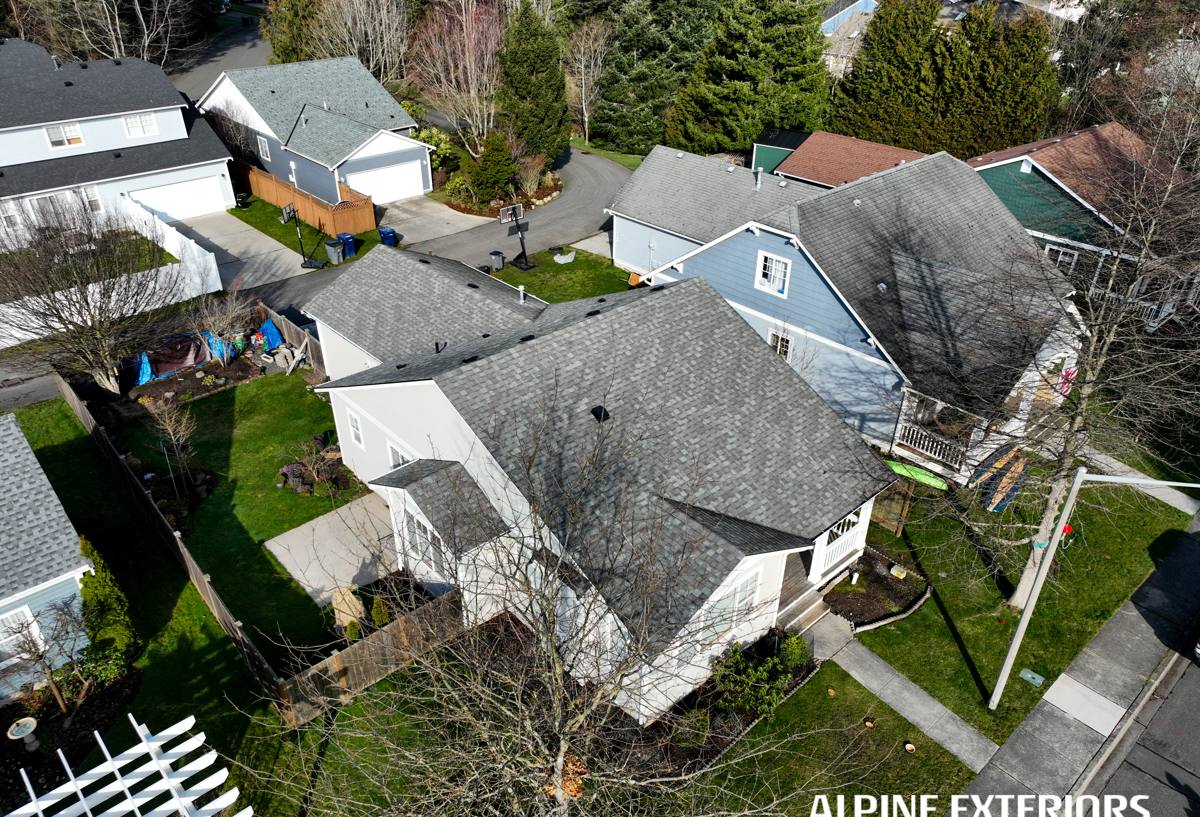
Why Edmonds' Climate Changes the Job
Salt Air and Metal Fastener Corrosion
Homes within a few miles of Puget Sound get a steady, low-grade exposure to salt in the air. It's not the same as a beachfront property getting direct salt spray, but it's enough over 15-20 years to matter, especially at fasteners, cut edges, and any spot where two dissimilar metals touch. Fastener choice and panel coating both need to account for this — a fastener that's fine in Sultan or Monroe isn't automatically fine in Edmonds.
Driving Rain and Wind-Driven Water
Snohomish County storms don't always come straight down. When wind pushes rain sideways or upward under panel laps, the roof's underlayment and flashing details are what actually keep the house dry — the panels themselves are only part of the water management system. Roofs near open water or exposed hillsides in Edmonds see this more than sheltered inland lots.
Extended Moss Season
Shaded, north-facing roof sections and lots with mature evergreen cover stay damp for much of the year in this area. Moss doesn't just sit on top of a roof looking bad — on shingles it lifts tabs and holds moisture against the surface. Metal roofing doesn't give moss the same foothold, which is one of the practical reasons homeowners in wooded or shaded Edmonds neighborhoods look at it in the first place.
What a Correct Metal Roof Installation Involves
A metal roof is a system, not just a set of panels. Each layer has a job, and skipping or shortcutting one shows up as a problem down the road — sometimes years down the road, which is exactly why it matters to get it right the first time.
- Deck inspection and repair — any soft, rotted, or under-ventilated decking gets addressed before a single panel goes down. Covering a bad deck with new metal just hides the problem.
- Underlayment suited to metal — synthetic or high-temp underlayment rated for use under metal, not a generic felt product, especially at valleys and eaves where water concentrates.
- Ice and water shield at vulnerable areas — eaves, valleys, penetrations, and low-slope transitions get additional protection where wind-driven rain and ponding are most likely.
- Panel layout and fastening — correct fastener type, spacing, and torque for the panel profile and expected wind exposure, with attention to galvanic compatibility between the panel, fastener, and any flashing metals.
- Flashing at every transition — valleys, wall-to-roof intersections, chimneys, skylights, and penetrations are where the vast majority of roof leaks originate, on metal or any other roofing material.
- Ventilation — proper intake and exhaust airflow keeps the attic space from trapping moisture, which matters even more under a metal roof than a shingle one.
Choosing the Right Panel and Finish
Not every metal roofing product is a good fit for every home or budget. Panel profile, gauge, and coating all affect how a roof performs and looks over time, and the right answer depends on the home's exposure, roofline, and the homeowner's priorities.
| Factor | What to Consider |
|---|---|
| Panel Profile | Standing seam gives a clean, concealed-fastener look and strong water-shedding performance; exposed-fastener panels cost less upfront but need more attention to fastener maintenance over time. |
| Gauge (Thickness) | Heavier gauge resists denting and holds up better to foot traffic and impact, which matters on roofs with equipment or frequent maintenance access. |
| Coating System | Higher-quality paint systems resist fading and chalking longer, which matters more here given the UV cycling between overcast wet seasons and bright summer stretches. |
| Coastal Fastener Rating | Homes closer to Puget Sound benefit from fasteners and flashing rated for higher corrosion resistance, even though Edmonds isn't direct beachfront. |
| Color and Reflectivity | Darker colors show more granular fading over time; lighter and cool-roof colors can help with attic heat load in south-facing installations. |
We walk homeowners through these trade-offs honestly rather than defaulting to whatever's easiest to install. A roof is a 40-plus-year decision in most cases, and the panel choice should match how the home actually sits on its lot — how much shade, how much wind exposure, how close to the water.
Metal Roofing vs. Asphalt Shingles in a Climate Like This
Both are legitimate roofing choices, and we install and repair both. The honest comparison for an Edmonds home usually comes down to a few practical points rather than one being universally "better."
| Consideration | Metal Roofing | Asphalt Shingles |
|---|---|---|
| Moss Resistance | Much less hospitable surface for moss growth | Granular surface holds moisture and gives moss a foothold, especially in shade |
| Wind-Driven Rain | Strong when flashing and laps are done correctly; less forgiving of installation errors | More forgiving of minor imperfections but more prone to wind uplift on individual tabs |
| Upfront Cost | Higher material and labor cost | Lower upfront cost |
| Lifespan | Typically decades longer with proper maintenance | Shorter lifespan, more frequent replacement cycles |
| Noise and Feel | Some homeowners notice rain sound more; proper deck and insulation largely address this | Quieter under rain by default |
Our Installation Process
- On-site assessment — we look at the existing roof, deck condition, ventilation, flashing points, and the specific exposure of the home given its position relative to sun, shade, and prevailing wind and rain.
- Product and panel recommendation — based on that assessment, not a one-size answer, we recommend a panel profile, gauge, and coating that fits the home and the homeowner's budget.
- Written estimate — clear scope, materials, and pricing before any work starts, so there are no surprises mid-project.
- Deck prep and repair — any rot or soft decking is repaired before installation begins.
- Underlayment and flashing installation — the part of the job that determines whether the roof actually stays dry over its lifespan.
- Panel installation — correct fastening, spacing, and seam work for the chosen panel type.
- Final walkthrough — we review the completed roof with the homeowner, including care and maintenance guidance specific to metal roofing.
Maintenance That Actually Matters
Metal roofing is lower-maintenance than shingles, but it isn't zero-maintenance, and a little attention goes a long way toward getting the full lifespan out of the investment.
- Clear debris from valleys and around penetrations, especially after fall leaf drop.
- Check that gutters and downspouts are flowing freely so water isn't backing up against roof edges.
- Watch for any early moss or algae staining at shaded sections and address it before it spreads.
- Have flashing and sealant points inspected periodically, particularly after major wind events.
- Trim back overhanging branches that keep sections of the roof shaded and damp longer than necessary.
Why Local Installation Experience Matters
A roofing crew that works across a range of Western Washington climates learns to read a given roof's specific exposure rather than applying the same install checklist everywhere. Edmonds' mix of near-water lots, mature tree cover, and driving winter storms is a specific combination — different from a drier inland Snohomish County property, and different from a fully exposed waterfront home further north. Getting the flashing, fastener choice, and ventilation right for that combination is what separates a metal roof that performs for decades from one that develops slow, hard-to-trace leaks.
We've installed and repaired roofing across Everett and the surrounding Snohomish County communities, and we bring that same attention to detail to every Edmonds project — treating the salt air, rain exposure, and moss pressure as real design factors, not afterthoughts.
Get a Straightforward Estimate
If you're weighing metal roofing for a home in Edmonds, we're glad to take a look and give you an honest read on what your roof actually needs — no pressure, no upsell. Reach out using the form below for a free estimate and we'll walk you through the options that make sense for your home.