 Everett
 Silver Lake Homes Face a Specific Kind of Wear
Silver Lake is one of south Everett's older, tree-shaded residential pockets, with homes ranging from mid-century ramblers to newer infill construction sitting close to the water and under mature conifer canopy. That combination — shade, humidity, and proximity to a lake — creates siding conditions that are different from a wide-open lot on higher, drier ground. Homes here tend to hold moisture longer after a storm, get less direct sun to dry out, and collect organic debris in siding laps and corners faster than homes in more exposed parts of the city. None of that is a reason to avoid the neighborhood — it's just a reason to be deliberate about what goes on the walls and how it's installed.
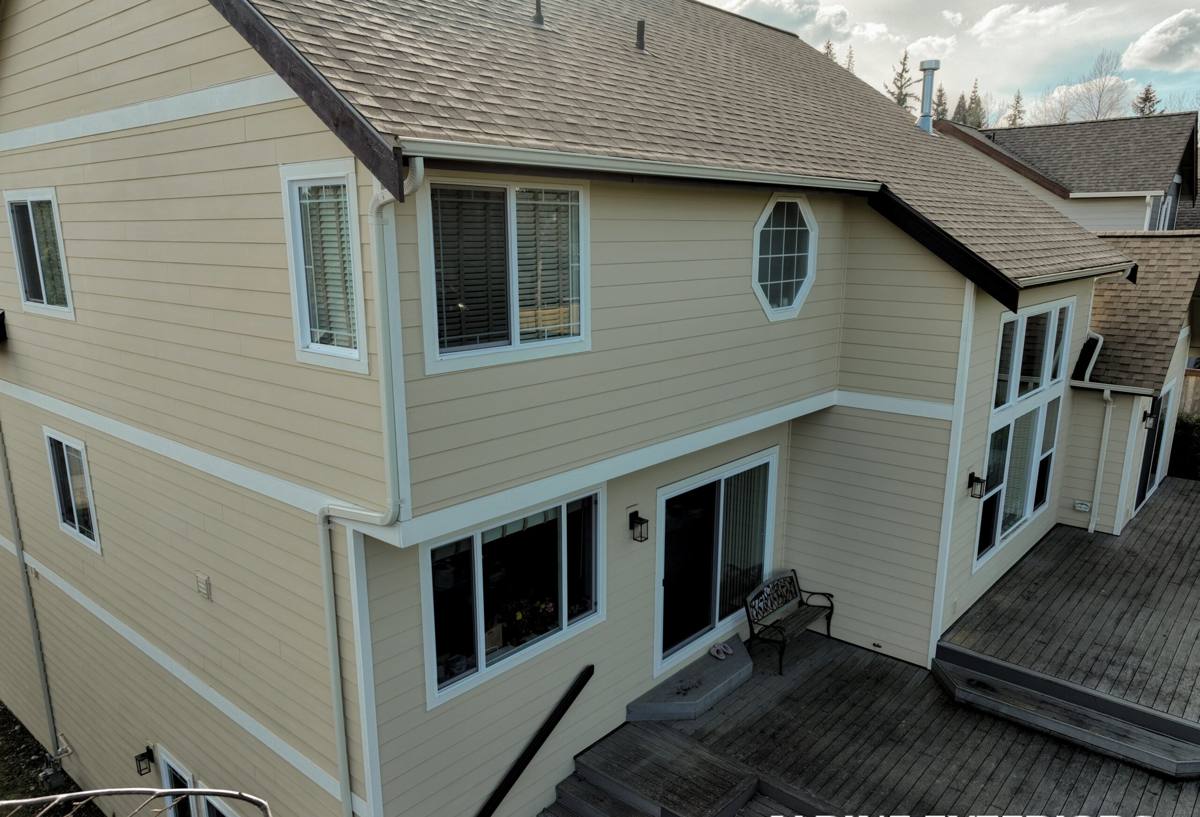
What Snohomish County's Climate Does to Siding Over Time
Driving rain and wind-driven moisture
Everett doesn't get flash flooding weather, but it gets long stretches of steady, wind-driven rain, especially from fall through spring. That kind of rain doesn't just fall on siding — it gets pushed sideways and up under laps, around trim, and into any gap that isn't properly flashed or caulked. Products that swell, delaminate, or rot when they stay damp for days at a time are working against the climate here, not with it.
Moss, algae, and shaded lots
Around Silver Lake specifically, tree cover and lake humidity add up to a long moss and algae season — often nine or ten months a year of conditions that favor growth on north-facing walls, under eaves, and anywhere siding stays shaded and damp. Moss doesn't just look bad; it holds moisture against the siding surface and, over years, can accelerate wear on products that aren't built to resist it.
Salt air across the region
Everett sits on Puget Sound, and salt-laden air moves through the broader region even in neighborhoods set back from the shoreline. Salt air is hard on fasteners, trim, and any siding component prone to corrosion or rust-staining. It's a slower, quieter form of wear than moss or rot, but it adds up over a couple of decades.
Why We Standardized on James Hardie Fiber Cement
We install James Hardie fiber cement siding exclusively — not vinyl, not LP SmartSide, not other fiber cement brands. That's a deliberate standard, not a default. Fiber cement as a category resists the two things that do the most damage to siding in a climate like ours: sustained moisture and fire. Within that category, James Hardie is the manufacturer we trust to back that performance with engineering and a warranty structure that holds up over the decades a Silver Lake home will actually wear its siding.
James Hardie siding is non-combustible, which matters in a region where wildfire smoke and ember exposure have become a more regular summer concern even west of the Cascades. It doesn't feed insects, doesn't require the same repainting cycle as wood, and its factory-applied finish is engineered to hold color and resist moisture intrusion far better than field-applied paint on raw material. For a lake-adjacent, tree-shaded home that spends much of the year damp, that combination is close to the whole ballgame.
The James Hardie Product Lines We Install
HardiePlank lap siding
The most common choice for Silver Lake homes — horizontal lap siding available in several plank widths and textures, from smooth modern profiles to more traditional cedar-look grain. It's the right fit for most single-family homes in the neighborhood and pairs well with the mix of architectural styles found around the lake.
HardiePanel vertical siding
Used as an accent or, on some homes, as the primary siding — often combined with lap siding on gables, entry features, or garages to break up a large wall plane. Vertical panel siding sheds water differently than lap siding, and detailing the seams correctly is what keeps that water-shedding advantage intact.
ColorPlus factory finish
Rather than field-painting siding after installation, ColorPlus is baked on at the factory in multiple coats under controlled conditions, which produces better adhesion and UV resistance than a job-site paint job can match. In a neighborhood with heavy tree cover and long damp seasons, that finish durability matters more than it would on a sun-drenched, wide-open lot.
HZ5 climate engineering
James Hardie engineers certain products to different regional exposure zones. Western Washington falls into a wet, moderate-freeze climate zone, and installing the HZ product line engineered for that exposure — rather than a formulation meant for a drier or colder climate — is part of getting the material right for this specific location, not just the general Pacific Northwest.
What a Correct Installation Involves
Fiber cement siding is only as good as its installation. The material itself resists moisture and fire, but a poorly detailed installation can undercut every one of those advantages — and on a shaded, damp lot near Silver Lake, installation mistakes show up faster than they would on a drier site.
| Detail | Done correctly | Common shortcut |
|---|---|---|
| Clearance from grade and hardscape | Minimum recommended clearance maintained above soil, decks, and walkways | Siding installed tight to grade, wicking moisture from the ground up |
| Flashing at windows and doors | Proper flashing and house wrap integration that directs water out and away | Trim installed without flashing, relying on caulk alone |
| Fastening | Corrosion-resistant fasteners at manufacturer-specified spacing and depth | Overdriven or under-driven nails, wrong fastener type for the climate |
| Joints and seams | Properly lapped, gapped, and sealed per manufacturer spec | Butt joints caulked without the specified gap, trapping moisture |
| Cut edge sealing | Factory-primed edges re-sealed where field cuts expose raw material | Cut ends left unsealed, inviting moisture at the most vulnerable point |
Every one of those "common shortcut" outcomes shows up in the field on homes that were sided quickly by crews unfamiliar with the product. On a Silver Lake property, where a wall might stay damp for days after a storm, a shortcut that would be a minor issue in a drier climate can turn into a real problem within a few seasons.
Our Process for a Silver Lake Project
- On-site assessment. We walk the property, note shaded and moss-prone walls, check for existing moisture damage behind the current siding, and look at trim, window, and roofline conditions that affect the siding plan.
- Tear-off and substrate check. Old siding comes off and we inspect the sheathing underneath for rot or soft spots before anything new goes up — a step that matters most on older homes and lake-adjacent lots where hidden moisture is more common.
- Weather-resistive barrier. A proper house wrap or weather barrier goes on correctly lapped and taped, giving the wall a second line of defense behind the siding itself.
- Flashing and trim details. Windows, doors, and penetrations get flashed before siding goes on around them — this is the step most often rushed on lower-quality jobs and the one that prevents the majority of long-term moisture problems.
- Siding installation. HardiePlank, HardiePanel, or a combination is installed to manufacturer spacing, fastening, and clearance specifications, with attention to the specific walls that get the most shade and moisture on that particular lot.
- Final trim, caulking, and cleanup. Finish trim, corner details, and touch-up work are completed, and the site is cleaned of debris and old material.
Cost Factors for Fiber Cement Siding in Silver Lake
We don't quote pricing without seeing the home, but these are the factors that move a Silver Lake project up or down in scope and cost.
| Factor | How it affects the project |
|---|---|
| Home size and wall complexity | More corners, gables, and dormers mean more cutting, flashing, and labor time |
| Existing siding removal | Tear-off of old wood, vinyl, or damaged fiber cement adds labor and disposal cost |
| Substrate repair | Rotted sheathing found during tear-off needs to be replaced before new siding goes on |
| Siding profile mix | Combining lap and panel siding, or adding accent details, adds material and install complexity |
| Trim and color selection | Custom trim packages and ColorPlus color choices vary in material cost |
| Site access | Mature trees, slopes, and tight lake-lot setbacks around Silver Lake can affect staging and scaffolding needs |
Maintaining Fiber Cement Siding Near Silver Lake
Fiber cement is low-maintenance compared to wood, but "low-maintenance" isn't "no-maintenance," especially on a shaded lot. A short annual routine keeps siding performing the way it's designed to.
- Rinse siding annually, focusing on north-facing and shaded walls where moss and algae take hold first
- Trim back tree branches and shrubs so walls get more air movement and sun exposure
- Inspect caulking at trim, windows, and joints yearly and re-caulk where it's cracked or pulling away
- Check gutters and downspouts before the wet season so water isn't dumping directly onto or behind siding
- Look at the base of the walls for splashback staining or standing water that suggests a grading or drainage issue
- Address any small chips or damage promptly so the factory finish isn't compromised at that point
Why Hire a Crew That Already Works This Neighborhood
A contractor who already works in and around Silver Lake understands how lake-adjacent lots, mature tree canopy, and Everett's permitting process fit together on a real project — not just in theory. That familiarity shows up in small but meaningful ways: knowing which walls on a shaded lot are going to need extra attention to flashing and moss resistance, planning access around trees and slopes without surprises mid-project, and building a siding plan around how a specific property actually sits relative to sun, shade, and water. It also means a crew that has already seen how James Hardie siding performs on homes like yours a few years after installation, not just on the day it goes up.
Get a Local Estimate
If you're weighing a siding project for a Silver Lake home, we're glad to take a look and walk you through what your specific lot and exposure call for. There's no pressure and no obligation — just a straightforward assessment and an honest recommendation. Use the form below to request a free estimate.