 Everett
 Building a Deck That Actually Holds Up in Forest Park
Forest Park sits close enough to Puget Sound and tucked in enough among mature trees that a deck here faces a different set of problems than one built out in a dry, open lot. The combination of salt-tinged air, long stretches of driving rain, and shade that never fully burns off in winter means a deck built without those conditions in mind will show its age fast — soft spots, black streaks, loose railings, rusted hardware. A deck built with them in mind can go decades before it needs more than routine care.
This page is about what that looks like in practice: what Forest Park's climate actually does to a deck over time, what a correctly built deck needs to resist it, and how we approach a project in this specific neighborhood rather than a generic build.
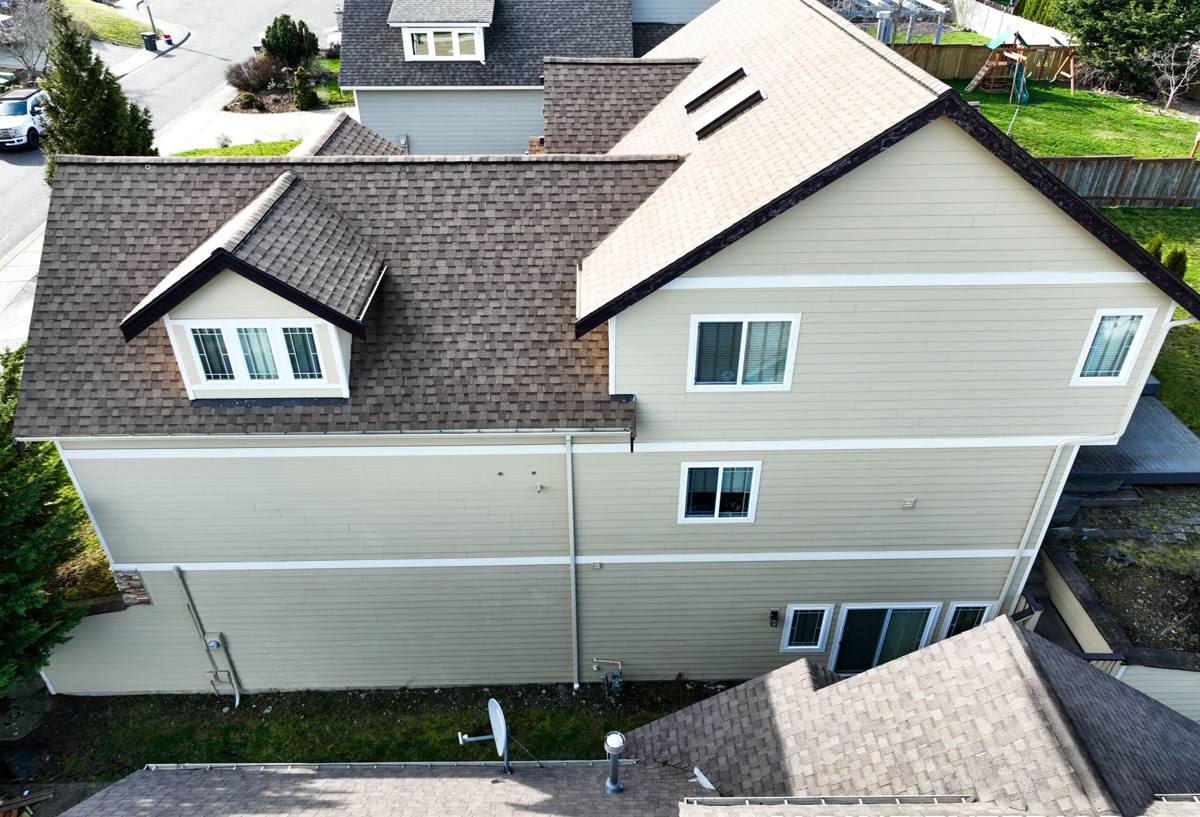
What Forest Park's Climate Does to a Deck
Everett and the rest of Snohomish County get a lot of rain spread across many months rather than a few heavy storms, and Forest Park's tree cover adds shade that keeps decks damp longer after each rain than a deck sitting in full sun. That combination — moisture plus shade plus mild temperatures — is exactly what moss, algae, and wood decay organisms need to establish themselves.
Moss and Algae Growth
Moss doesn't just look bad. It holds moisture directly against decking boards and stair treads, which keeps wood fibers wet far longer than they'd otherwise be. On composite and wood decking alike, moss and algae buildup also makes surfaces slick — a real slip hazard on stairs and ramps, especially through the wetter months of the year. A deck in a shaded Forest Park yard will grow moss faster than one in an open, sun-exposed lot, so board spacing, surface texture, and drainage all matter more here than they would elsewhere in the county.
Moisture and Wood Movement
Wood expands and contracts with moisture. In a climate where boards rarely get a long, dry stretch to fully release moisture, that movement is more constant and more extreme — which is what drives cupping, splitting, and popped fasteners over time. Framing lumber buried under decking boards is especially vulnerable, because it can stay damp for weeks without anyone noticing until a board starts to feel soft underfoot.
Salt Air and Metal Fasteners
Forest Park's proximity to Puget Sound means a low but steady exposure to salt-laden air, which accelerates corrosion on unprotected metal. Fasteners, joist hangers, and railing hardware that aren't rated for coastal exposure can start rusting years before they would inland. Once a fastener corrodes, it loses holding strength — which is a structural problem, not just a cosmetic one.
Decking Material Options for This Climate
There's no single "correct" decking material for every homeowner — budget, maintenance tolerance, and look all factor in. What matters is picking a material with realistic expectations for how it will perform under Forest Park's specific conditions, and detailing it correctly regardless of which one you choose.
| Material | How It Handles Moss & Moisture | Maintenance | Typical Lifespan Here |
|---|---|---|---|
| Pressure-treated wood | Absorbs moisture readily; needs sealing to resist moss staining and rot | Annual cleaning, re-sealing every 1-2 years | 15-20 years with upkeep |
| Cedar | Naturally rot-resistant but still needs sealing to prevent graying and moss growth in shade | Cleaning and sealing every 1-2 years | 15-25 years with upkeep |
| Composite decking | Doesn't rot, but moss and algae can still grow on the surface film in shaded, damp spots | Periodic washing; no sealing needed | 25-30+ years, manufacturer-dependent |
| PVC decking | Fully moisture-resistant board; surface can still need washing where moss accumulates | Occasional washing | 25-30+ years, manufacturer-dependent |
Composite and PVC decking generally make the most sense for shaded, damp lots like much of Forest Park, simply because they remove wood rot from the equation. That said, plenty of homeowners want the look and feel of real wood, and a well-built, well-maintained cedar or treated-wood deck can perform just fine here too — it just asks more of the owner in upkeep. We'll walk through the honest trade-offs for your specific yard rather than push one material across the board.
What a Correctly Built Deck Involves in This Climate
Most deck failures we see aren't a material problem — they're a detailing problem. The parts of a deck that fail first in Snohomish County's climate are almost always the connections and the hidden framing, not the visible decking surface.
Footings Set to Proper Depth
Footings need to be sized and set below frost depth and bear on undisturbed, load-rated soil — not fill or loose topsoil, which is common in yards that were graded during original construction. A deck built on undersized or shallow footings can shift over time as the ground around it saturates and drains through the wet season, leading to a deck that feels bouncy or slowly pulls away from the house.
Ledger Board Attachment and Flashing
Where a deck attaches to the house is the single most common source of long-term water damage on a deck project — and it's almost entirely invisible until the damage has already spread into the house framing. Correct ledger flashing directs water away from the house wall rather than letting it pool behind the ledger board, which is critical in a climate where the wall behind that ledger rarely gets a chance to fully dry out between rain events.
Joist Protection and Airflow
Joists and beams need protection from standing moisture — proper flashing tape on joist tops, corrosion-resistant hangers, and enough clearance and airflow underneath the deck so the framing can actually dry between rains. In a shaded yard, that clearance matters even more, since less sun and airflow means slower drying no matter how well the framing was built.
Railings, Stairs, and Code Considerations
Any deck more than 30 inches above grade needs a code-compliant guardrail, and stairs need graspable handrails per Washington's adopted building code. Beyond the legal minimum, a few things matter specifically for a shaded, damp lot like Forest Park:
- Stair treads should have enough texture or spacing to shed water and resist the slickness that moss and algae buildup create.
- Railing hardware should be corrosion-resistant given the area's salt air exposure, not just standard zinc-coated fasteners.
- Baluster and post spacing needs to meet current code, which has tightened over the years — older decks in the neighborhood often don't meet current spacing requirements.
- Stair stringers benefit from the same moisture detailing as the rest of the frame, since they're low to the ground and catch splash-back from wet soil.
Our Process for a Forest Park Deck Build
Site Visit and Design
We start by walking the actual lot — sun exposure, tree cover, drainage patterns, and how the deck will connect to the house. Shade patterns and grading vary block to block in Forest Park, so we design around your yard rather than a template.
Permitting
Deck construction in Everett and unincorporated Snohomish County typically requires a permit, and inspections at key stages — footings, framing, and final. We handle that process as part of the build rather than leaving it to the homeowner to navigate.
Construction
Footings, framing, ledger flashing, decking, and railings are built in that order, with each structural stage set up to shed water rather than trap it. We use corrosion-resistant fasteners and hangers throughout, given the area's salt air exposure, regardless of which decking material you choose.
Final Walkthrough
Before we call the job done, we walk the finished deck with you — checking railing solidity, stair feel, drainage under the frame, and answering questions about care for whatever material you chose.
Maintenance Checklist for a Long-Lasting Deck
Whatever material you go with, a little seasonal attention goes a long way in this climate. A practical yearly routine:
- Sweep debris and standing leaves off the deck surface regularly, especially in fall — trapped leaves hold moisture and speed up moss growth.
- Wash the deck surface at least once a year to remove moss, algae, and organic buildup before it stains or gets slick.
- Check and re-seal wood decking on the manufacturer's recommended schedule — don't wait until it's visibly gray or dry.
- Inspect railings and stair connections annually for loose fasteners or early corrosion.
- Confirm nothing is blocking airflow underneath the deck — stored items, overgrown plants, or debris all slow drying.
- Look at the ledger board area where the deck meets the house once a year for any signs of staining or soft wood.
Why Local Experience in Forest Park Matters
A deck contractor who mostly works drier, sunnier parts of the country can build a technically sound deck that still struggles here, simply because the detailing that matters in a low-moss, low-rain climate isn't the same detailing that matters in a shaded Forest Park yard with year-round moisture. Knowing which fasteners hold up under salt air exposure, how much airflow a joist bay actually needs under tree cover, and how local soil drains through the wet season isn't something you learn from a spec sheet — it's something you learn from building decks in this exact area, season after season.
If you're planning a new deck, replacing an aging one, or just want an honest read on whether your current deck's framing is holding up, we're happy to take a look. Reach out for a free, no-pressure estimate using the form below.