 Everett
 Glenhaven sits inside one of the tougher climates on the West Coast for exterior siding, even if most homeowners never think about it until a wall starts showing streaks or soft spots. Everett's location in Snohomish County means homes here deal with a rare combination: salt-laden air moving in off Puget Sound, long stretches of driving rain that comes in sideways off the water, and a moss and mildew season that can run eight or nine months out of the year. Siding that would hold up fine in a drier inland climate can start failing here in a fraction of the time. That's the backdrop for every siding installation we do in this neighborhood, and it shapes every material and detail decision we make.
What Everett's Climate Actually Does to Siding
It helps to understand the mechanics of why siding fails here, because it explains why installation quality matters so much more than it does in a milder climate.
Salt Air and Corrosion
Homes in and around Everett sit close enough to Puget Sound that airborne salt is a real factor, not a theoretical one. Salt accelerates corrosion on fasteners, flashing, and any exposed metal trim. Over years, that corrosion can loosen fastener holds and create small gaps where water gets behind the siding. It also breaks down cheaper paint films faster than a dry-climate home would ever experience, which is part of why factory-cured finishes matter so much out here.
Driving Rain and Wind-Driven Moisture
Snohomish County doesn't just get rain — it gets rain pushed sideways by wind coming off the Sound, which means water hits vertical wall surfaces directly instead of mostly falling straight down. That kind of exposure finds every gap, every under-caulked seam, and every place where siding wasn't lapped or flashed correctly. A house can look fine from the curb and still be taking on water at the corners, around windows, or at the bottom courses near grade.
Moss, Mildew, and the Shade Factor
Between the rain and the tree cover common in established Everett neighborhoods, siding here spends much of the year damp. Moss and mildew take hold anywhere moisture sits against a surface without drying out, particularly on north-facing walls and areas shaded by mature trees. On absorbent or poorly sealed materials, that constant dampness works its way into the material itself, not just the surface.
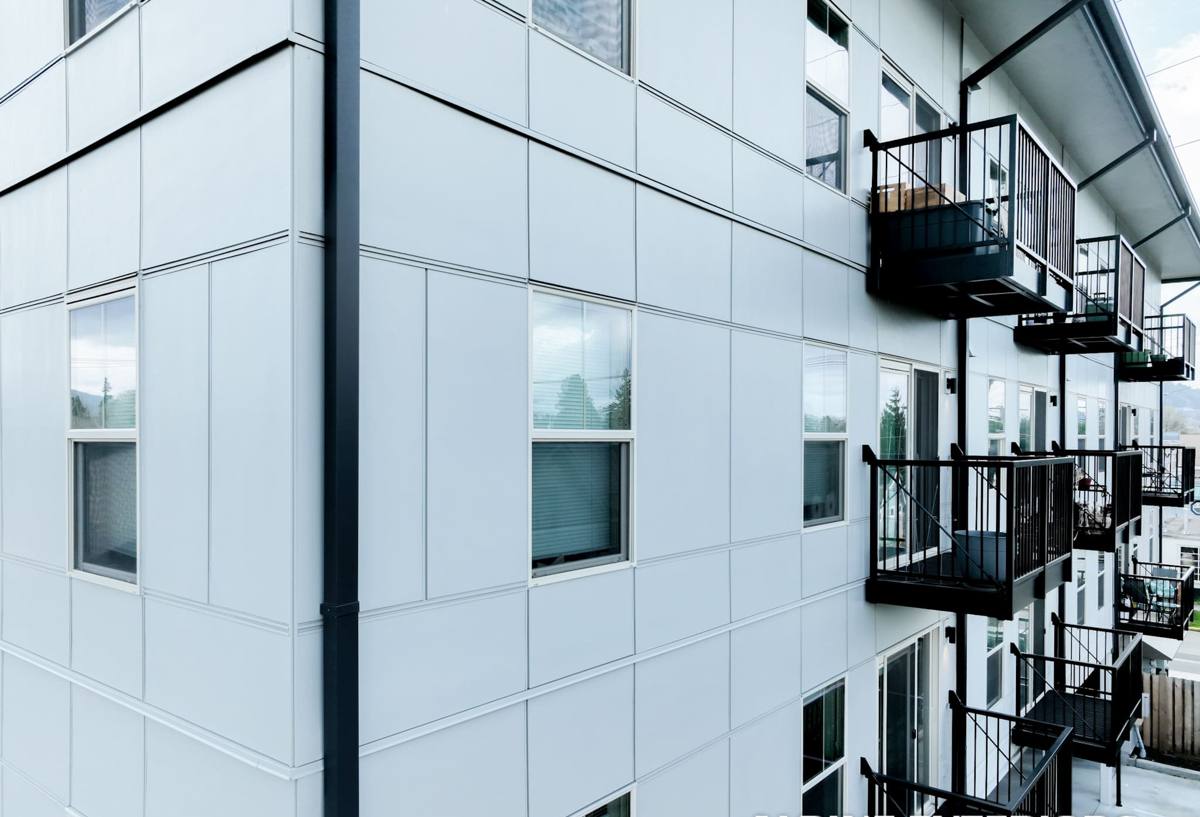
How Different Siding Materials Hold Up in This Climate
Not all siding materials respond to Everett's conditions the same way. Here's an honest comparison of how the common options perform against salt air, driving rain, and sustained moisture exposure.
| Material | Moisture Behavior | Salt Air / Coastal Durability | Maintenance Burden | Typical Longevity Here |
|---|---|---|---|---|
| Vinyl siding | Sheds surface water but seams and J-channels can trap moisture behind panels | Can warp or become brittle with UV and temperature swings over time | Low upfront, but limited repair options once damaged | Moderate, shorter in exposed coastal-adjacent spots |
| Engineered wood (LP SmartSide and similar) | Wood-based core is vulnerable if edges or cuts aren't fully sealed | Moisture intrusion risk rises with prolonged damp exposure | Ongoing caulk and paint upkeep to protect edges | Dependent heavily on installation and maintenance discipline |
| Cedar / primed spruce | Natural wood absorbs moisture; needs a finish that's actively maintained | Salt air accelerates finish breakdown, exposing raw wood | High — regular refinishing and moss/mildew treatment | Shortest without a strict maintenance schedule |
| James Hardie fiber cement | Cement-based composition doesn't absorb and swell like wood | Factory ColorPlus finish resists fading and holds up to salt exposure | Low — periodic washing, no repainting cycle needed for decades | Longest of the group when installed to spec |
This is exactly why we install only James Hardie fiber cement siding. We're not against other products because they're cheap or because we can't work with them — we simply won't put material on a Glenhaven home that we know is going to fight this climate instead of shedding it.
Why James Hardie Fits This Climate Specifically
James Hardie engineers its siding lines by climate zone, and the Pacific Northwest falls into the wetter HZ5 category, meaning the boards are formulated to resist moisture-related damage in exactly the conditions Everett produces. A few things make it a strong fit for Glenhaven homes specifically:
- Fiber cement is non-combustible, which matters as wildfire smoke and regional fire risk have become a bigger seasonal concern across Western Washington.
- The ColorPlus factory finish is baked on under controlled conditions, so it resists the fading and chalking that field-applied paint struggles with under constant damp-then-sun cycling.
- It doesn't rot, and it isn't a food source for the moss and mildew that thrive in shaded, damp yards.
- It carries a strong transferable warranty, which matters to buyers if a Glenhaven home ever goes on the market.
None of that means Hardie is maintenance-free or bulletproof — it still depends entirely on correct installation, which is where a lot of siding jobs in this climate actually go wrong.
What a Correct Installation Actually Involves
Most siding failures we see in Everett aren't material failures — they're installation failures. Fiber cement is only as good as the water management system built behind it. A correct job includes:
Weather-Resistive Barrier and Flashing
A properly lapped weather-resistive barrier goes on before a single piece of siding, with flashing at every window, door, and roofline intersection so water is directed out and away from the wall assembly rather than trapped behind it.
Proper Clearances and Gaps
James Hardie specifies minimum clearances from grade, roofing, decks, and other abutting surfaces, plus expansion gaps at every butt joint. Skipping these clearances is one of the most common corner-cutting moves in the trade, and it's one of the fastest ways to void a warranty.
Fastener Pattern and Corrosion-Resistant Hardware
Given the salt air here, fastener choice matters more than it would inland. Correct nail placement, spacing, and corrosion-resistant fasteners keep the siding secured over decades instead of loosening early.
Caulking and Sealant at Penetrations
Every pipe, vent, light fixture, and trim seam needs a sealant approach that's actually built to last in a wet climate, not just look finished on installation day.
Our Process for a Glenhaven Siding Installation
- On-site assessment: We walk the exterior, check for existing moisture damage, note shaded and exposed sides, and evaluate the current water management setup.
- Plan and estimate: We put together a clear scope — what's being removed, what's being replaced, product line and color, and a realistic timeline given Everett's weather windows.
- Prep and moisture barrier: Old siding comes off, sheathing gets inspected for hidden damage, and a new weather-resistive barrier and flashing system goes in before anything else.
- Installation to spec: James Hardie panels or lap siding go up following manufacturer clearance, gap, and fastening requirements — not shortcuts to save a day of labor.
- Final detailing: Trim, caulking, and touch-up finishing get done with the same attention as the field siding, since these are the spots that fail first if rushed.
- Walkthrough: We go over the finished work with the homeowner before calling the job done.
Cost Factors for a Glenhaven Project
Every home is different, but these are the main factors that move the price of a siding installation up or down in this neighborhood:
| Factor | How It Affects the Job |
|---|---|
| Extent of existing damage | Rot or moisture damage found under old siding adds sheathing repair before new siding can go on |
| Home size and wall complexity | More corners, gables, and trim detail mean more labor and material cutting |
| Siding profile chosen | Lap siding, panel siding, and shingle-style Hardie products carry different material and labor costs |
| Access and site conditions | Mature landscaping, fencing, or tight setbacks common in older neighborhoods can slow staging and scaffolding |
| Trim and detail work | Window and door trim, fascia, and corner detailing add finish-carpentry time |
We'll always walk a Glenhaven home in person before giving a real number — broad estimates without seeing the actual wall conditions and prep needs aren't worth much in a climate where hidden moisture damage is common.
Why a Crew That Already Works Glenhaven Matters
Siding installation isn't just a product question — it's a judgment question, made on-site, hundreds of times over the course of a job. A crew that already works in Glenhaven and the surrounding Everett neighborhoods has a working sense of how local wall assemblies tend to be built, how moisture typically shows up on shaded and exposed sides, and how to sequence a job around the region's rain patterns instead of getting caught mid-installation by a wet stretch. That familiarity shows up in fewer surprises, tighter scheduling, and a finished product built for what this specific climate will actually throw at it for the next several decades.
Signs Your Glenhaven Home May Be Due for New Siding
- Visible cracking, warping, or soft spots anywhere on the siding surface
- Paint that's peeling, bubbling, or failing faster than a normal repaint cycle would suggest
- Moss or dark streaking that keeps returning shortly after cleaning
- Soft or spongy sheathing felt when pressing near the base of exterior walls
- Gaps opening up at seams, corners, or trim joints
- Rising energy bills that may point to compromised insulation behind failing siding
- Visible fastener corrosion or staining running down from nail heads
If any of that sounds familiar, or you're simply planning ahead for a Glenhaven home that could use an upgrade, we're happy to take a look and walk you through what correct James Hardie installation would involve for your specific house. The estimate is free, there's no pressure, and you'll get a straight answer about what your siding actually needs — just fill out the form below to get started.