 Everett
 Deck Repair Built for Lake Stevens Conditions
Lake Stevens sits close enough to the water, and gets enough of Snohomish County's long wet season, that decks here age differently than decks in drier parts of the state. Homeowners around the lake and the surrounding neighborhoods deal with a specific combination of moisture, shade, and organic debris that shortens the life of ledger boards, joists, and decking if the deck wasn't built or maintained with that in mind. A repair job that doesn't account for local conditions tends to fail again within a few seasons.
We're an Everett-based crew that works Lake Stevens regularly. That matters less because of any local trivia and more because of pattern recognition — we've opened up enough decks in this area to know where the damage usually starts, what usually gets missed, and what actually needs to change so the repair holds.
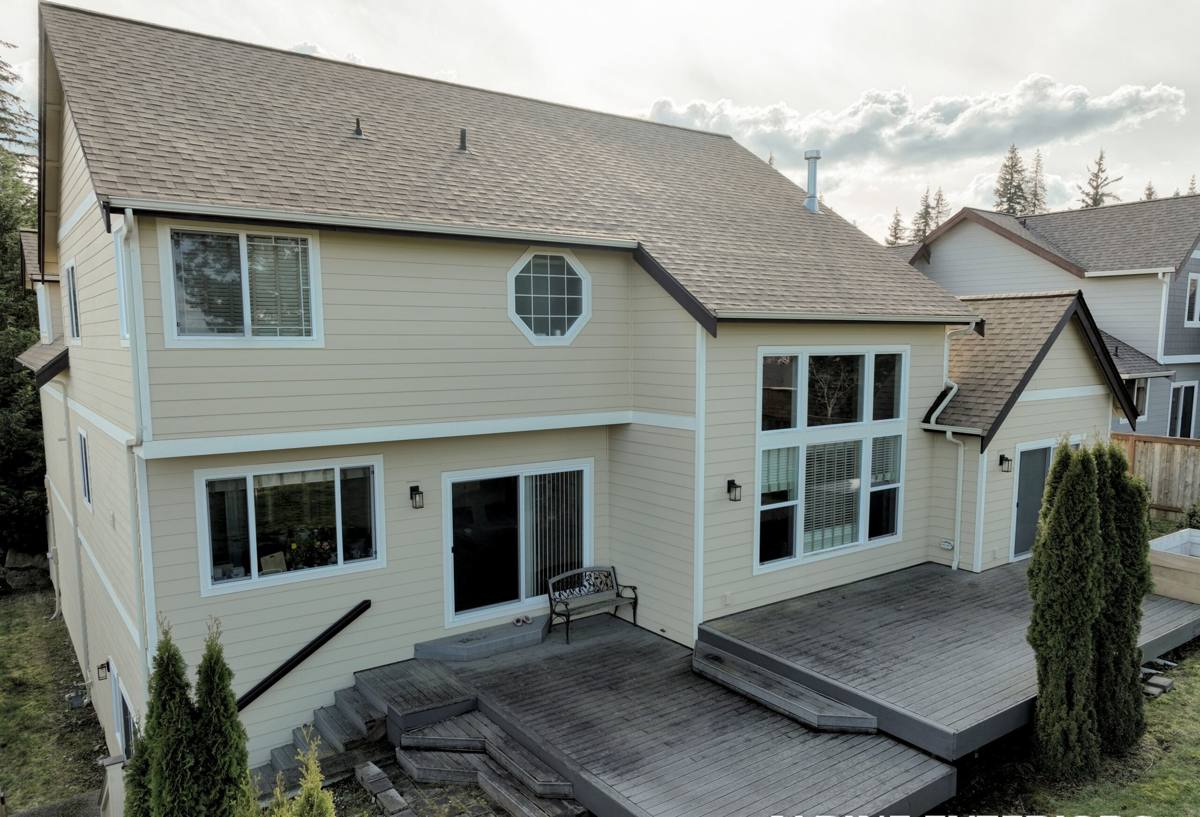
Why Decks Fail Faster Here
Moisture That Doesn't Fully Dry Out
Snohomish County gets long stretches of driving rain followed by damp, overcast days that don't do much to dry lumber out between storms. Decks near tree cover or close to the lake hold that moisture longer than decks in open, sun-exposed yards. Wood that stays damp for extended periods is far more prone to rot, especially at joints, fasteners, and anywhere two pieces of wood sit tight against each other.
Moss and Algae Season
The region's moss season runs long — often most of the year on shaded or north-facing decks. Moss and algae hold moisture directly against the wood surface and railings, and they make boards slick and unsafe underfoot well before they cause structural problems. A deck that looks merely dirty is often already retaining more moisture than it should.
Salt-Influenced Air
Homes closer to the water deal with a mild but steady dose of salt-laden air, which accelerates corrosion on fasteners, joist hangers, and any exposed metal hardware. Corroded hardware is one of the most common hidden failure points we find on older decks — it's rarely visible from the surface, but it's structural.
What a Real Deck Repair Involves
A proper repair starts with an honest inspection, not a quote based on what's visible from the yard. We check the ledger board attachment to the house, the condition of joists and beams underneath, the state of fasteners and hardware, and the decking and railing surfaces themselves. Surface staining or a few soft boards can be the visible tip of a larger structural issue underneath — or they can be purely cosmetic. The only way to know is to look.
Common Repair Scope
- Replacing rotted or soft decking boards, matching span and fastening pattern to code
- Sistering or replacing compromised joists and beams
- Re-securing or rebuilding a failing ledger board connection — often the most safety-critical repair on an older deck
- Swapping corroded fasteners and joist hangers for corrosion-resistant hardware
- Rebuilding or reinforcing railings and stair stringers that have loosened or rotted
- Addressing moss, algae, and surface staining as part of a broader moisture plan, not just a power wash
Some repairs are contained — a section of decking, a stair stringer, a railing post. Others reveal that the underlying structure needs more attention than the homeowner expected. We'll always tell you which situation you're in before work starts, and why.
Structural vs. Cosmetic: Knowing the Difference
Homeowners often call about something cosmetic — dark staining, a bouncy board, a railing that wiggles — and the underlying cause can go either way. Distinguishing the two matters because fixing the wrong thing wastes money and leaves the real problem to keep progressing.
| Symptom | Often Cosmetic | Often Structural |
|---|---|---|
| Dark or green staining on boards | Surface moss/algae, cleanable | Chronic moisture trapped beneath boards |
| Soft spot when you press a board | Localized surface rot, board-level fix | Rot has reached the joist below |
| Railing feels loose | Loose fastener, tighten or replace | Post base or blocking has rotted |
| Deck feels bouncy when walked on | Undersized but sound framing | Joist or beam has lost load capacity |
| Gap where deck meets the house | Minor settling, cosmetic trim fix | Ledger board pulling away — safety issue |
That last one — a ledger board pulling away from the house — is the item we take most seriously. It's the connection that keeps the deck attached to the structure, and it's also one of the most common causes of deck collapses nationally when it's ignored. If we see any sign of ledger separation, we'll flag it clearly and won't recommend cosmetic work as a substitute for fixing it.
Repair or Replace?
Not every damaged deck needs to be torn out. The decision usually comes down to how much of the framing is still sound and how old the deck is relative to typical service life in this climate.
Repair Usually Makes Sense When
- The framing (joists, beams, posts) is largely sound and the damage is limited to decking, railings, or isolated framing members
- The ledger connection is intact or repairable
- The deck is structurally adequate for its current use, just aged or weathered on the surface
Replacement Starts Making Sense When
- Rot has spread through multiple structural members, not just isolated spots
- The deck was undersized or under-built for its span in the first place
- Repeated repairs haven't stopped the moisture problem, meaning the design itself is the issue
We'll give you a straight answer on which category your deck falls into, including the honest tradeoffs, rather than defaulting to whichever option is more profitable for us.
Decking Material Considerations for This Climate
When decking does need to be replaced, the material choice matters more here than in drier climates because of how much time boards spend wet.
- Pressure-treated lumber — the most common and budget-friendly option, but it needs regular sealing to perform well through our wet season, and it's more susceptible to moss growth if not maintained
- Cedar — naturally more rot-resistant and a good regional fit, but still requires periodic maintenance and isn't immune to moisture damage if drainage under the deck is poor
- Composite decking — higher upfront cost, but resists rot and moss buildup better than wood and doesn't need sealing or staining; the tradeoff is that surface debris and algae still need occasional cleaning, and not all composite products handle standing moisture equally well over the long term
We don't push one material as universally "best" — the right call depends on your budget, how much maintenance you're willing to do, and how exposed the deck is to shade and moisture. We'll walk through the honest tradeoffs for your specific setup.
Our Process for Lake Stevens Deck Repair
- Inspection: We check the full structure — ledger, framing, hardware, decking, and railings — not just the visible complaint.
- Honest scope: You get a clear explanation of what's cosmetic, what's structural, and what your real options are.
- Written estimate: No surprise scope creep — if we find something during the work that changes the plan, we tell you before proceeding.
- Repair: Work is done to code, with corrosion-resistant hardware appropriate for this region's moisture and salt exposure.
- Walkthrough: We show you what was fixed and flag any maintenance items worth watching going forward.
Why a Local Everett Crew Matters Here
Deck repair isn't exotic work, but doing it well in Snohomish County means understanding how this area's rain patterns, shade cover, and moss season interact with wood and hardware over time. A crew that mostly works drier or more sun-exposed regions may underestimate how much moisture management matters here — sealing schedules, drainage under the deck, and hardware choice all need to account for a longer wet season than much of the country deals with. Working Lake Stevens and the surrounding Everett area regularly means we see the same failure patterns often enough to know what to check first and what tends to get missed.
A Quick Homeowner Checklist
Before calling anyone, a quick visual check can help you describe the problem accurately and gauge urgency:
- Press on boards near the house and near the outer edge — note any soft spots
- Look at the ledger board where the deck meets the house for gaps, dark staining, or separation
- Check railing posts for wobble at the base, not just at the top rail
- Look underneath the deck (if accessible) for visible rot, rusted hardware, or standing water
- Note any areas with heavy moss or algae buildup — these are your highest-moisture zones
If you notice ledger separation, widespread soft framing, or a deck that feels unstable when walked on, treat it as a priority — those are safety issues, not cosmetic ones.
If your deck needs attention, we're happy to take a look and give you a straight, no-pressure assessment of what it actually needs. Use the form below to request a free estimate — we'll tell you honestly whether you're looking at a repair or something bigger.