 Everett
 Why Lake Stevens Siding Has to Work Harder Than the Catalog Photo
Lake Stevens sits in a part of Snohomish County where the weather doesn't pick one way to attack a house — it rotates through several. You get salt-tinged air pushed inland off Puget Sound, long stretches of driving rain that hits siding at an angle instead of falling straight down, and a wet, shaded season every year where moss and algae get a real foothold on anything that stays damp too long. A siding product that looks fine on a showroom wall can still fail here if it wasn't built, or installed, with those specific conditions in mind. This page is about one job done right: James Hardie fiber cement siding on Lake Stevens homes, installed by a crew that treats this climate as the starting assumption, not an afterthought.
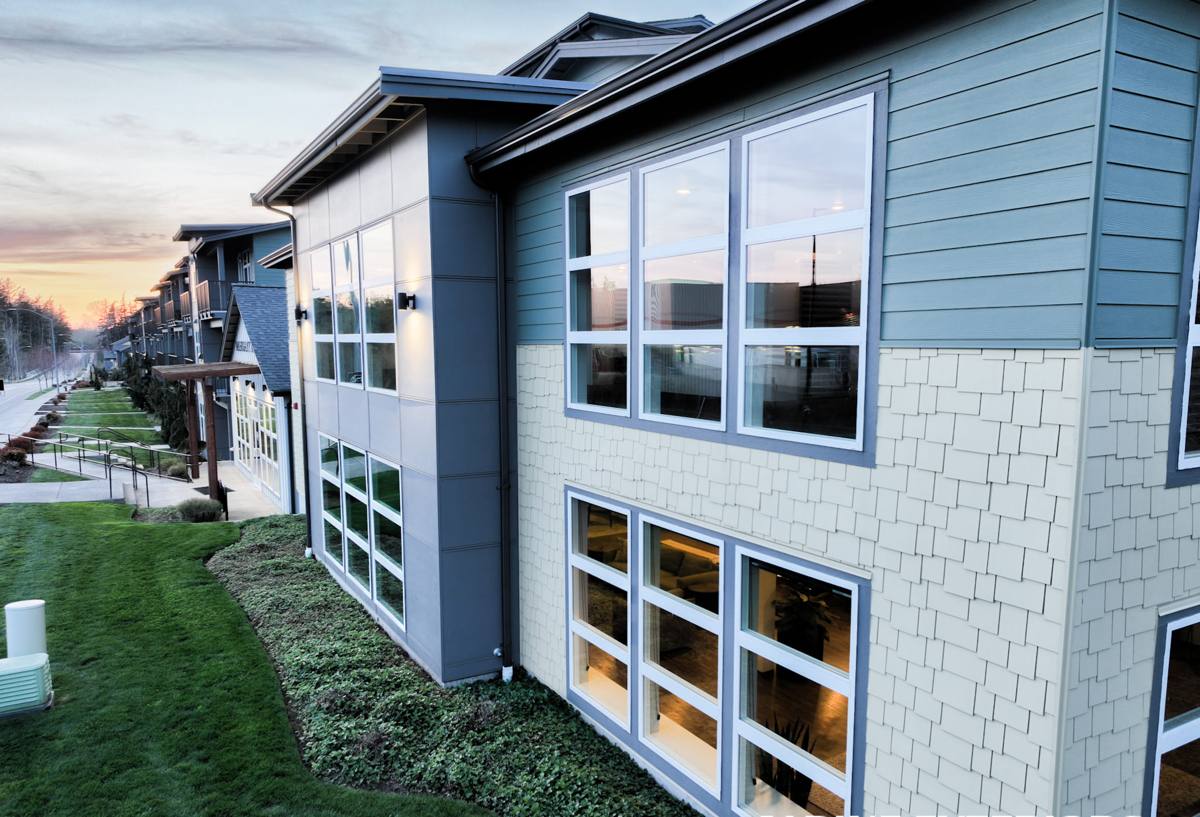
The Three Local Stressors: Salt Air, Driving Rain, and Moss Season
Every siding material eventually meets its limit somewhere. In this part of Snohomish County, three conditions do most of the damage over time:
| Local condition | What it does to siding |
|---|---|
| Salt-influenced air off the Sound | Accelerates corrosion of fasteners, trim flashing, and any exposed metal; breaks down cheaper paint films faster than inland climates |
| Driving, wind-blown rain | Forces water sideways into laps, seams, and butt joints that were only designed for water falling straight down |
| Extended moss and algae season | Keeps siding surfaces damp for days at a time, which feeds organic growth and, on the wrong material, slowly breaks down the substrate underneath |
None of these three is dramatic on its own. What matters is that they overlap for much of the year, and a siding system has to hold up under all three at once, not just the one it was easiest to test against.
Why We Standardized on James Hardie for This Climate
We install James Hardie fiber cement siding exclusively. We don't install vinyl, LP SmartSide, Cemplank, Allura, or raw wood siding like cedar or primed spruce, and we're upfront with Lake Stevens homeowners about why. Vinyl expands, contracts, and can warp or crack in temperature swings, and its seams are a natural place for wind-driven rain to find a way in. Wood siding looks good on day one but demands a repainting and caulking schedule that most owners underestimate, and in a damp climate like this one, any gap in that maintenance shows up fast as rot. Engineered wood products bring their own moisture-sensitivity questions at cut edges and panel seams. James Hardie is fiber cement: sand, cement, and cellulose fibers, cured into a board that doesn't feed organic growth the way wood does, doesn't expand and contract the way vinyl does, and is non-combustible — a real advantage for insurance conversations in this region as well.
The HZ5 Engineering Difference
James Hardie engineers its products by climate zone, and the Pacific Northwest falls under the HZ5 line — engineered specifically for regions with sustained moisture exposure rather than a generic national spec. That distinction matters more in Lake Stevens than in a drier climate, because the product's moisture-management behavior is being tested against exactly the kind of weather this house will actually see, not an average of every climate in the country.
ColorPlus Factory Finish vs. Field Paint
Most of our installs use Hardie's ColorPlus finish — color baked onto the board in a controlled factory environment rather than sprayed or brushed on site. Field-applied paint on any siding material is only as good as the weather conditions the day it was applied, and it starts breaking down the moment UV and moisture start working on it. A factory finish is more consistent, holds its color longer under salt-air exposure, and comes with its own finish warranty separate from the substrate warranty.
What a Correct Hardie Installation Actually Involves
Fiber cement siding is only as good as the installation underneath it. Most of the siding failures we get called out to inspect in this region trace back to shortcuts taken during install, not a flaw in the board itself.
Clearances, Flashing, and Fastening
Correct installation means specific clearances from grade, decks, and roof lines so water has somewhere to go instead of wicking straight into the bottom edge of the board. It means flashing integrated at every window, door, and roof intersection — not caulk used as a substitute for flashing, which is a common corner cut. It means the right fastener spacing and depth, and in a salt-air environment, using corrosion-resistant fasteners rated for that exposure rather than whatever was cheapest on the truck that day.
| Detail | Done to spec | Common shortcut |
|---|---|---|
| Bottom clearance from grade/decking | Manufacturer-specified gap maintained | Siding installed tight to grade or hardscape |
| Window and door flashing | Integrated flashing with proper laps | Caulk relied on in place of flashing |
| Fasteners | Corrosion-resistant, correct depth and spacing | Standard fasteners driven too deep or too sparse |
| Panel joints and seams | Sealed and shingled to shed water | Butt joints left uncaulked or unbacked |
Every one of these details is invisible once the job is finished and the paint looks good. That's exactly why it matters who's holding the nail gun, not just which board they're nailing up.
Our Process for Lake Stevens Homes
The steps don't change from house to house, but the judgment calls at each step do — how close a lot sits to standing water, how much tree cover shades a wall from ever fully drying, how exposed a wall is to prevailing wind-driven rain.
- On-site assessment. We walk the exterior, check existing siding and sheathing condition, note moisture staining, moss patterns, and any trouble spots around windows, trim, and roof lines.
- Moisture and substrate check. Before new siding goes up, we confirm what's underneath it is sound. Covering rotten sheathing with new siding just hides a problem instead of solving it.
- Weather barrier and flashing. A correctly lapped weather-resistant barrier and integrated flashing go on first — the layer doing most of the actual water-management work, siding included.
- Hardie installation to manufacturer spec. Clearances, fastener schedule, and joint treatment follow James Hardie's published installation requirements, which is also what keeps the product warranty intact.
- Trim, caulking, and finish detail. Corners, trim boards, and penetrations get sealed correctly rather than over-caulked as a catch-all.
- Final walkthrough. We go over the finished work with the homeowner and explain what maintenance, if any, the specific product line requires going forward.
Choosing the Right Hardie Line and Color for a Lake Stevens Lot
James Hardie makes several board profiles — lap siding, panel siding, and shingle-style products — and the right choice depends on the home's architecture and how exposed different walls are. A wall that takes the brunt of prevailing wind-driven rain is a place to be conservative with detailing and color choice; darker colors on a heavily shaded, moss-prone wall will also show streaking and growth sooner than lighter tones, simply because they hold moisture-related staining more visibly. We talk through these tradeoffs with homeowners up front rather than letting color choice be an afterthought at the end of the estimate.
What Siding Costs Depend On Here
We don't quote fake numbers on an educational page, but the real cost drivers on a Lake Stevens siding job are consistent enough to lay out honestly:
| Cost factor | Why it moves the price |
|---|---|
| Existing siding removal and disposal | Tear-off, hauling, and disposal fees add labor time before install even starts |
| Sheathing or substrate repair | Any rot or water damage found underneath has to be fixed before new siding goes on |
| Home size and wall complexity | More corners, dormers, and trim detail mean more cutting, fitting, and flashing work |
| Board profile and finish selection | Panel style, texture, and ColorPlus color options carry different material costs |
| Site access and lot conditions | Slope, tree cover, and proximity to water can affect staging and drying time between steps |
An accurate number only comes from seeing the actual house, which is exactly what a free estimate is for.
Maintenance Checklist for Hardie Siding in This Climate
One reason we recommend James Hardie in a climate like this is how little upkeep it demands compared to wood or older vinyl systems — but "low maintenance" isn't "no maintenance." A short annual routine keeps it performing the way it's supposed to:
- Rinse siding down once or twice a year to clear salt residue, pollen, and organic buildup before it becomes established moss or algae
- Walk the exterior each fall and check caulking at trim, windows, and corners for cracking or gaps
- Keep gutters clear so overflow isn't running down the face of the siding during heavy rain
- Trim back vegetation and tree limbs that keep a wall shaded and damp longer than it needs to be
- Check fastener heads and trim fasteners periodically for early corrosion, especially on walls with the most direct exposure
- Address any paint chipping or finish damage promptly rather than letting exposed board sit through a wet season
Why Hire a Crew That Already Works in Lake Stevens
Installation crews who mostly work drier inland climates tend to install to a generic national standard, and that gap shows up years later as premature failures around flashing and joints — exactly the details that don't get inspected once the siding is up. A crew that regularly works Lake Stevens and the surrounding Snohomish County area already has a working sense of which walls on which lots take the worst of the wind-driven rain, where moss tends to establish first, and how local permitting and inspection expectations run. That local pattern-recognition doesn't replace following the manufacturer's installation spec — it's what makes sure the spec actually gets applied where it matters most on your particular house.
If your current siding is showing moss buildup, peeling paint, or soft spots near trim and window edges, or if you're planning ahead for a full replacement, we're happy to take a look and walk you through what a correctly installed James Hardie system would involve on your home. Fill out the form below for a free, no-pressure estimate.