 Everett
 Siding Replacement Built for Lake Stevens Weather
Lake Stevens sits inland from Puget Sound, but it doesn't escape the moisture that defines Snohomish County living. Between the humidity coming off the lake itself, the tree cover that shades so many yards and rooflines, and the marine air pushing in off the Sound, homes here deal with a steady damp season that runs long and doesn't let up quickly. Add in driving rain that comes sideways during winter storms, and you've got a climate that is genuinely hard on exterior siding — especially siding that wasn't engineered with this kind of exposure in mind.
When a homeowner calls us about siding replacement in Lake Stevens, the conversation almost always starts with one of a few visible problems: soft spots near the bottom courses, paint that won't hold anymore, moss creeping up from ground level, or panels that have started to bow, crack, or separate at the seams. These aren't cosmetic annoyances — they're signs that moisture has already found its way into the wall assembly, and the siding is no longer doing its job.
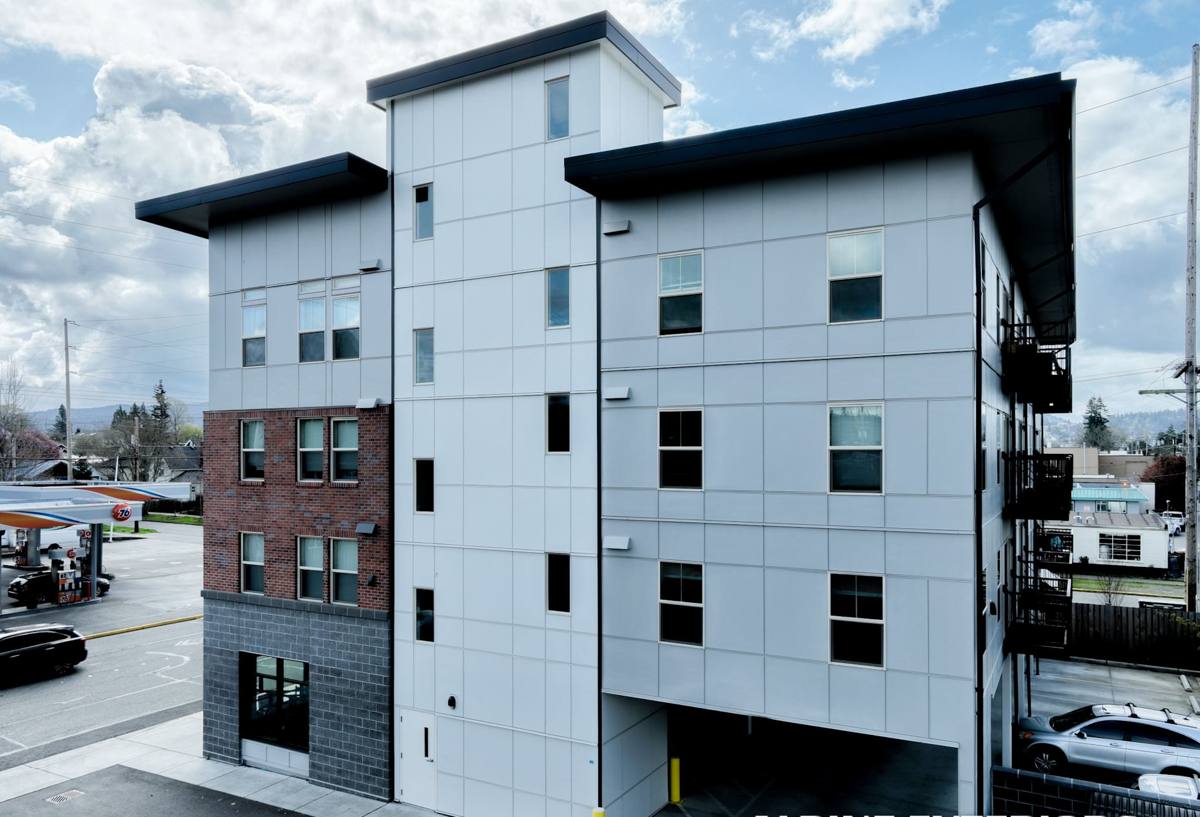
Why Siding Fails Faster Here Than in Drier Climates
Every siding material has a moisture tolerance. In a drier region, a marginal product can coast for years without anyone noticing its weak points. In Lake Stevens, those weak points get tested constantly — rain events stack up through fall and winter, shaded north- and west-facing walls stay damp for days at a time, and the freeze-thaw swings we get in a typical Snohomish County winter stress any material that's already absorbed water.
What we see most often on replacement calls
- Wood-based siding (cedar, primed spruce, engineered wood) swelling at butt joints and cut edges where factory sealant has failed
- Vinyl siding that's warped, faded unevenly, or cracked from age and UV exposure
- Moss and algae staining that keeps returning no matter how many times it's washed off
- Caulk lines that have shrunk, cracked, or pulled away, leaving open paths for water
- Paint that's peeling or alligatoring within just a few years of the last repaint
None of this means the original installer did a bad job. It usually means the material itself has a moisture ceiling, and this climate pushes past it faster than most.
Our Position: James Hardie Fiber Cement Only
We install James Hardie fiber cement siding exclusively. We don't install vinyl, LP SmartSide, Cemplank, Allura, primed spruce, or cedar — not because those products don't have a place in the market, but because we've made a professional decision about what we're willing to put on a home in this climate and stand behind long-term.
Fiber cement is a cement-and-cellulose composite, not wood and not plastic. It doesn't swell when it absorbs moisture the way wood-based products do, it doesn't soften or warp in heat the way vinyl can, and it's non-combustible — a real advantage during wildfire smoke and ember season, which has become a more regular concern across Western Washington summers. Hardie also builds specific product lines engineered for different climate zones, and the HZ5 line used in our region accounts for the freeze-thaw and moisture cycling that's normal here.
What ColorPlus finish adds
Most of the siding we install uses Hardie's factory-applied ColorPlus finish rather than field paint. It's baked on in a controlled environment, backed by its own finish warranty, and holds color and adhesion far longer than paint applied on-site after installation. For a homeowner, that means fewer repaint cycles and a more consistent look across the whole house, including trim.
Comparing Siding Materials for a Lake Stevens Home
| Material | Moisture Behavior | Maintenance | Typical Lifespan Locally |
|---|---|---|---|
| James Hardie fiber cement | Doesn't swell or rot; engineered for wet climates | Low — occasional wash, no repainting with ColorPlus | 30+ years with correct install |
| Vinyl | Doesn't absorb water but traps moisture behind it if installed poorly | Low, but cracks and fades with age | 15-25 years, shorter in direct sun/wind exposure |
| Cedar / primed spruce | Absorbs moisture readily; prone to swelling, rot at joints | High — regular repainting and caulk maintenance | 10-20 years depending on upkeep |
| LP SmartSide / engineered wood | Better than raw wood but still moisture-sensitive at cut edges | Moderate — edge sealing and repainting over time | 15-25 years depending on install quality |
This table reflects general product behavior, not a claim about how any specific installation will perform — installation quality changes these numbers significantly for every material listed.
What a Correct Siding Replacement Involves
Replacing siding isn't just swapping old panels for new ones. In a climate like this, the work that happens underneath the siding matters as much as the siding itself.
Tear-off and inspection
We remove the existing siding down to the sheathing and inspect for hidden damage — soft or rotted sheathing, compromised framing, or signs of moisture that never showed on the surface. This is often where a homeowner learns whether their siding failure was a surface problem or something that had been working its way into the wall for years.
Weather-resistive barrier and flashing
A proper water-resistive barrier goes on correctly lapped, and flashing gets detailed at every window, door, and roofline intersection. This is the layer that actually keeps bulk water out of the wall assembly — the siding itself is the second line of defense, not the first.
Rainscreen or drainage gap where appropriate
Depending on the wall assembly, we build in a drainage plane so that any moisture that does get behind the siding has somewhere to go and dry out, rather than sitting against the sheathing.
Hardie installation to manufacturer spec
Proper clearances from grade, decks, and roof lines; correct fastener pattern and spacing; factory-mitered or properly sealed cut edges; and joint treatment that matches Hardie's published installation requirements. Installing Hardie off-spec is one of the most common ways a fiber cement job underperforms — the product is only as good as the install.
Trim, caulking, and paint touch-up
Final detailing at corners, trim boards, and any field-cut edges, using products compatible with the ColorPlus finish system.
Our Process, Start to Finish
- Free on-site estimate — we walk the exterior with you, look at problem areas, and talk through what's actually driving the failure
- Written scope and pricing — clear about what's included, what siding line and color, and what the warranty covers
- Scheduling around weather windows — we plan tear-off and dry-in around forecasted rain, which matters more here than in drier regions
- Tear-off, inspection, and any sheathing or framing repair, documented and discussed with you before we close the wall back up
- Weather barrier, flashing, and drainage detailing
- Hardie installation and finish detailing
- Final walkthrough
Why It Matters to Hire a Crew That Already Works Lake Stevens
Siding installation isn't one-size-fits-all across Western Washington. A crew that mostly works drier inland climates or hasn't spent real time on homes exposed to Snohomish County's rain patterns can miss details that matter here — flashing laps, drainage planes, clearance at grade — because those details are less forgiving in a climate that stays wet for months at a stretch. A crew that regularly works Lake Stevens and the surrounding area already knows which wall orientations take the worst weather, which lots hold shade and moisture longer, and where moss and algae tend to come back if the install isn't detailed correctly the first time.
Local experience also shows up in scheduling and sequencing — knowing when to push a tear-off date because of an incoming rain system, rather than leaving sheathing exposed overnight and hoping for the best.
Signs It's Time to Replace, Not Repair
- Soft or spongy siding when pressed, especially near the bottom of walls or under windows
- Persistent moss or algae growth that returns within a season of cleaning
- Visible warping, bowing, or separation at panel seams
- Paint failure across large sections rather than isolated spots
- Interior signs of moisture — stains, musty smell, or soft drywall near exterior walls
- Siding that's simply reached the end of its expected service life for its material type
If you're seeing one or two of these, a repair might still make sense. If you're seeing several at once, it's usually a sign the whole system has reached its limit rather than just the surface.
If your Lake Stevens home is showing any of these signs, we're happy to take a look and give you an honest read on whether you're looking at repair or replacement — no pressure, no obligation. Use the form below to request a free estimate.