 Everett
 Why Lynnwood's Climate Puts Extra Demands on a Roof
Lynnwood sits in the wet, mild, and mossy stretch of Snohomish County that comes with living close to Puget Sound. That means three things working against a roof at the same time: salt-tinged marine air that accelerates corrosion on unprotected metal, long stretches of driving rain that finds every weak seam and flashing gap, and a moss season that runs longer here than in drier parts of the state because shaded, moisture-retaining roof surfaces rarely get a chance to fully dry out. None of that is unusual for the area — it's just the baseline a roof has to be built for.
A roof that isn't detailed correctly for this environment doesn't fail all at once. It fails slowly, through small leaks at penetrations, moss that lifts shingle tabs, and fasteners that corrode years before the roofing material itself is worn out. Metal roofing, installed correctly, is one of the more effective answers to that combination — but "installed correctly" is doing a lot of work in that sentence, and it's worth understanding what that actually means before you commit to it.
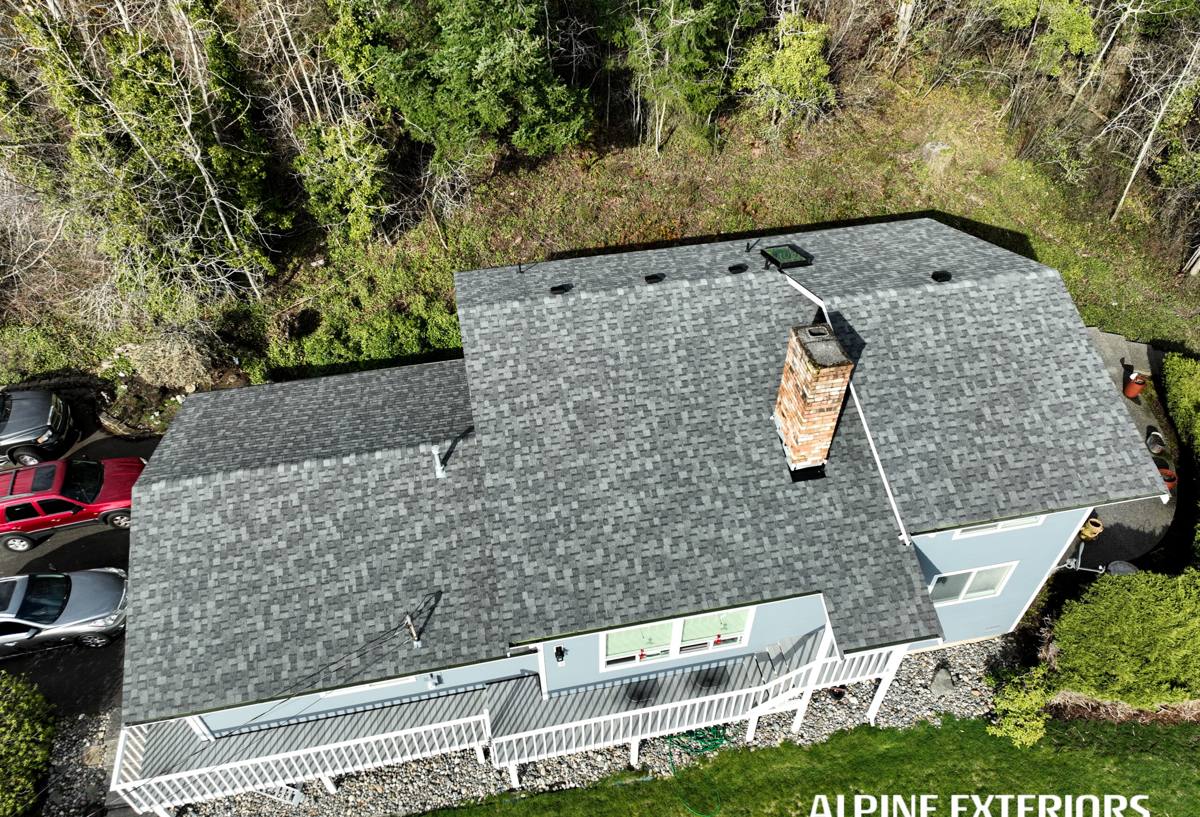
Why Metal Roofing Holds Up Well in This Environment
Shedding Water and Resisting Moss
Metal panels are non-porous and have a slick, low-friction surface, so rainwater moves off quickly instead of sitting and soaking in. That matters in a climate with as much sustained rainfall as Snohomish County sees. It also matters for moss: moss needs standing moisture and organic material to root into, and a smooth metal surface gives it far less to grab onto than a shingle's granulated texture. Metal roofs still need occasional debris clearing, but they don't feed moss growth the way some other roofing surfaces do.
Standing Up to Wind and Salt Air
Coastal and near-coastal air carries salt that can pit and corrode bare or poorly coated metal over time. This is a real consideration in Lynnwood, and it's why panel coating and fastener quality matter more here than they would somewhere inland. Properly coated steel and aluminum panels, installed with corrosion-resistant fasteners and correctly lapped seams, are built to handle that exposure. Cutting corners on coating grade or fastener material is where problems start, not the metal itself.
Panel Types We Install
Not every metal roofing system is the same, and the right choice depends on your roof's pitch, your budget, and how much you value a completely concealed fastening system versus a more economical option. Here's how the main types compare for a Lynnwood home:
| Panel Type | How It's Fastened | Best Suited For | Maintenance Load |
|---|---|---|---|
| Standing Seam | Concealed clips, no exposed screws through the panel face | Homes wanting the longest service life and cleanest look | Lowest — fewer penetration points to fail |
| Exposed-Fastener Panel | Screws driven through the panel face into the deck or purlins | Budget-conscious projects, outbuildings, some roof retrofits | Higher — fastener washers age and need periodic checking |
| Metal Shingle / Shake Panel | Interlocking panels styled to resemble shingles or shakes | Homeowners who want a traditional look with metal's durability | Moderate — more seams than standing seam, still concealed fastening in most systems |
For most Lynnwood homes, we lean toward standing seam when the budget allows, simply because concealed fasteners remove the single most common long-term failure point on a metal roof — the exposed screw and washer. That's a professional preference based on how these systems age in wet climates, not a claim that exposed-fastener panels are unusable; they have a legitimate, cost-effective place on many roofs.
What Correct Installation Actually Involves
Underlayment and Ice/Water Protection
A metal panel is only the outer layer. Underneath it, we install a synthetic underlayment rated for use under metal, with self-adhered ice-and-water protection at eaves, valleys, and any low-slope transitions where water is most likely to back up. Skipping or under-speccing underlayment is one of the most common shortcuts on a rushed metal roof job, and it's invisible until the first real leak shows up.
Flashing and Penetrations
Chimneys, vents, skylights, and wall-to-roof transitions are where the vast majority of roof leaks originate, metal or otherwise. Each penetration needs custom-formed flashing that integrates with the panel profile, not a generic boot or a bead of caulk standing in for proper metalwork. This is detail-heavy, slower work, and it's where experience with metal roofing specifically — not just roofing in general — shows up in the final result.
Fastening and Panel Seams
Panel seams need to be locked, lapped, or clipped according to the manufacturer's specification for the pitch and exposure of your roof. Fastener spacing and torque matter too — overdriven screws crush the washer and stop sealing, while underdriven ones back out over time under wind load. Both are common defects on poorly supervised installs.
Ventilation
Metal roofs perform best over a properly ventilated deck. Without adequate intake and exhaust airflow, moisture can build up in the attic space and condense against the underside of the roof deck — a problem that has nothing to do with the metal itself but gets blamed on it anyway. We check and correct ventilation as part of every metal roofing project rather than treating it as a separate issue.
Our Process, Start to Finish
- On-site assessment of your existing roof deck, flashing points, and ventilation to identify what needs to be corrected, not just covered over.
- A written scope and material selection walkthrough, so you understand the panel type, coating, and underlayment being used and why.
- Deck inspection and repair once the old roofing is removed — replacing any soft or water-damaged sheathing before a single panel goes down.
- Underlayment, flashing, and ice/water barrier installation at all vulnerable points.
- Panel installation following manufacturer fastening and lap specifications for your roof's pitch and exposure.
- Final walkthrough covering ventilation, flashing details, and any maintenance items specific to your property.
- Job-site cleanup, including a magnetic sweep for stray fasteners around the foundation and landscaping.
We don't skip the deck inspection step even when it slows the project down. A new metal roof over a compromised deck is a roof that fails for reasons that have nothing to do with the metal — and that's an outcome we plan around avoiding from day one.
What Actually Drives the Cost
Metal roofing costs more upfront than asphalt shingles, and homeowners deserve a straight answer about what moves that number rather than a single flat quote pulled out of thin air. The real cost drivers are:
| Factor | Why It Matters | Relative Cost Impact |
|---|---|---|
| Panel material (steel vs. aluminum) | Aluminum resists corrosion inherently but typically costs more per square foot than coated steel | Moderate to Higher |
| Fastening system (standing seam vs. exposed fastener) | Concealed fastening requires more labor and specialized tooling | Higher |
| Roof complexity and pitch | More valleys, dormers, and penetrations mean more custom flashing work | Higher |
| Tear-off vs. overlay | Full tear-off allows deck inspection and repair but adds labor and disposal cost | Moderate |
| Access and site conditions | Steep pitches, limited driveway access, or tall multi-story sections add setup time | Low to Moderate |
We'd rather walk you through these factors during an on-site estimate than throw out a number before we've seen your roof. Every Lynnwood property is a little different, and a fair quote reflects your actual roof, not a generic average.
Living With a Metal Roof in a Wet, Mossy Climate
A well-installed metal roof is lower-maintenance than shingles, but "lower-maintenance" isn't the same as "no maintenance." A few habits go a long way toward getting the full service life out of the system:
- Clear needles, leaves, and organic debris from valleys and around penetrations a couple of times a year, especially after fall storms.
- Keep overhanging branches trimmed back so wet foliage isn't resting directly on panels or feeding moss growth.
- Check gutters and downspouts for blockages before the heavy winter rains arrive — overflow at the eaves is a common source of water intrusion.
- Have sealant at flashing points and penetrations visually checked every few years rather than waiting for a leak to show up inside the house.
- After any significant windstorm, take a look (or have us take a look) for loosened panels, lifted flashing, or debris impact.
- Avoid pressure washing metal panels directly, which can drive water under laps or strip protective coatings — a soft brush and hose is usually enough.
Repairs, Recoating, and Knowing When to Replace
Not every issue on a metal roof means starting over. Isolated fastener backouts, a damaged panel from a fallen branch, or failing sealant at a single flashing point are typically repairable. Recoating can also extend the service life of an aging metal roof in some cases, restoring the protective finish before corrosion becomes structural.
Full replacement makes more sense when corrosion has spread across multiple panels, when the underlying deck has taken on water damage over time, or when the original installation had systemic flashing or fastening problems that keep resurfacing in different spots. We'll always tell you honestly which category your roof falls into rather than defaulting to "replace" as the easy answer.
Why Hiring a Crew That Already Works in Lynnwood Matters
Metal roofing done right is detail work, and the details that matter most here are shaped by this specific climate — salt exposure off Puget Sound, sustained winter rain, and moss pressure that doesn't let up for much of the year. A crew that installs metal roofs across a wide range of climates may not default to the coating grade, fastener spec, or ventilation correction that a Snohomish County roof actually needs. Working regularly in and around Everett and Lynnwood means we're not guessing at how a roof will perform here — we're building to what this environment consistently demands.
If you're weighing metal roofing for a home in Lynnwood, we're happy to take a look and walk you through what your specific roof needs — no pressure, no obligation. Use the form below to request a free estimate.