 Everett
 Marysville's Climate Is Harder on Siding Than It Looks
Marysville sits close enough to Puget Sound that salt-laden air is a daily fact of life for homes here, not an occasional nuisance. Add Snohomish County's long stretch of driving rain — wind-driven, sideways, working its way into every gap a roofline or trim board leaves open — and you have two of the three conditions that wear out exterior siding faster than manufacturers' marketing usually admits. The third is moss. Marysville's mild, wet winters and shaded north-facing walls give moss and algae a season that can run eight months or longer, and once it takes hold on a porous or poorly finished surface, it holds moisture against the wall long after the rain has stopped.
None of this is unique to any one house. It's the baseline for exterior materials anywhere in this part of Snohomish County. What it means practically is that siding choice and installation quality matter more here than they would in a drier, calmer climate — and it's why we've standardized on one product system rather than offering a menu of options with different failure points.
What Fiber Cement Actually Solves for a Marysville Home
Fiber cement is a mix of cement, sand, and cellulose fiber, pressed and cured into planks or panels. It doesn't rot, it isn't attractive to insects, and it doesn't warp the way wood-based products can when they take on moisture. For a house dealing with salt air and sustained damp, those are the three failure modes that matter most:
- Salt exposure — fiber cement's cement-based composition doesn't corrode or pit the way some metal-faced or engineered wood products can under chronic salt contact.
- Driving rain — the material itself doesn't swell or delaminate when it gets wet repeatedly, which is the failure mode that ends the life of moisture-sensitive siding early.
- Moss and algae — a factory-applied finish resists the kind of surface breakdown that gives organic growth a foothold, and it can be power-washed without stripping bare wood fiber underneath.
Fiber cement isn't magic, and it isn't maintenance-free. But it removes the specific vulnerabilities that this climate is hardest on, which is the whole reason it belongs on Marysville homes more than it belongs in a generic siding brochure.
Why We Only Install James Hardie
Not all fiber cement is engineered the same way, and we've made a deliberate choice to install James Hardie exclusively rather than carry multiple fiber cement brands. Hardie manufactures specific product lines engineered for different climate zones — the HZ5 line for the Pacific Northwest's wet-but-moderate conditions is built with moisture and freeze-thaw behavior in mind, not just a generic all-climate spec. The ColorPlus factory finish is baked on under controlled conditions rather than field-applied, which matters directly for moss and algae resistance and for how the color holds up under years of PNW rain. And the warranty is transferable and backed by a manufacturer with a long track record, which is worth more to a homeowner than a lower upfront price on a product with a thinner track record locally.
We don't install vinyl, LP SmartSide, Cemplank, Allura, or unprimed wood species on the homes we work on. That's not a knock on every use case those products might have elsewhere — it's that we've seen enough installs and enough climate-related failures in Snohomish County to know which system holds up here, and we'd rather stand behind one product line we trust completely than offer several we have reservations about.
What a Correct Fiber Cement Installation Actually Involves
Water Management Comes First
The siding itself is only as good as what's behind it. A correct install starts with a weather-resistive barrier, properly lapped and taped, with flashing at every window, door, and horizontal trim transition — the places driving rain actually finds a way in. Skipping or rushing this step is the single most common cause of siding "failures" that get blamed on the material when the real problem is what's underneath it.
Fastening and Clearances
James Hardie specifies exact fastener types, spacing, and penetration depth, along with minimum clearances from grade, roof lines, and decks. These aren't suggestions — get them wrong and you create the gaps and trapped-moisture pockets that let rot start in the framing behind otherwise sound siding. In a climate with this much sustained rain, clearance mistakes show up as problems years earlier than they would somewhere drier.
Joints, Caulking, and the ColorPlus Finish
Every cut edge on a ColorPlus board needs to be sealed with the matching touch-up product, and joints need the right sealant, not whatever caulk is on the truck. This is where a lot of installation shortcuts happen because it's slow, detail-heavy work that doesn't show up as a problem until a year or two later, when unsealed edges start to show moisture staining or the finish starts to fail at the seams.
- Weather-resistive barrier installed and lapped correctly, with flashing at every penetration
- Manufacturer-specified fasteners, spacing, and penetration depth
- Correct clearances from grade, roofline, and horizontal surfaces
- All cut edges sealed with matching touch-up product
- Proper sealant at joints and trim transitions
- Ventilation behind the cladding maintained per the rainscreen or drainage plane design
Choosing the Right Hardie Product for Marysville's Exposure
Not every wall on a house faces the same conditions, and part of doing this job right is matching the product and detailing to actual exposure rather than treating the whole house the same.
| Product Line | Best Suited For | Why It Fits Marysville |
|---|---|---|
| HZ5 Lap Siding | Most exterior walls, standard exposure | Engineered for Pacific Northwest freeze-thaw and moisture conditions |
| ColorPlus Finish | Any wall, especially shaded or north-facing | Factory-cured finish resists moss and algae better than field-applied paint |
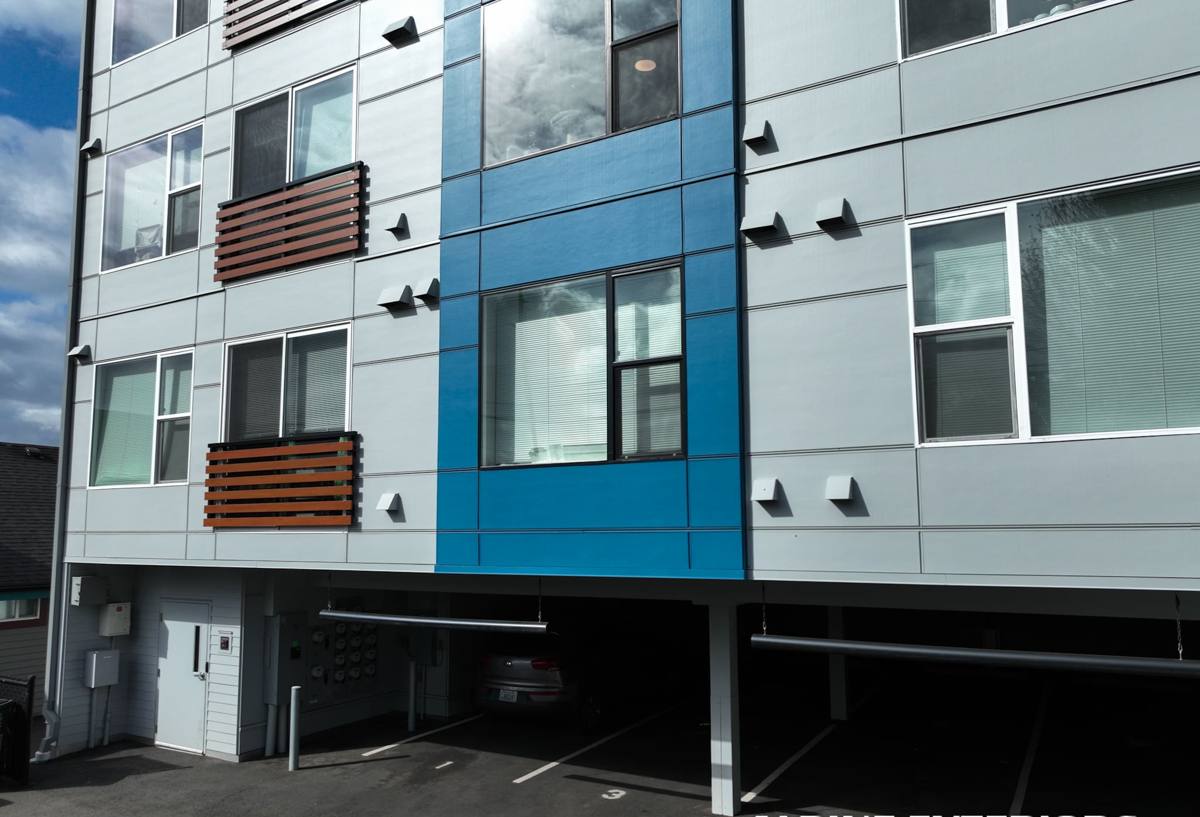
| Panel Siding / Board & Batten | Accent walls, modern facades | Fewer horizontal laps means fewer potential water entry points |
| Trim & Soffit | Eaves, window and door surrounds | Matches the same moisture and durability profile as the field siding |
Shaded, north-facing walls and areas near heavy landscaping tend to hold moisture and grow moss the longest, so those are usually where we pay closest attention to detailing and, when it's relevant, recommend cladding choices that shed water fastest.
Our Process, Start to Finish
Inspection and Estimate
We walk the exterior, check the condition of the existing siding and trim, and look at what's happening behind problem areas where we can access them. You get a written estimate based on what we actually find, not a guess from the driveway.
Prep and Tear-Off
Old siding comes off, and we inspect the sheathing and framing underneath before anything new goes up. Any rot or water damage found at this stage gets addressed before the weather barrier goes on — covering up a problem with new siding just delays it and makes it more expensive later.
Installation
Weather barrier, flashing, then Hardie siding installed to manufacturer spec with correct fastening, clearances, and sealed edges throughout.
Final Walkthrough
We walk the finished job with you, check details up close, and make sure everything meets both Hardie's installation standard and our own.
What Affects the Cost of a Marysville Siding Project
| Factor | Why It Matters |
|---|---|
| House size and wall complexity | More corners, dormers, and trim transitions mean more labor and detailing |
| Condition of sheathing underneath | Rot or water damage found during tear-off adds repair work before new siding goes on |
| Product selection | Lap siding, panel siding, and trim packages carry different material costs |
| Existing siding removal | Layers of old siding or extensive prep work add time |
| Site access | Tight lots, fencing, and landscaping can affect setup and staging |
We don't quote broad ranges without seeing the house — too many of those cost factors are only visible once tear-off starts — but we'll always tell you plainly what we find and why it changes the number, if it does.
Signs Your Current Siding Is Struggling in This Climate
- Moss or algae staining that comes back quickly after cleaning
- Soft spots, bubbling, or visible swelling, especially near the bottom edges
- Paint or finish that's peeling, chalking, or fading unevenly
- Warping or gaps opening up between boards
- Water stains on interior walls near exterior corners or window trim
- Visible rot at butt joints, corners, or where siding meets trim
Any one of these on its own might be minor. Several together, especially on a shaded or weather-exposed wall, usually means moisture has been getting behind the siding for a while.
Why Local Experience in Marysville Matters
A crew that works Snohomish County regularly knows which walls take the worst of the driving rain, where moss shows up first, and how the salt air off Puget Sound shows up in the wear pattern on a house before the homeowner notices it. That's not something a crew unfamiliar with the area picks up on a single job — it comes from seeing the same conditions repeat across enough houses to know what actually holds up and what doesn't. We install James Hardie fiber cement because it's the product we trust to handle this climate, and we install it to spec because in Marysville, the installation details are what determine whether that trust is well placed five, ten, and twenty years down the road.
If you're dealing with aging or failing siding, or you're planning ahead for a replacement, we're happy to take a look and give you a straightforward, no-pressure estimate — just fill out the form below.