 Everett
 Roof Repair Built Around How Lynnwood Actually Gets Weathered
Lynnwood sits in the part of Snohomish County that takes the Puget Sound climate seriously — not the dramatic storms you see elsewhere, but the slow, grinding combination of moisture, moss, and salt-laden air that wears a roof down from the inside out. A roof repair here isn't just patching a leak. It's addressing why that leak formed in the first place, which almost always traces back to one of three things: trapped moisture under aging materials, moss or algae that's lifted shingles or clogged drainage, or flashing and fasteners that have slowly corroded from years of damp air moving through the neighborhood.
We work out of Everett and spend a lot of our week on roofs in Lynnwood and the surrounding communities, which means we're not guessing at what your roof has been through. We're describing what we've already seen on the house down the block.
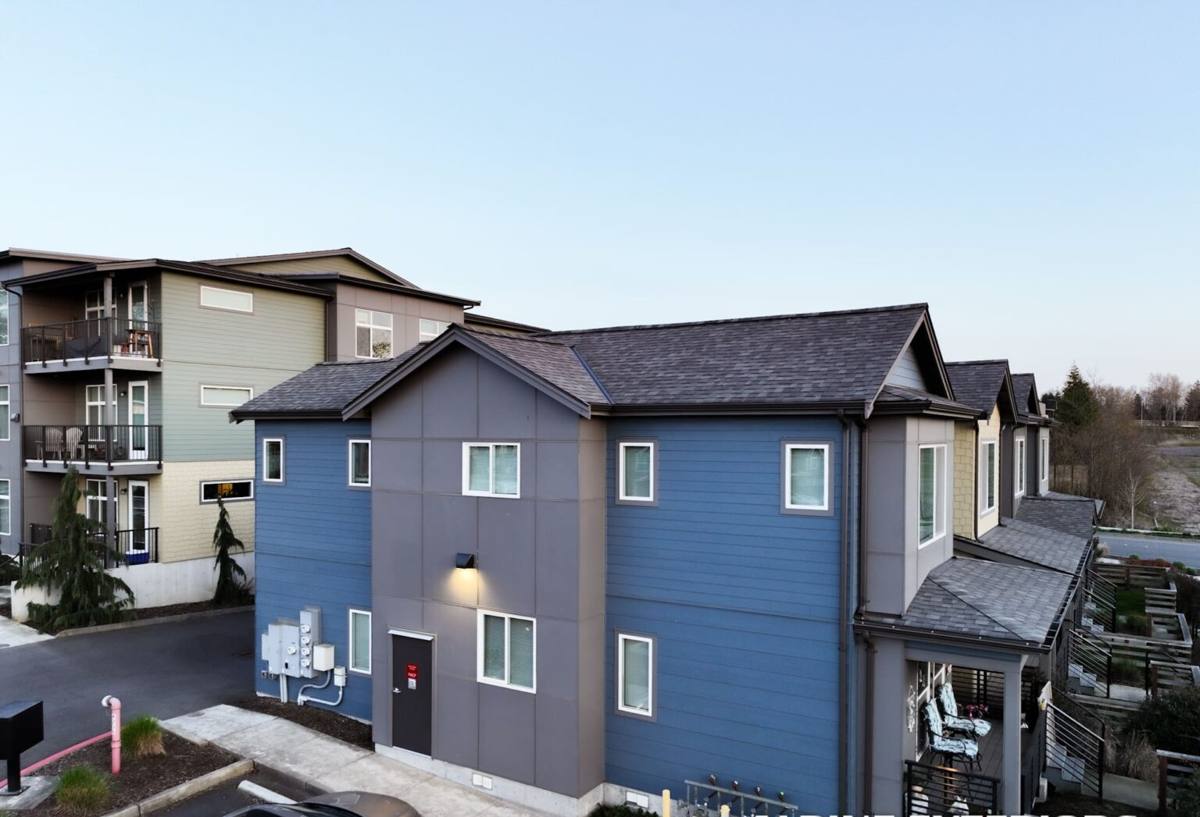
Why This Climate Is Hard on Roofs, Specifically
Three regional factors do most of the damage to roofs in this part of Snohomish County, and each one shows up differently on the shingles, decking, and flashing.
Driving Rain
Wind-driven rain doesn't just fall straight down — it gets pushed sideways under shingle edges, around vent boots, and behind flashing that's even slightly separated from the surface it's sealing. A roof that would shed a calm rain without issue can still leak during a wind event, because water is being forced uphill and sideways into seams that were never designed to handle that kind of pressure.
A Long Moss Season
Cool, damp conditions for much of the year mean moss and algae get a long runway to establish themselves, especially on north-facing slopes and anywhere shaded by trees. Moss doesn't just look bad — it holds water against the roofing material for days at a time, lifts shingle edges as it grows, and can work its way under tabs and flashing where it keeps that surface constantly wet.
Salt Air
Proximity to Puget Sound means airborne salt is a real factor, even well inland from the water. Salt accelerates corrosion on exposed metal — flashing, fasteners, drip edge, vent caps — faster than it would in a dry inland climate. A fastener or flashing seam that would last decades elsewhere can start failing years earlier here if it wasn't installed with corrosion-resistant materials in the first place.
Signs a Lynnwood Roof Needs Repair — Not a Full Replacement
Not every roof problem means you need a new roof. Most of the calls we get in Lynnwood turn out to be legitimate repairs, and catching them early is what keeps them that way. Here's what we look for when deciding whether repair is the right call:
- Isolated soft spots or staining on an interior ceiling, especially near a chimney, skylight, or where two roof planes meet
- Missing, cracked, or curling shingles in a limited area rather than across the whole roof
- Moss buildup that's thick enough to hold water but hasn't yet caused widespread granule loss or decking damage
- Flashing that's visibly separated, rusted, or caulked over as a temporary fix by a previous owner or contractor
- A roof that's structurally sound and within its expected service life, but has one or two problem areas
- Gutters and downspouts overwhelmed by moss or debris, causing water to back up under the roof edge
If instead we find widespread granule loss, soft decking in multiple areas, or a roof that's simply past its material lifespan, we'll tell you that plainly rather than repair something that's going to need replacing again soon anyway. Our job is to give you an honest read, not to talk you into the more expensive option.
What a Correct Repair Actually Involves
Tracing the Leak to Its Real Source
Water rarely drips straight down from where it enters. It travels along the underlayment or decking until it finds a gap, then shows up on your ceiling somewhere else entirely. A repair that just patches the spot where the stain appeared, without tracing the water's actual path, often leaves the real entry point untouched. We open up the area around the suspected source, follow the moisture path, and confirm the actual entry point before we close anything up.
Addressing Moss and Trapped Moisture, Not Just Sweeping It Off
Moss removal has to be done carefully — scraping it off aggressively can strip granules and damage the shingle surface underneath. We remove moss growth, treat the area to slow regrowth, and check the decking underneath for soft spots or rot before any new material goes down. If the decking has absorbed moisture over time, that gets addressed as part of the repair, not left as a hidden problem under new shingles.
Flashing and Fasteners That Match the Exposure
Given the salt air and moisture in this area, we use corrosion-resistant flashing and fasteners on repairs, not whatever was on hand. Flashing around chimneys, skylights, vent pipes, and roof-to-wall transitions is one of the most common failure points we find, and it's also one of the most overlooked in a quick patch job.
Matching Materials Properly
A repair that uses mismatched shingles or the wrong underlayment can create a new weak point right next to the one you just fixed. We match shingle profile, color, and underlayment type as closely as possible to the existing roof, and we make sure new material ties into the old roofing system correctly at every seam and transition — not just laid over the top of it.
Our Repair Process, Start to Finish
1. Inspection and Diagnosis
We start on the roof, not with a guess from the ground. That means checking the suspected problem area plus the surrounding sections, since moisture and moss damage often extend further than the visible symptom suggests.
2. A Clear, Written Estimate
You get a straightforward explanation of what we found, what needs to happen, and what it costs — before any work starts. If we think the roof is closer to needing replacement than repair, we'll say so at this stage, not after you've paid for a patch.
3. The Repair Itself
Work is done to match your existing roofing system, with flashing and fasteners chosen for this climate's moisture and salt exposure. We protect gutters, siding, and landscaping around the work area, and we clean up debris and old material as we go.
4. Final Check and Cleanup
Before we call the job done, we walk the repair area again, check that drainage and flashing are performing as expected, and do a final debris sweep — including a magnetic sweep for stray fasteners near walkways and driveways.
Repair vs. Replacement: What Actually Drives the Decision
Homeowners in Lynnwood often ask whether it's worth repairing an older roof or better to plan for replacement. There's no single right answer — it depends on a handful of factors that we walk through during the inspection.
| Factor | Leans Toward Repair | Leans Toward Replacement |
|---|---|---|
| Age of roof | Well within expected material lifespan | At or past the material's typical service life |
| Extent of damage | Isolated to one or two areas | Spread across multiple slopes or the whole roof |
| Decking condition | Solid, no soft spots found | Soft or rotted decking in multiple locations |
| Moss/algae history | Recent growth, caught early | Years of untreated growth with granule loss |
| Underlying cause | A single identifiable defect (flashing, vent boot, etc.) | General wear across the whole roofing system |
Cost for a repair varies widely depending on what's actually found — a straightforward flashing repair is a different job than one that involves opening up decking to address hidden moisture damage. We'll give you a real number for your roof after the inspection rather than a broad estimate that doesn't reflect what's actually going on up there.
Keeping Moss and Salt Air From Undoing the Repair
A repair holds up a lot longer if the conditions that caused the original problem are kept in check afterward. A few habits make a real difference for roofs in this area:
- Keep gutters and downspouts clear so water isn't backing up under the roof edge, especially in fall and winter
- Trim back tree branches that keep a section of roof shaded and damp longer than the rest
- Have moss growth addressed while it's still light, rather than waiting until it's thick and established
- Check flashing and vent boots periodically for early signs of corrosion or separation, particularly after a windy winter
- Avoid pressure-washing a roof directly — it can strip granules and force water under shingles instead of removing moss safely
None of this replaces a proper inspection, but it does reduce how often you need one.
Why a Crew That Already Works Lynnwood Matters
Roofing crews that work all over Western Washington aren't wrong for the job, but a crew based in Everett that regularly works Lynnwood roofs has a practical edge: we know which roof types and installation habits tend to show up in this area, we're not learning the local climate's effect on materials for the first time on your roof, and we're close enough that a follow-up visit isn't a special trip. That matters for warranty work, for a quick check after a windstorm, or simply for being reachable if a question comes up after the job is done.
We also know that Lynnwood homeowners have seen their share of rushed storm-chaser sales pitches. We'd rather earn the job with a clear inspection and an honest estimate than a high-pressure pitch, and we're planning to still be the people you call five years from now, not just for the one repair.
Get a Straightforward Look at Your Roof
If you're dealing with a leak, moss buildup, or a roof that's just due for a check after another wet Snohomish County winter, we'll come take a real look and tell you honestly what it needs. The estimate is free, there's no pressure to book anything on the spot, and you'll get a clear explanation of what we found — use the form below to get started.