 Everett
 Marysville's Roofs Work Harder Than Most
Marysville sits close enough to the water that salt-laden air is a daily fact of life, and far enough into Snohomish County's rain shadow pattern that homes still take on months of driving, wind-blown rain every winter. Add a moss season that can run from October well into April, and you've got a set of conditions that ages an asphalt shingle roof faster here than it would in a drier, calmer climate. None of that means asphalt shingles are the wrong choice for this area — they remain one of the most practical, cost-effective roofing systems available, and the vast majority of homes in Marysville use them. It means the installation details matter more here than they would somewhere with a gentler climate.
A shingle roof that's installed correctly for this environment and one that's installed to a generic national standard can look identical the day the crew leaves. The difference shows up three, five, and ten years later — in whether the granules are still intact, whether moss has undermined the shingle mat, and whether water found its way under a flashing detail during the worst storm of the year.
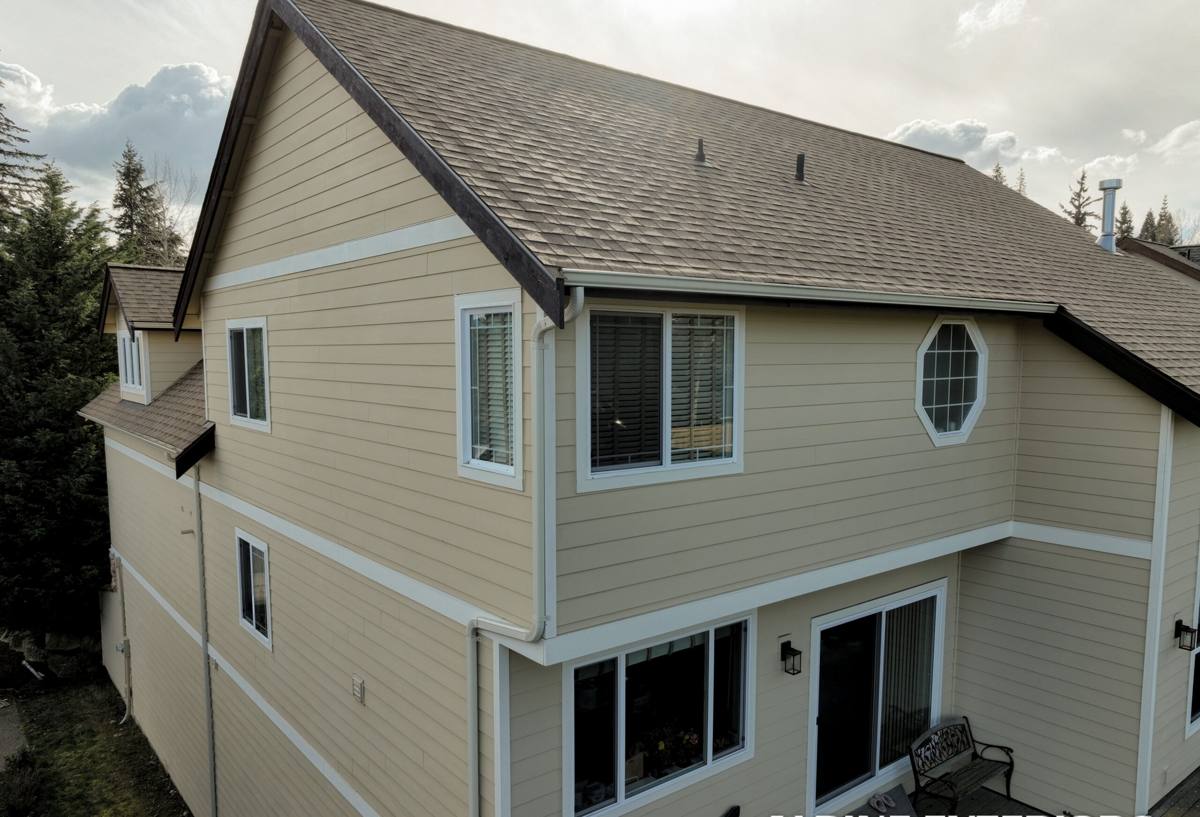
What Salt Air, Rain, and Moss Actually Do to a Roof
Salt Air
Airborne salt doesn't dissolve asphalt shingles the way it corrodes bare metal, but it accelerates wear on the metal components every shingle roof depends on — flashing, drip edge, nail heads, and vent housings. Corrosion at these points is usually where leaks start, not in the shingle field itself. It also speeds up the breakdown of unprotected fasteners over time.
Driving Rain
Wind-driven rain doesn't fall straight down — it gets pushed sideways and upward under shingle edges, around chimneys, and along valleys. A roof built for calmer weather often relies on gravity alone to shed water. A roof built for this area needs sealed laps, properly lapped underlayment, and valley protection that assumes water will try to travel uphill under pressure.
Moss and Constant Moisture
Moss doesn't just look bad. As it establishes on the north-facing and shaded slopes common on Marysville lots, it holds moisture against the shingle surface long after the rest of the roof has dried out. That constant dampness accelerates granule loss, and moss rhizoids can work into shingle laps and lift tabs enough to let wind-driven rain underneath. A roof that's shaded by mature trees or sits close to neighboring structures is at higher risk and needs a maintenance plan that accounts for it.
What a Correctly Built Shingle Roof Includes Here
For this climate, a proper asphalt shingle installation is a system, not just a layer of shingles. Every layer underneath the shingles is doing real work against the specific conditions Marysville sees.
- Ice-and-water shield at eaves, valleys, and roof-to-wall transitions — the areas most exposed to wind-driven rain and ice damming during cold snaps.
- Synthetic underlayment across the full deck, properly lapped, as the secondary water barrier if wind ever drives moisture past the shingles.
- Balanced ventilation — intake at the eaves and exhaust at the ridge — so the attic doesn't trap the moisture that feeds moss and rot from underneath.
- Corrosion-resistant flashing at chimneys, skylights, sidewalls, and valleys, since these metal details are what salt air attacks first.
- Correct nailing — the right number of fasteners, placed in the manufacturer's nailing zone, driven flush (not overdriven) — since wind uplift in coastal Snohomish County storms is a real, recurring load.
- Starter strip and hip/ridge caps matched to the field shingle, sealing the edges and high points that take the most direct rain exposure.
Skip any one of these and the roof may still look fine for a few years. The failures that show up later — soft decking at a valley, a leak behind a chimney, moss lifting a whole course of shingles — usually trace back to a shortcut in this list, not a defect in the shingles themselves.
Choosing a Shingle for This Climate
Not every asphalt shingle product is built the same way, and the differences matter more in a wet, moss-prone climate than they do in a dry one. Here's how the common options compare for a Marysville home.
| Shingle Type | Typical Lifespan Here | Moss/Algae Resistance | Wind Rating | Best For |
|---|---|---|---|---|
| 3-Tab (standard) | Shorter end of the range | Low unless treated | Lower | Budget-driven projects, simple roof lines |
| Architectural / Dimensional | Longer end of the range | Moderate to good with algae-resistant granules | Higher | Most Marysville homes — best balance of durability and cost |
| Impact-Resistant (Class 4) | Long, with added durability | Good with algae-resistant granules | High | Homes wanting extra durability and potential insurance discounts |
For most homes in this area, we steer people toward architectural shingles with algae-resistant granules (usually copper- or zinc-infused) as the practical baseline — not because 3-tab shingles are defective, but because the added mat thickness and treated granules hold up noticeably better against the moss and streaking this climate produces. Impact-resistant shingles are worth the upgrade cost for homeowners who want maximum durability or who qualify for an insurance premium reduction, but they're not a requirement for a sound roof here.
Our Installation Process
The steps don't change much from job to job, but how carefully each one is done is exactly where climate-appropriate roofing is won or lost.
- On-site inspection and measurement. We walk the roof (or use close-up imagery when the pitch or condition makes that unsafe), check the decking condition where visible, and note trouble spots — valleys, chimneys, skylights, low-slope sections, and shaded areas prone to moss.
- Tear-off and deck inspection. Old shingles and underlayment come off down to the deck. This is the only point where we can actually see soft spots, rot, or prior water damage — and where we flag any decking that needs to be replaced before new shingles go down.
- Deck repair as needed. Any damaged sheathing gets replaced. Installing new shingles over a compromised deck just hides a problem that will resurface as a leak.
- Ice-and-water shield and underlayment. Applied at eaves, valleys, and penetrations first, then the full underlayment layer across the deck.
- Flashing. New flashing at chimneys, sidewalls, valleys, and vents — reused old flashing is a common source of future leaks, especially once corrosion has started.
- Shingle installation. Starter course, field shingles, and hip/ridge caps installed to the manufacturer's nailing pattern and exposure spec.
- Ventilation check. We confirm intake and exhaust venting are balanced, and correct it where the existing setup is trapping heat and moisture in the attic.
- Cleanup and final walk-through. Magnetic sweep for nails, debris removal, and a walk-through so you know exactly what was done and what to watch for going forward.
Signs Your Marysville Roof Needs Attention
Because moss and constant moisture do their damage gradually, a lot of homeowners don't realize a roof needs work until a leak shows up inside. Watch for these signs, especially after the wetter months:
- Moss or dark algae streaking on shaded or north-facing slopes
- Granules collecting in gutters or at downspout outlets
- Curling, cupping, or cracked shingle edges
- Missing or lifted shingle tabs after a windstorm
- Rust staining or visible gaps around flashing at chimneys and vents
- Sagging in the roof line or soft spots felt underfoot on inspection
- Water stains or peeling paint on interior ceilings, especially near valleys or chimneys
Catching these early is almost always cheaper than waiting. A patch or a section repair costs far less than the deck repair and interior damage that follow a roof that's been leaking unnoticed for a season or two.
What Drives the Cost of a Shingle Roof Here
Every roof is different, so we won't quote a number without seeing yours, but these are the factors that typically move the price on a Marysville project:
| Factor | Why It Matters |
|---|---|
| Roof size and pitch | Steeper roofs take longer, need more safety setup, and use more material for cuts and waste |
| Number of existing layers | Tear-off of multiple old layers takes more labor than a single-layer strip |
| Decking condition | Rot or soft sheathing found during tear-off adds material and labor to replace it properly |
| Shingle grade chosen | 3-tab, architectural, and impact-resistant products carry different material costs |
| Roof complexity | Valleys, dormers, skylights, and chimneys all add flashing work and labor time |
| Ventilation upgrades | Adding or correcting intake/exhaust venting is worth doing during a re-roof, not after |
Living With a Shingle Roof in a Long Moss Season
Even a well-built roof benefits from some upkeep in this climate. A few habits go a long way toward getting the full lifespan out of your shingles:
- Have gutters cleared going into fall, before the heaviest rain arrives
- Trim back tree limbs that shade the roof or drop debris onto it — shade and debris are what let moss get a foothold in the first place
- Have moss growth removed by a professional rather than pressure-washed, which can strip granules and shorten shingle life
- Schedule a roof check every year or two, particularly after a hard windstorm
- Address small leaks or lifted shingles right away rather than waiting for the next dry stretch
Why It Matters That We Already Work in Marysville
Roofing to a national average is different from roofing for this specific stretch of Snohomish County. A crew that works Marysville regularly already knows which slopes on a given lot orientation tend to hold moss, how far wind-driven rain travels under a poorly sealed valley in a coastal storm, and which flashing details fail first once salt air gets into unprotected metal. That local pattern recognition shows up in small decisions — where we add extra ice-and-water shield, which valleys get closed-cut versus woven, how we set up ventilation on a roof shaded by neighboring trees — that a generalist crew unfamiliar with this specific climate might not think to make.
It also means straightforward communication. You're not explaining your climate to us; we already understand what a Marysville roof is up against, and we build and repair accordingly.
Get a Straightforward Estimate
Whether you're dealing with moss buildup, a storm-damaged section, or a roof that's simply due for replacement, we're happy to take a look and give you an honest read on where things stand. Use the form below to request a free, no-pressure estimate for your Marysville home.