 Everett
 Marysville's Climate Is Hard on Siding — Here's Why
Marysville sits close enough to Puget Sound and the Snohomish River delta that salt-laden air is a real factor in how exterior materials age here, not just a talking point. Add in the driving, wind-pushed rain that Western Washington throws at north- and west-facing walls for months at a stretch, plus a moss and mildew season that can run from fall through spring, and you have a climate that finds every weak point in a home's exterior. Siding that looks fine from the curb can be quietly failing behind the surface, especially on older homes that were never built with today's moisture-management standards in mind.
We work on homes throughout Snohomish County, and Marysville properties tend to show a specific pattern of wear: caulking that's cracked and pulled away at trim joints, paint that's blistering or peeling in shaded, damp corners, and soft or discolored siding low on the wall where splashback and standing moisture do the most damage over time. None of this is unusual for the area — it's just what happens when siding isn't built, installed, or maintained for this specific climate.
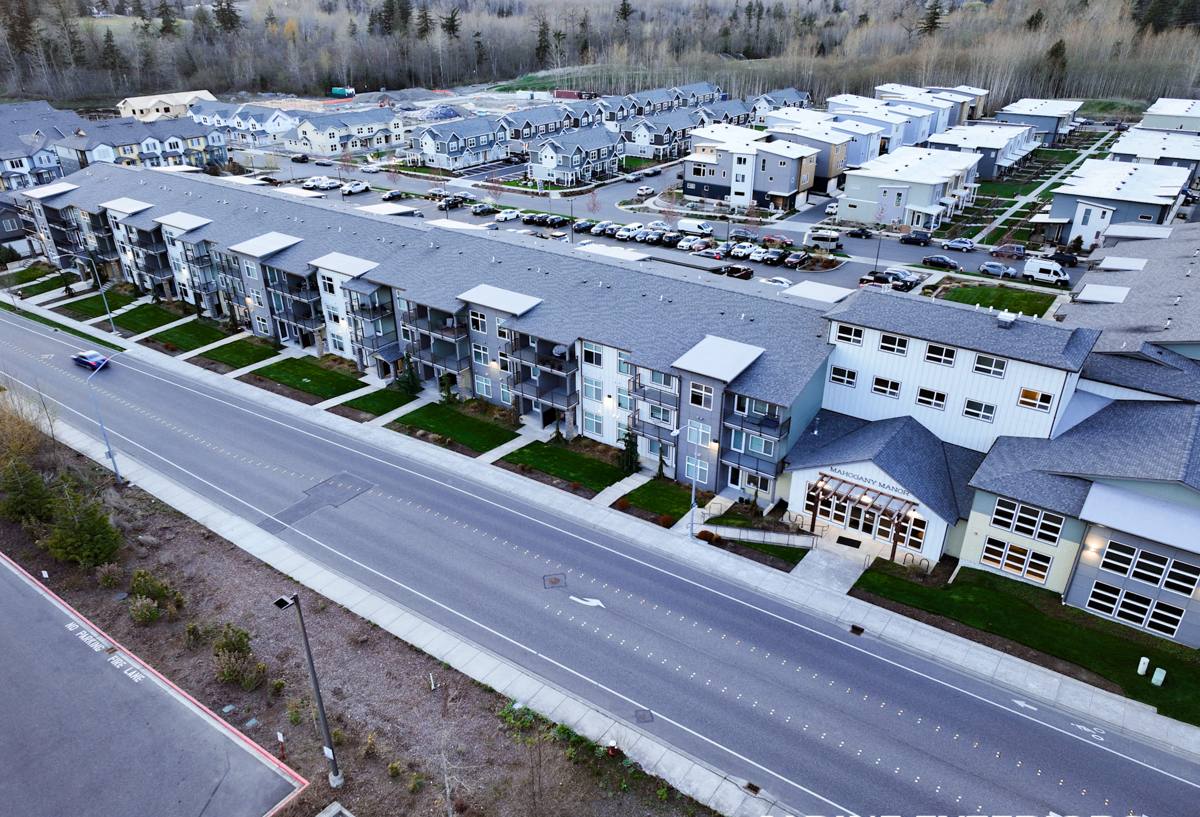
Common Siding Damage We Find on Marysville Homes
Every home is different, but repair calls in this area tend to cluster around a handful of recurring problems:
- Moisture intrusion at seams and penetrations — around window trim, hose bibs, vents, and light fixtures where old caulking has failed
- Soft or delaminating panels near ground level, decks, and downspouts where water sits longer than it should
- Moss and algae growth on shaded north- and east-facing walls, which holds moisture against the siding surface long after a storm has passed
- Cracked or warped boards on older wood or engineered wood siding that was never rated for this level of sustained moisture exposure
- Failed or missing flashing above windows, doors, and trim boards, which is often the real root cause even when the visible damage is elsewhere
That last point matters more than most homeowners realize. A stained or bubbled section of siding is usually a symptom, not the source. If we patch the visible damage without correcting the flashing or drainage detail that let water in, the same problem reappears in a year or two — sometimes worse, because the framing underneath has had more time to absorb moisture.
What a Correct Siding Repair Actually Involves
It starts with finding the real cause
Before any board comes off, a proper repair starts with tracing the water's actual path. That means checking flashing above openings, looking at how trim boards are sealed, checking whether house wrap or weather-resistant barrier behind the siding is intact, and probing surrounding material to see how far moisture has traveled. Replacing a damaged panel without this step is guesswork — and guesswork on a siding repair usually means paying for the same repair twice.
Then the damaged material comes out — all of it
We remove everything affected, not just what's visibly stained. Water travels sideways and downward inside a wall assembly, so damage is often larger than what shows on the surface. If sheathing underneath has gone soft, that gets addressed too — patching over compromised sheathing is a shortcut that costs homeowners far more down the line.
Flashing and drainage get corrected, not just replicated
If the original flashing detail was the problem, we don't reinstall the same detail that failed. We correct it, so the repair actually holds up through the next decade of Marysville winters instead of failing again on the same schedule.
New material is matched and integrated properly
Panels are cut, fastened, and finished to match the existing siding's reveal, profile, and factory finish as closely as possible, with all joints, seams, and penetrations sealed to current best practice — not just however the original installer happened to do it.
Repair or Replace? How We Help Homeowners Decide
Not every siding problem calls for a full replacement, and not every homeowner needs to hear "you need all new siding" from a contractor who'd rather sell the bigger job. Here's the honest breakdown of how we evaluate it:
| Factor | Repair is usually the right call | Replacement is usually the right call |
|---|---|---|
| Extent of damage | Isolated to one or two areas (a wall section, around one window) | Recurring problems across multiple walls or elevations |
| Siding material | Fiber cement or newer material still structurally sound elsewhere | Original wood, hardboard, or aging vinyl showing widespread failure |
| Underlying structure | Sheathing and framing test dry and solid | Rot has reached framing in multiple locations |
| Age of siding | Well within its expected service life | At or past the end of its realistic lifespan |
| Home's overall condition | Exterior is otherwise in good shape | Repair costs are approaching a meaningful share of full replacement cost |
We'll always tell you honestly which side of that table your home falls on, even when the answer is the less profitable one for us.
Our Siding Repair Process
- On-site inspection — we assess visible damage, probe suspect areas, and check flashing, trim, and drainage details around the affected zones
- Straight explanation — you get a clear picture of what's actually wrong, what caused it, and what it will take to fix it correctly, in plain language
- Written scope and estimate — no vague line items, so you know exactly what's being repaired and why
- Removal and inspection of hidden structure — once panels come off, we confirm the extent of the damage before closing anything back up
- Correction of the root cause — flashing, sealant, and drainage details are fixed, not just re-covered
- Installation and finish matching — new material is installed to manufacturer spec and finished to blend with the surrounding siding
- Final walkthrough — we review the completed work with you before we consider the job done
Why We Repair Exclusively with James Hardie Fiber Cement
When a repair calls for new material — whether it's a few boards or a full wall section — we use James Hardie fiber cement, and only James Hardie. We don't install LP SmartSide, vinyl, Cemplank, Allura, primed spruce, or cedar, on repairs or full installs. That's a deliberate standard, not a brand preference.
Fiber cement is non-combustible and doesn't absorb and swell with moisture the way wood-based and engineered wood products can, which matters directly in a climate defined by long stretches of standing dampness and moss growth. Hardie's ColorPlus factory finish is baked on under controlled conditions, so it holds color and resists peeling far better than a field-applied paint job — a real advantage in an area where paint failure is one of the most common repair calls we get. Hardie also engineers specific product lines (their HZ5 line, for instance) for regions with high moisture exposure, which the Pacific Northwest qualifies as. And it carries a strong, transferable warranty, which matters if you ever sell the home.
None of this means other products are without merit — it means that after years of doing repair work in this climate, we've seen which materials hold up and which ones generate repeat service calls, and we built our standard around the answer.
Why It Matters to Hire a Crew That Already Works in Marysville
Siding repair isn't just carpentry — it's understanding how water moves on a home in this specific environment. A crew that mostly works drier inland markets or unfamiliar climates can miss the details that matter here: how far salt air degrades hardware and fasteners over time, which elevations take the worst of the driving rain, and how aggressive moss growth needs to be addressed at the repair, not just cleaned off and ignored. A crew that already works Snohomish County homes has seen the failure patterns before and knows what correcting them actually requires, rather than learning on your house.
Local, established crews are also easier to hold accountable. You're not dealing with an out-of-area company that won't be reachable if a repair needs a follow-up visit next season.
Signs Your Marysville Home Needs a Siding Inspection Now
You don't need visible rot to justify a look. Any of the following is worth having checked before the next wet season makes it worse:
- Paint that's peeling, bubbling, or flaking, especially in shaded or damp areas
- Soft spots when you press on siding near the ground, decks, or downspouts
- Visible gaps, cracks, or missing caulk around windows, doors, and trim
- Persistent moss, algae, or dark staining that keeps coming back after cleaning
- Musty smells or visible staining on interior walls that back up to exterior siding
- Siding panels that look warped, bowed, or separated from the wall
- A home that hasn't had its exterior inspected in the last several years
Catching these early is almost always cheaper and less disruptive than waiting for the damage to spread into framing.
Get a Straight Answer About Your Siding
If you're seeing any of the warning signs above, or you just want an honest opinion on what your Marysville home's siding actually needs, we're happy to take a look. We'll give you a clear, no-pressure estimate and tell you plainly whether you're looking at a repair or something bigger — use the form below to get started.