 Everett
 Building New in Port Gardner Comes With Its Own Window Problems
Port Gardner sits right on the water, which means homes going up here catch a version of Everett's weather that inland lots don't see as hard: salt-laden air off Port Gardner Bay, wind-driven rain that hits walls at an angle instead of falling straight down, and a moss and mildew season that can stretch eight months out of the year. None of that is a reason to panic about a new build. It is a reason to think carefully about window selection and installation sequencing before the crew ever sets a unit in the rough opening.
New-construction windows are installed differently than replacement windows, and getting that difference right matters more here than it would on a sheltered lot a few miles inland. This page covers what we actually do, why, and what a homeowner or builder in Port Gardner should expect from the process.
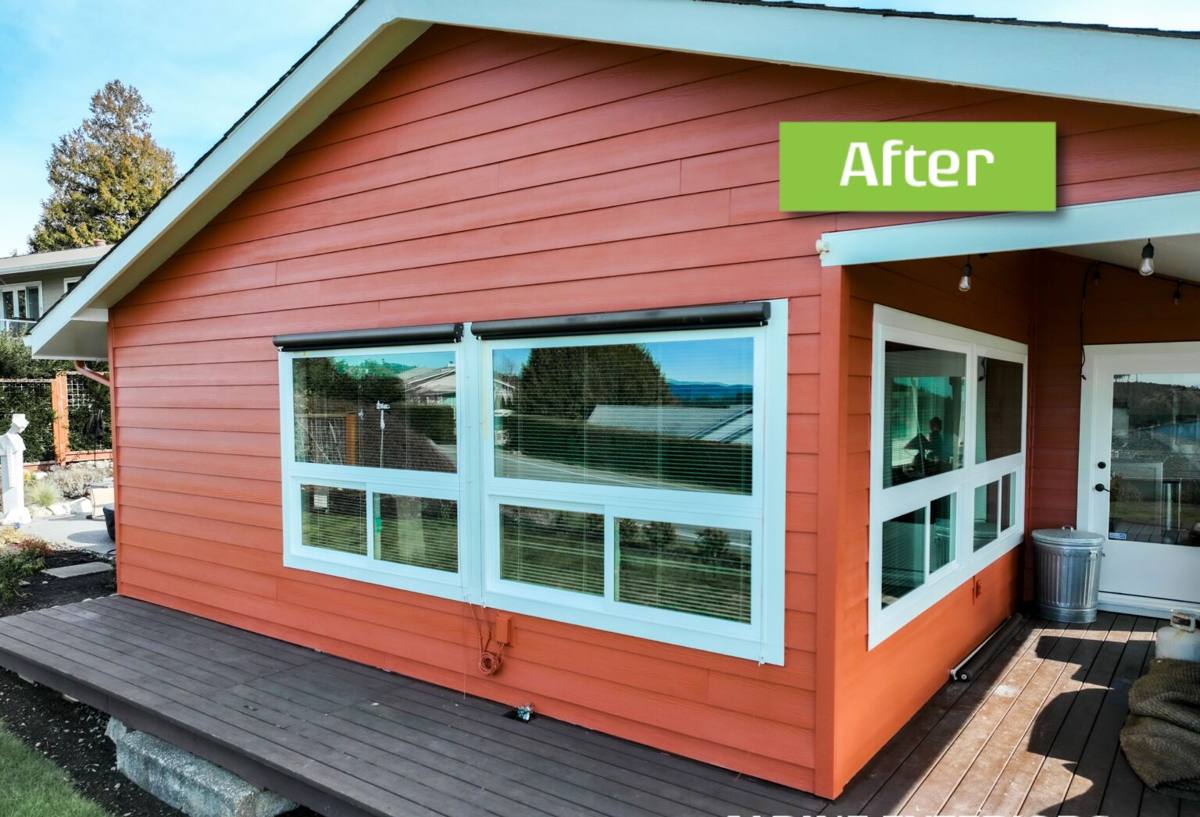
New Construction vs. Replacement: Why the Job Isn't the Same
A replacement window gets inserted into an existing frame that's already flashed and sided. A new-construction window is installed into a bare rough opening, before or during siding, which means the window itself becomes part of the building's water management system rather than sitting inside one that already exists. That's a bigger responsibility, and it's also an opportunity — done right, a new-construction install can outperform almost any retrofit because the flashing, house wrap, and window nailing fin all get integrated as one continuous water-shedding assembly instead of being patched together after the fact.
On a Port Gardner lot, that integration is the difference between a window that handles forty years of driving rain off the Sound and one that starts showing sill rot or interior staining within a decade.
What Salt Air and Driving Rain Actually Do to a Window Over Time
Three things show up repeatedly on waterfront and near-waterfront homes in this part of Everett:
- Hardware corrosion — cheaper fasteners, hinges, and cranks pit and seize faster in salt air, especially on the water-facing elevations.
- Wind-driven water intrusion — rain that hits siding at an angle finds any gap in flashing or sealant, and it finds it at the window because that's the largest interruption in the wall plane.
- Sustained moisture load on sills and trim — a long moss season means longer periods where exterior surfaces stay damp, which stresses any wood component that isn't properly sealed or clad.
None of these are exotic problems. They're just the normal cost of building in a marine climate, and they're all manageable with the right materials and installation detail — which is the whole point of doing the job correctly the first time, since a window buried behind finished siding is expensive to fix later.
Frame Material: What Holds Up Near Port Gardner Bay
We don't push one brand over another, but frame material choice does matter more here than on an inland lot. Here's how the common options actually compare for a coastal-influenced build:
| Frame Material | Salt Air / Moisture Behavior | Maintenance | Typical Cost Tier |
|---|---|---|---|
| Vinyl | Won't corrode; performs well if hardware and reinforcement are quality-grade | Low — occasional cleaning | Lowest to mid |
| Fiberglass | Excellent — dimensionally stable, doesn't expand/contract with humidity swings | Low | Mid to high |
| Aluminum-clad wood | Good exterior protection, but any breach in the cladding exposes wood to sustained moisture | Higher — sealant joints need periodic inspection | High |
| Bare wood | Most vulnerable to salt air and driving rain unless finish is maintained rigorously | Highest | Varies |
Our standard is to steer new-construction clients toward vinyl or fiberglass on water-exposed elevations unless there's a strong architectural reason for clad wood — not because wood or aluminum-clad products are bad, but because they carry a maintenance commitment that a lot of homeowners underestimate until they're the ones re-caulking trim on a ladder every other year.
Hardware and Fastener Grade
Whatever frame material you choose, ask what grade of fasteners and hardware the installer uses on the exterior. Standard-grade screws and cranks can start showing corrosion within a few years this close to the water. Stainless or coated hardware costs a little more up front and is a non-issue by comparison.
Flashing and Water Management: Where New Construction Wins or Loses
This is the part of the job that matters most and shows the least once the siding goes on. A correct new-construction window opening follows a sequenced, shingled approach so that water is always directed outward and downward, never trapped behind a layer:
- Sill pan flashing installed first, sloped to drain outward, with end dams to stop water from wicking sideways into the wall cavity.
- House wrap or weather-resistive barrier integrated at the jambs and head before the window is set, not taped over it afterward.
- Window set into the opening, shimmed level and square, and fastened per the manufacturer's nailing fin schedule — not just "however many nails fit."
- Jamb flashing lapped over the sill pan, head flashing lapped over the jamb flashing and integrated with the house wrap above, maintaining a shingle-style water path from top to bottom.
- Backer rod and exterior sealant at the trim-to-siding joint, sized and installed so it can flex with seasonal movement instead of cracking.
Skip or shortcut any one of those steps and you get a window that looks fine for years and then fails quietly behind the wall — which is exactly the kind of damage that's hard to catch on a routine walkthrough and expensive once it's found.
Energy Code and Comfort in a Marine Climate
Washington's energy code sets minimum performance requirements for new construction, and Snohomish County inspectors check for it. But code minimums are a floor, not a target. In a marine climate like Port Gardner's — mild temperatures but a lot of damp, overcast days — the two specs that matter most for comfort are:
- U-factor (how well the window resists heat loss) — lower is better for keeping heating costs down through our wet winters.
- Solar Heat Gain Coefficient (SHGC) — less critical here than in sunnier climates, but still worth balancing on south- and west-facing glass to avoid summer overheating on the few genuinely hot weeks we get.
We spec glass packages by elevation and orientation rather than using one blanket spec for the whole house — a north-facing window on the water side has different priorities than a south-facing one on the street side.
Our New-Construction Window Process
For Port Gardner builds, our process runs alongside the framing and siding schedule rather than as an isolated trade:
- Rough opening review — we check sizing, header height, and sill condition before ordering, since a mis-sized opening costs everyone time later.
- Material and glass spec selection, elevation by elevation, based on sun exposure and water exposure.
- Sill pan and flashing installation, sequenced with the house wrap install so nothing gets taped out of order.
- Window set, leveled, shimmed, and fastened to manufacturer spec.
- Head and jamb flashing integration, tied into the weather-resistive barrier.
- Pre-siding inspection — we photograph and check every opening before it gets covered, since this is the one point in the build where problems are cheap to fix.
- Final trim, sealant, and interior finish coordination once siding is complete.
Coordinating With Your Builder or General Contractor
Most of our new-construction window work happens as a sub-trade under a GC's schedule, and the biggest risk on any job isn't the window itself — it's a scheduling gap where the opening sits exposed to weather longer than planned, or where the siding crew closes up a wall before flashing is fully inspected. We coordinate directly with the builder's schedule and flag any opening that isn't ready for siding yet, rather than letting it get covered and hoping it was done right.
If you're a homeowner working with your own GC rather than through us directly, it's reasonable to ask that GC to have us or another qualified window crew inspect flashing before siding closes it up. That single inspection point catches the overwhelming majority of water intrusion problems before they ever become problems.
Moss, Long-Term Maintenance, and What to Watch For
Everett's long moss season doesn't attack windows directly, but it's a sign of the sustained dampness that stresses trim, sealant joints, and any exposed wood. A few habits keep a correctly installed window performing for decades:
- Inspect exterior caulk joints at trim-to-siding transitions once a year, ideally before the wet season starts.
- Keep gutters and downspouts clear so water isn't sheeting down the wall face above window heads.
- Watch for any green growth or dark staining directly below a window sill — it's often the first visible sign of a slow leak, not just cosmetic moss.
- Don't paint or seal over weep holes on vinyl or fiberglass frames — they're there to let incidental moisture drain back out.
Why Hire a Crew That Already Works Port Gardner
Window installation instructions read the same everywhere in the manufacturer's manual. What changes lot to lot is exposure — how much direct wind-driven rain a wall sees, how close the build is to salt water, how a particular street sits relative to prevailing weather off the Sound. A crew that already works this part of Everett has a feel for which elevations need the extra attention and isn't learning that on your build. That's less about brand loyalty and more about not treating a waterfront-adjacent lot in Snohomish County the same as a sheltered inland one.
If you're planning a new build in Port Gardner and want a straight answer on window selection, flashing detail, or how our process fits into your builder's schedule, we're happy to walk the plans with you. Reach out for a free, no-pressure estimate — there's a form below to get started.